

I was (super) excited to pick up my Mac Neo today. Got the Citrus/512GB.
I am completely blown away by it. It is a paradigm shifting computer.
But I also have to say it made me a bit melancholy, and I’ll explain why. This is an indulgent post but it has been a decade in the making and it just took today’s Neo to put it all in perspective. Consider this my “review”.
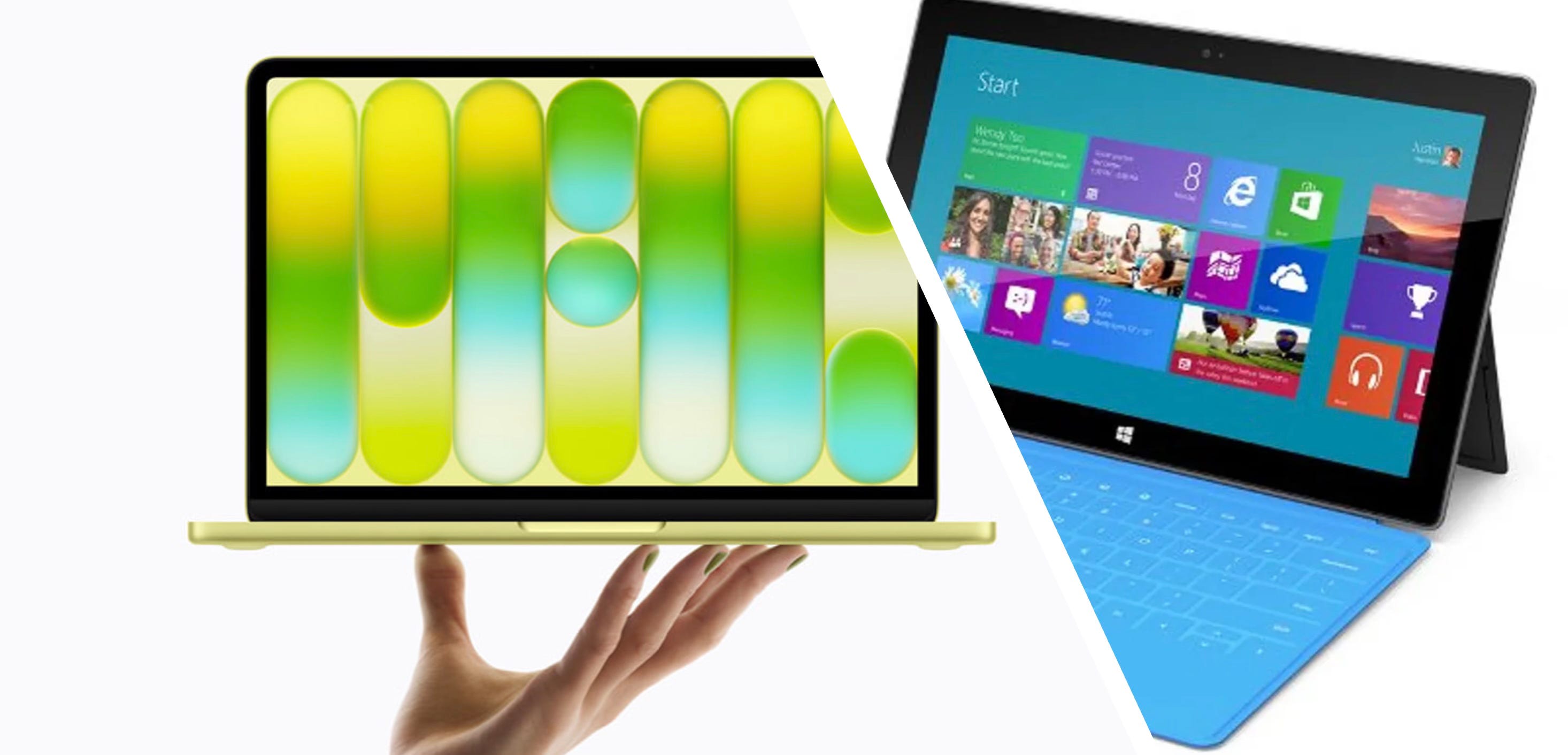
I set it up via migration and was up and running quickly. Usually the first 24 hours of a new computer are the worst time to evaluate performance as system optimizations (like Spotlight) that run in the background are doing their work.
I put everything on it that was on my MBA: Apple apps, Box Sync, OneDrive, Office, Chrome, a few utilities (Keka, exif cleaner, Nikon WTU), ChatGPT, Zoom, Xcode, and set up app icons for some browser apps like Gemini and Google Remote and so on. I like to have files local so I set a subset of OneDrive and Box to sync locally (about 100GB). I have other apps that come and go. I do run some models locally to try things out but haven’t gotten there yet.
I spun up all my apps, photos, and so on. I could not tell the difference between this and my MacBook Air. Max memory use was just under 7GB in the first couple of hours. I think when launching stuff it bumped up a bit and then dropped down. This was just using Activity Monitor.
All the “compromises” are totally acceptable and go unnoticed to me. I always charge over USB anyway. Anywhere I need an external display there’s an HDMI/USB adapter attached. I only rarely use external USB storage (security!) and so on. The trackpad is a tad smaller but the physical click feels little different than Force Touch to me. The screen actually looks a bit brighter side by side and I can see the resolution difference but I’m ok. I rarely use the camera. I can tell the difference in physical dimensions, but only when I try. I never need an actual full day of battery life. I don’t even use a sleeve or anything so I won’t notice it in a suitcase. On storage, for my mobile computer I do my best to avoid having all my iCloud and cloud stuff locally, just current work and resources. This is a security thing. So 512GB is not a limitation for me. I don’t edit 8K video :-)
Neo doesn’t have to get better. It just has to stay excellent. If you need or just want better, there’s two more levels of laptops and two levels of desktops. Plus iPads. The Neo in 5 years will be more powerful than most of those and probably still cost $699. Moore’s law is undefeated.
For me, Neo is just a MacBook Air replacement. And in a much cooler color. It is also a laptop made with “a phone chip”. That’s the part that is so familiar.
That’s why I got a bit melancholy looking at it. Everyone who knows me knows I (too often) like to bring computing history into the present for context, framing, and comparison. I always do so thinking about the old adage of “generals fighting the last war”. I don’t want to be that person.
If you’ve read any of “Hardcore Software”, which tries to put all those stories in one place (hardcoresoftware.substack.com), then you know a theme in computing that repeats is how something that appears to have been a prescient product or “early” is actually little different than “wrong”. In almost all cases something that was early was early across many dimensions. The “concept” was right, but the ability to actually execute the concept was wrong. For example Newton and then General Magic (and to some degree mobile Palm Pilots) were all perfectly right as concepts, but the lack of a usable data network, the ability to shrink computing, and even display and input technologies all added up to being “early and wrong”.
So when I thought about Windows 8 over the past dozen years, I quite often settled on being early AND wrong or too much too soon when I didn’t want to feel that bad.
But today I’m using Neo and thinking about Windows 8 and Surface, and I have to admit I’m struggling with that conclusion. We had all the pieces and all the pieces worked then. One I’m thinking about is compute. The original Surface on ARM (Nvidia Tegra) had 2GB RAM and 64GB storage. Those were also the published baseline specs for Windows 8 on Intel at the time. Both had no problem running Office and browsing.
In other words, the hardware and software were not early. The world as we lived it was quite capable of running the device. And it cost $599 with keyboard/32GB, $699 for 64GB. Here’s a slide we used when we announced ARM. Baseline compute power for phones had already matched baseline PCs. We were there. The Nvidia Tegra was ready for the world as was the next iteration in the pipeline. As Jensen said to me “we’re going to create a new class of device”. We were so excited. Betting on Jensen and Nvidia then was “easy” as I wrote before, and few could argue that in hindsight it was the right bet.

Where we were wrong was in moving the ecosystem to a new app model fast enough that was safer, more reliable, more power efficient. A lot of people rebelled about this. They wanted the old Windows app model. We knew there was no way to secure it, no way to make it power efficient, no way to make it safe. It was designed for another era. From the day we announced ARM we sought to separate the x86 Windows world and be new. I knew that any baby-step in the Microsoft world was in practice a lifetime commitment. You can see this in how ARM is treated today, as a forever alternative to x86. We viewed it then and I still view it that way as the replacement. There’s no revisionist history here. It was our strategy.
Apple, seeing these same problems (remember the “I’m a Mac” commercials) starting with OS X, spent the next two decades moving to new OS APIs for apps. It was not quick, but they moved the ecosystem and removed old code. Unlike Windows up until recently, where you could still run Excel 4 designed for Windows 3, you can’t run Excel 3 Mac on anything. In fact you can’t run Excel from even a decade ago (not going to research this so consider this rhetoric). Apps have all been modernized. They are power efficient. They are more secure. They use different system APIs (frameworks) than were used when Apple moved to Intel. Yes there was emulation and that was brilliant but that technology has been sunset and thoughtfully isolated. The real news there is with Neo people aren’t even complaining or asking all that much. Everyone on Mac is current. Every Mac is the most secure, power efficient, and reliable Mac ever made.
We can’t say that about Windows PCs even today.
Apple’s software secret was this constant upgrading of the OS and the ecosystem (from drivers up). Microsoft’s secret was “run everything forever”. As is almost always the case in business and product development, your greatest strength (in any of the 4 Ps) becomes your greatest weakness. The pull and push of forever compatibility was not just “Windows DNA” but it was the soul of what made Windows successful and was sacred. But it was obvious then and now that it was the part that needed to change. The web and browser were born. That middleware layer was going to take over. Chromebooks were just the Network Computer from 2000. Mac was starting to look like that too, especially if you had an iPhone where the real new apps were being built.
Beyond that broad view, many saw that app model as specifically about “touch” and trying to be like an iPad, a product that hit the market just as we were going public with Windows 8 (see hardcoresoftware.substack.com). We definitely over-indexed the communication of Windows 8 on tablet form factors and Surface was a tablet with an integral keyboard. But make no mistake, from the start Windows 8 was designed to work exclusively with a mouse/keyboard OR touch, or using both (stay tuned for that touch MacBook!). The Start Screen was symbolic of that and many people could never ever get past the start screen. I litigated this in Hardcore Software. That might have been wrong but it wasn’t early. It was an easy fix as the evolution of Windows showed, though it could have been done better I am certain.
The feelings today are about those emotions I felt leaving Microsoft and particularly after. I knew the winds and emotions at the time wanted to give up and walk away from Surface and particularly ARM. To pretend it never happened and get back to the world as “we knew it”. Watching that happen was incredibly sad. I knew the trajectory we could have been on. I also knew that I was not bullish on the Windows API and Intel going forward. We’re here today seeing this. That’s emotional for me.
I sat there looking at my Neo and admit and apologize, but all I could feel was a bit of “what could have been”. I use a Mac a lot but generally don’t feel that way. The Mac is brilliant and the Apple Silicon work was the best linear silicon and packaging the industry has ever seen. macOS is fantastic. It’s still macOS though, the one I grew up with in college and was hired to work on at Microsoft, but I’m a PC and always wanted to make the PC better too.
I type this today with these emotions and there’s no escaping my “certainty” that had we kept going and been able to round the corner with developers to build new apps we would have been in the same spot Neo is today in just a few years. Ironically, the rescue plan I suggested to new leaders after I left Microsoft in 2012–13 was to turn RT into what was just announced as Chromebook focused on corporate use. And how are people talking about Neo today? A better Chromebook.
The trajectory of the hardware was clear. I am certain we would have had a clamshell (look at Surface Pro from the 2012 launch, it was almost that). We would have had a desktop all-in-one. We would have done cellular (all the code was there and we even gave that hardware out previously). What kept us from doing those out of the gate was most obviously our own need to focus but also a desire to not compete with PCs. I never felt we were competing. I felt we were replacing the traditional PC.
In the past when I looked at Apple Silicon I wrote that there was no way Microsoft would have gone first party that far down the stack. But now today I look at what Apple delivered with Neo and can see just how close we were without doing all that. We had chosen Nvidia specifically for the GPU. The compute was there to run the most demanding productivity tools in use. We had all the sensors (many still unused on typical Windows PCs). We had additional processor support for media. I now look at things and confidently can say we would not have needed to own the silicon. Nvidia would have continued to deliver.
There are a million ways (ok just a few dozen) this is complete fantasy and would never have worked. But I couldn’t help myself in using Neo today. It felt like a strange way to validate what we began 15 years ago with that first demo of Windows on ARM or in 2012 when we unveiled Surface to a completely shocked audience.
I remain proud of what we did and write this in no way at all/even a little to take away or distract from the wonderful work of Apple on Neo and all their products. Neo just offered me a new way to think about something that I’ve thought about and written about a lot.
And a chance to once again thank the Windows 8 team that even to this day delivered more in one release, on time and on schedule, than any other Windows team before or after. We were early, but not wrong.
Congratulations Apple on another insanely great product 50 years in the making.
"being early is no different than being wrong, mostly." Love. This. A huge life lesson, and it reminds me of about 10 products I worked on over the last four decades.
the problem with Microsoft has always been the disagreements, and fear. There isn't one person who is willing to make a bet and see it through - and also survive long enough to fix the problems that an inevitable v1 will create. MSFT lacks patience, resilience, and changes in directions are the result. Steven was different, he offended everyone internally, not because he wanted to, but because he needed to make the tough calls no one else had the guts to make. Unfortunately, as a result, he also wasn't allowed to fix the critical issues for the long run, as there were too many people betting against him. Reading this just makes me melancholic for those "good ol' days", and as I'm typing this on my own neo, I share Steven's feelings here.... so close. sigh.