

CES is a trade show and not a broad consumer event. It just so happens that it attracts so many in the industry that it has often been covered as a broad interest news event. My sense is the coverage was somewhat muted this year (judging by the extremes of X and CNN) but I have a theory as to why. The show had on display extremes of innovation. On the one hand, every day consumer tech from televisions, vacuums, and computers had a great show of substantially improved products, but because we all have these and “new and better” isn’t going to get us to the store lining up at midnight it doesn’t get a lot of coverage. On the other hand, autonomy, robots, and even artificial intelligence broadly are truly some of the most amazing innovations of my lifetime, but the products are still finding their way so you’re not going to run out and buy those either.
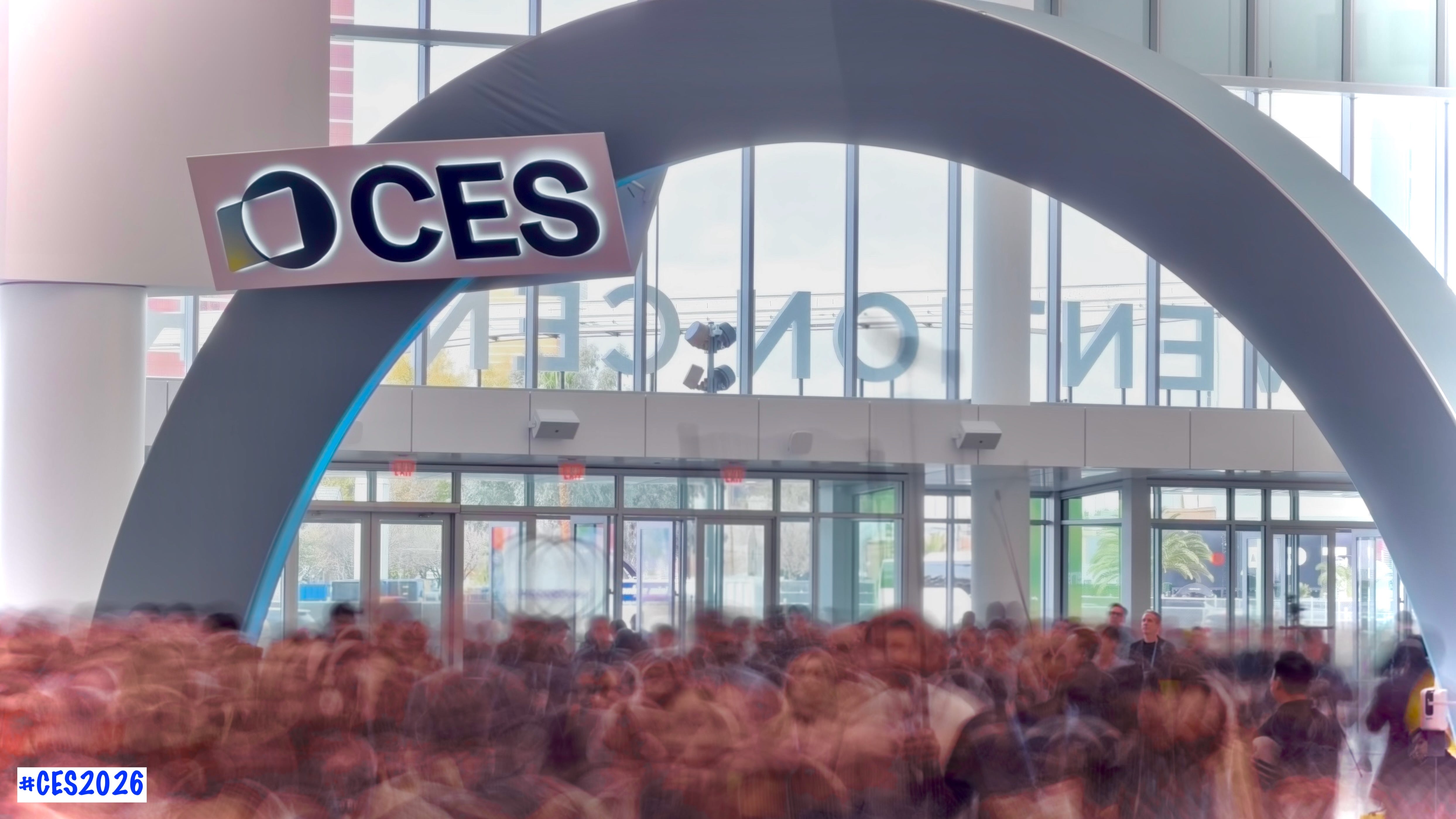
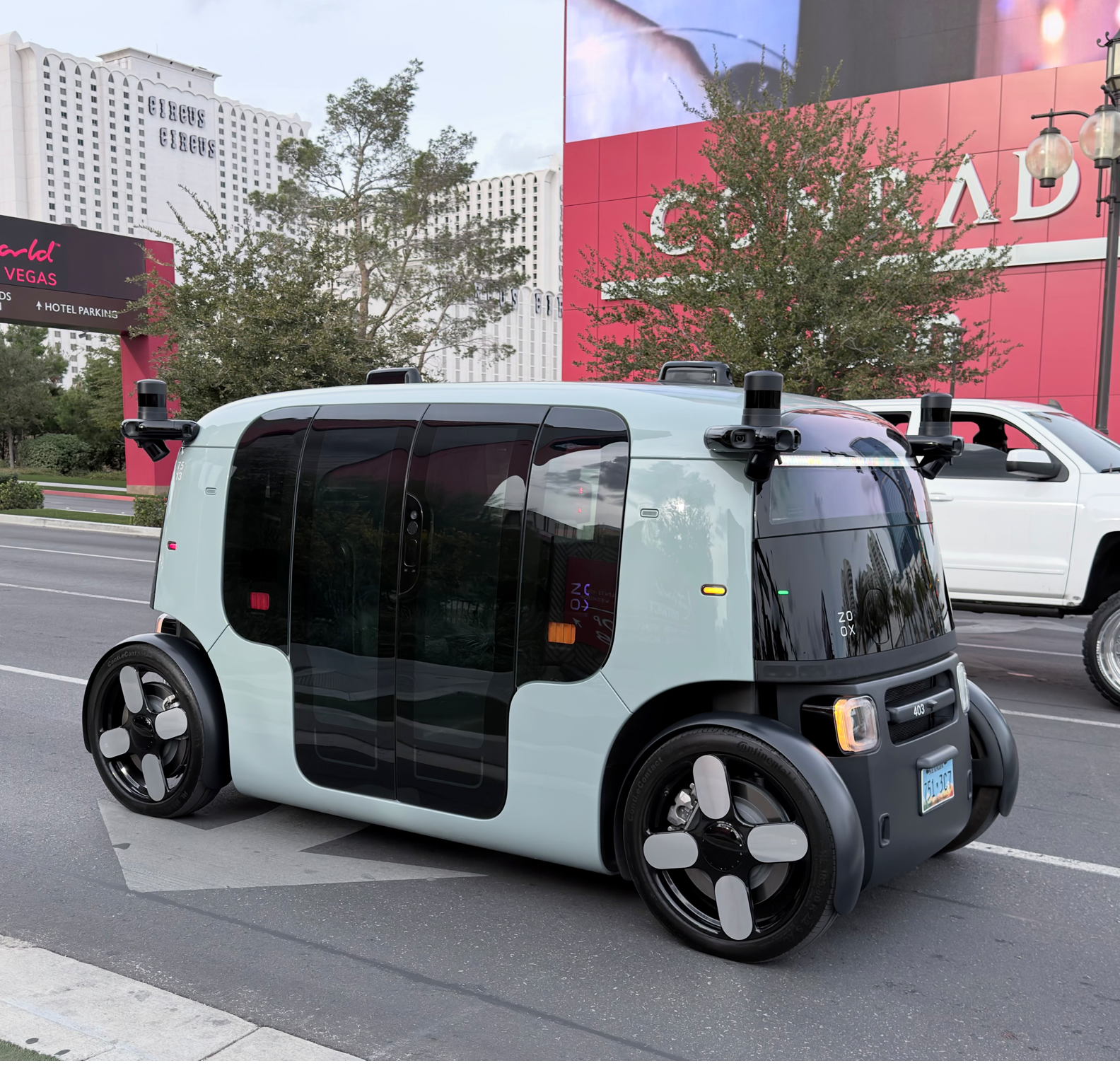
Maybe you must take my word for it, but this year’s CES had a lot of extremely solid advances in things that matter and at the same time the progress is more than just tangible. The old saying “the future is here, it just isn’t equally distributed” applies. For many at the show, seeing the Amazon Zoox picking up and dropping off people on the Strip was mind-blowing. It was just last year that these bubble cars with no steering wheel were just on display on a show floor.
The show was big this year, up over 2025 with 4100+ exhibitors and 148K+ attendees, including some 6900+ media (according to CTA) that compares to 2025 of 4,500 exhibitors, 141K+ attendees, and some 6,000+ media.
The number of exhibitors might catch your attention. My sense is there has been somewhat of a restructuring of the show. There’s always been a tension for big companies over attending with a big presence or just sending the right bizdev people to meet privately in hotel rooms. There was some noticeable shifting this year. Samsung and Sony both left the central hall, as did Panasonic to some degree (making a smaller, boxed in theater-only booth) which freed up a lot of space and dramatically improved the flow of people in what was historically a completely jammed and miserable entrance experience. Samsung set up their own convention within a convention at a hotel complete with reservation times. It was a wonderful experience where you could really see stuff and even breathe at the same time.
The PC industry has long been in retreat at the show. Dell and Lenovo have done primarily small private events for years and even those went away. Instead, this year Lenovo did a monster keynote as The Sphere and had signage everywhere for what they were talking about. I didn’t have the energy for a special trip.
Nvidia followed the Samsung model and at a different hotel set up their own exhibit space. It was branded as a CES themed “The Foundry” which makes a lot of sense. In my view Nvidia is now the underlying technology of the whole of CES the way that “home theater” was for the first generation, then the computer, then the internet, then phones. More on Nvidia below.
With Sony’s absence we also saw Nikon and Canon both pull back. This meant that “image capture” was not represented at the show. There are other places for this such as the NAB show for broadcast or Photokina in Germany. But this made me sad since I love photography.
For the past decade or so, CES was almost an electronics show combined with a car show, a mini-Detroit Auto Show held in the North Hall. The car makers had huge booths with exotic cars or prototypes, and the hall was filled with a vast array of after-market products for car enthusiasts, all of which was difficult to navigate and often only borderline tasteful. The rise of EVs and Tesla brought a wave of high technical car components aimed at car makers from platform batteries, charging infrastructure, and electric motors. Then with autonomy came all the components for self-driving such as LiDAR. By and large all this has been replaced by the broad category of mobility, which for a while meant an over-abundance of scooters. This year the emphasis of mobility was on full autonomy and a bit of general mobility. These changes bring more focus to the show, and the North Hall was once again traversable.
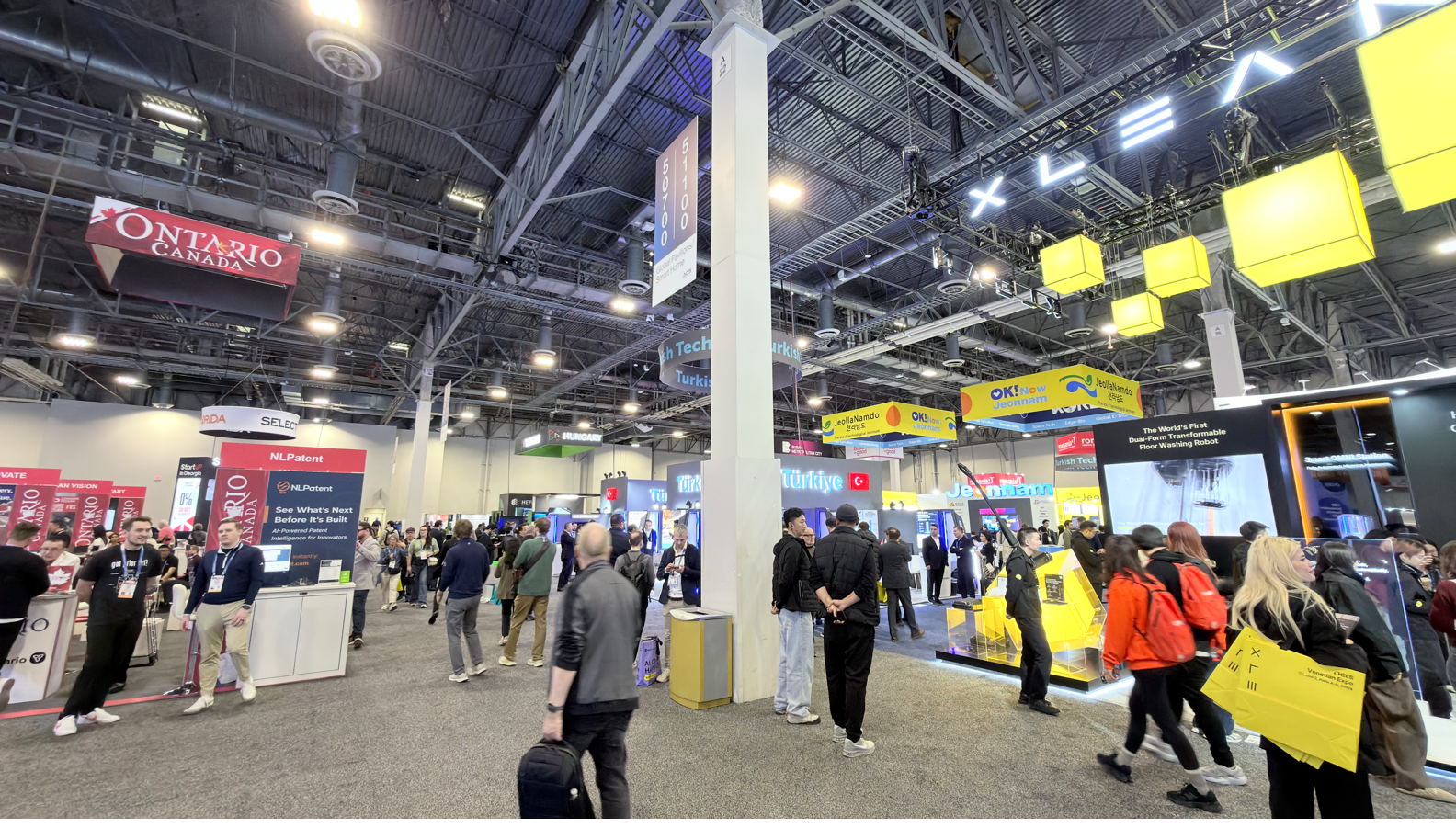
The ever-expanding role of international or country level booths continued. These booths are when some country level agency such as a ministry in charge of science policy or an economic development rents a big chunk of floorspace and then curates startups or other companies to attend. This is an amazing opportunity for a tiny startup in Korea, Romania, or Italy to come to Vegas and have a booth. But as an attendee these are extraordinarily difficult because “country of origin” is not a pivot you care about compared to healthcare, home security, enterprise, or whatever. Plus, navigating the whole show as a series of booths within booths is logistically impossible. That said some countries over-achieve. I lost count but there were at least two-dozen booths sponsored by one of a major Korean university, government agency, or trade group. Japan had two giant booths next to each other representing Japan but neither could tell me who the other was! There are other interesting ways floor space is allocated. For example, the AARP (American Assoc. of Retired Persons) had a large space dedicated to technology for aging and health.
On top of all that, this was the first year without a major part of the convention district under construction. Truly a remarkable decade of remodeling. The amount of super nice exhibit space that is all gracefully connected and accessible with bathrooms and places to get food is an accomplishment. Along with that there are huge numbers of brand-new hotel rooms all easily walkable from the convention center. It kind of blows my mind to think we used to come to the COMDEX show with almost twice as many people with half as much space and half the number of hotel rooms, no food anywhere and hotels were all 2 miles away.
One meta comment about “global trade” which is this year was as global as ever. I did not see or hear any commentary on global trade issues. In fact, I think there was less than last year where booths were out front saying “opening factories in <not our home country>”. There’s a broad set of new normals and it felt like everyone is working through what needs to be done for every market to have new levels of safety and self-determination.
As usual I am going to share a lot. That’s just because I love this stuff. You don’t have to love it as much as me. So here are the sections you can look for:
AI and Nvidia
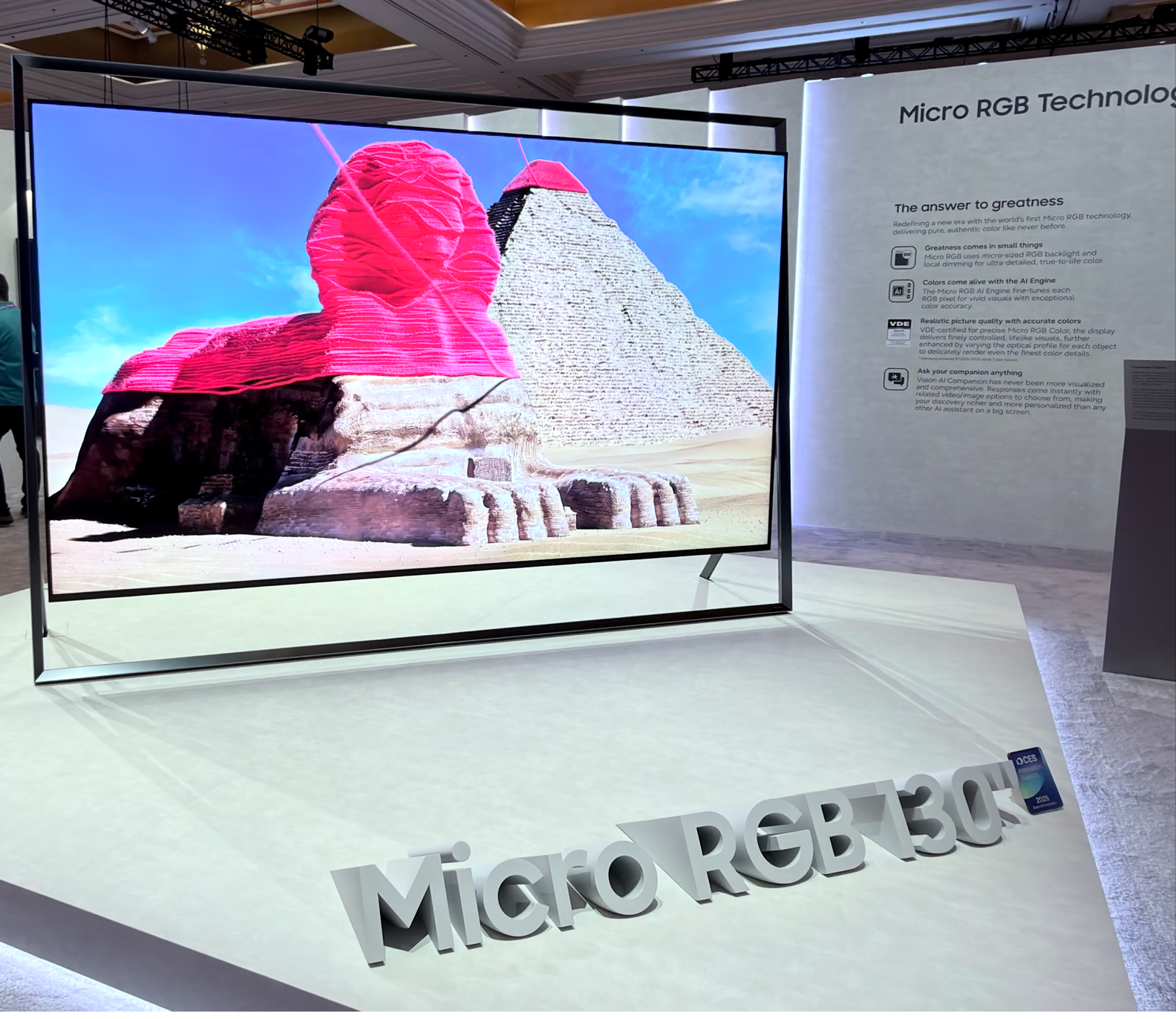
Television and Display (includes my show favorite, Samsung 130” MicroRGB TV)
PC and Tablets (includes my show favorite, Dell XPS laptop)
Home, Automation, Security (includes my show favorite, Amazon Ring products)
Health (includes my show favorite, Triage 360° from Omedus)
Robots
Mobility
Lifestyle and Accessories (includes my show favorite, Roam Smart Tracker)
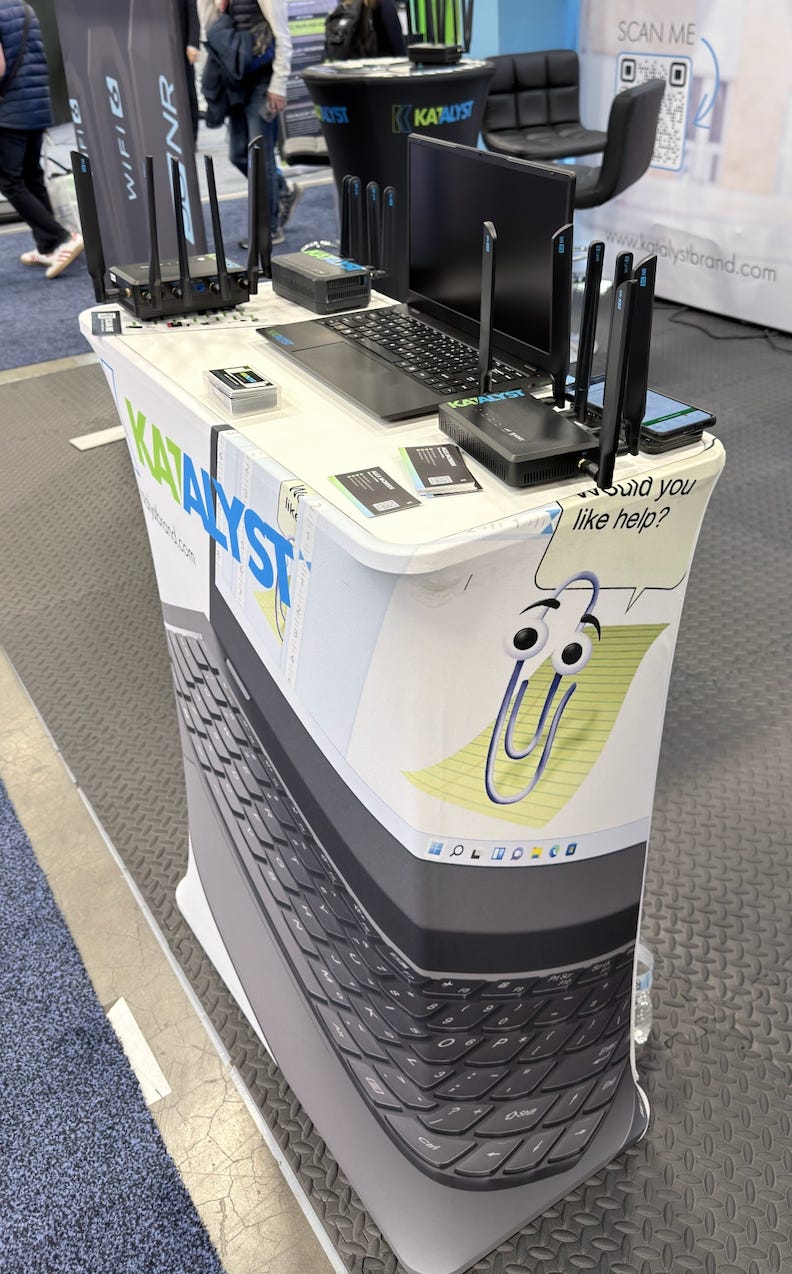
And Finally… (includes…an appearance by Clippy)
AI and Nvidia
It’s been clear for quite some time we’re in the midst of a platform transition. What hasn’t been clear is what shape it will take. The progress Nvidia has made over the past year and the strategy they have has solidified my view they are not just benefiting from but setting the direct for how things move forward in both hardware and software, much more than I think most are saying. My view is that the (stock) market dynamics are making this seem like a battle where there will be a GPU winner and an LLM winner. That pre-supposes the next platform is LLM based but I think that is too narrow a definition.
The question people should be asking is who is leading in a compute platform—it is not only LLMs that are the next platform but a switch from algorithmic computing (bound by instructions per second) to data computation (based on model computations or “tokens” broadly defined) per second.
The race is no longer about MIPs, megahertz, or parameters but about computing on tokens. As with those old-style measures, tokens will have infinite demand and essentially infinite supply, and the price will continue to drop. And like those other measures the availability to compute on tokens across an entire network (the “edge”, devices, datacenters, hyperscale) means that whoever has a strategy working across all of those is the de facto leader in the platform.
Nvidia is the leader. The signage saying “The Next Generation Begins” is not aspirational. It is predicting the present.
Nvidia
Nvidia is executing better than any previous leader in these shifts in a more dynamic and fast-paced environment—better than IBM and mainframes, DEC/Sun in mini/workstations, better than Microsoft with Windows, or Google and the internet. They are executing at the level Apple executed from 2006-2025, but doing so in a way that drives an entire industry at every level of the stack not “only” (not trying to understate Apple, just contrast) at the app ecosystem level. Nvidia is executing like a combination of Microsoft, Intel, and Open Source all combined. It is incredible.
Nvidia brings software assets and a surrounding ecosystem at multiple levels, proprietary APIs unlike any in the market and open source contributions on par with any one else. They bring hardware from the edge to devices to hyperscale, not just compute but networking, sensors, and more. They are marshalling the “old” PC ecosystem in new ways to redefine what it means to even be a computer.
Author’s note: We bet on and with Nvidia to redefine the PC when we built the original Surface computer. While I am biased in favor of Nvidia today, I kind of feel validated. Read what it was like to Launch Windows on ARM with Nvidia at CES January 2011.
At CES 2026 Nvidia had a show within a show, first with Jensen having a pre-exhibit keynote where he among other things announced the latest GPUs are in production, and then with a large-scale set of booths at a hotel off the show floor. The square footage wasn’t huge, but the density of technology matched most of the rest of the show combined.
One aspect of the booths that really put me back at Microsoft twenty years ago was that the booths were staffed with line engineers showing off their own work. I had a half dozen conversations and listened in on a dozen more and was simply blown away. Nvidia is simply executing at the most phenomenal level with incredible talent that can easily answer rapid fire if not always on-point questions. The only other company that could do that today would be Google, but it isn’t the whole company the way it is at Nvidia. The breadth and focus are what you notice.
Some examples for me were robotics, autos, biological discovery, and of course machine learning. Each of those stations was the absolute pinnacle state of the art. And all represented real products with real partners making real progress. This was not demoware. It was like being in the Windows booth in 1996 after spending the night putting signs on every computer on the show floor proclaiming “Windows Compatible”.
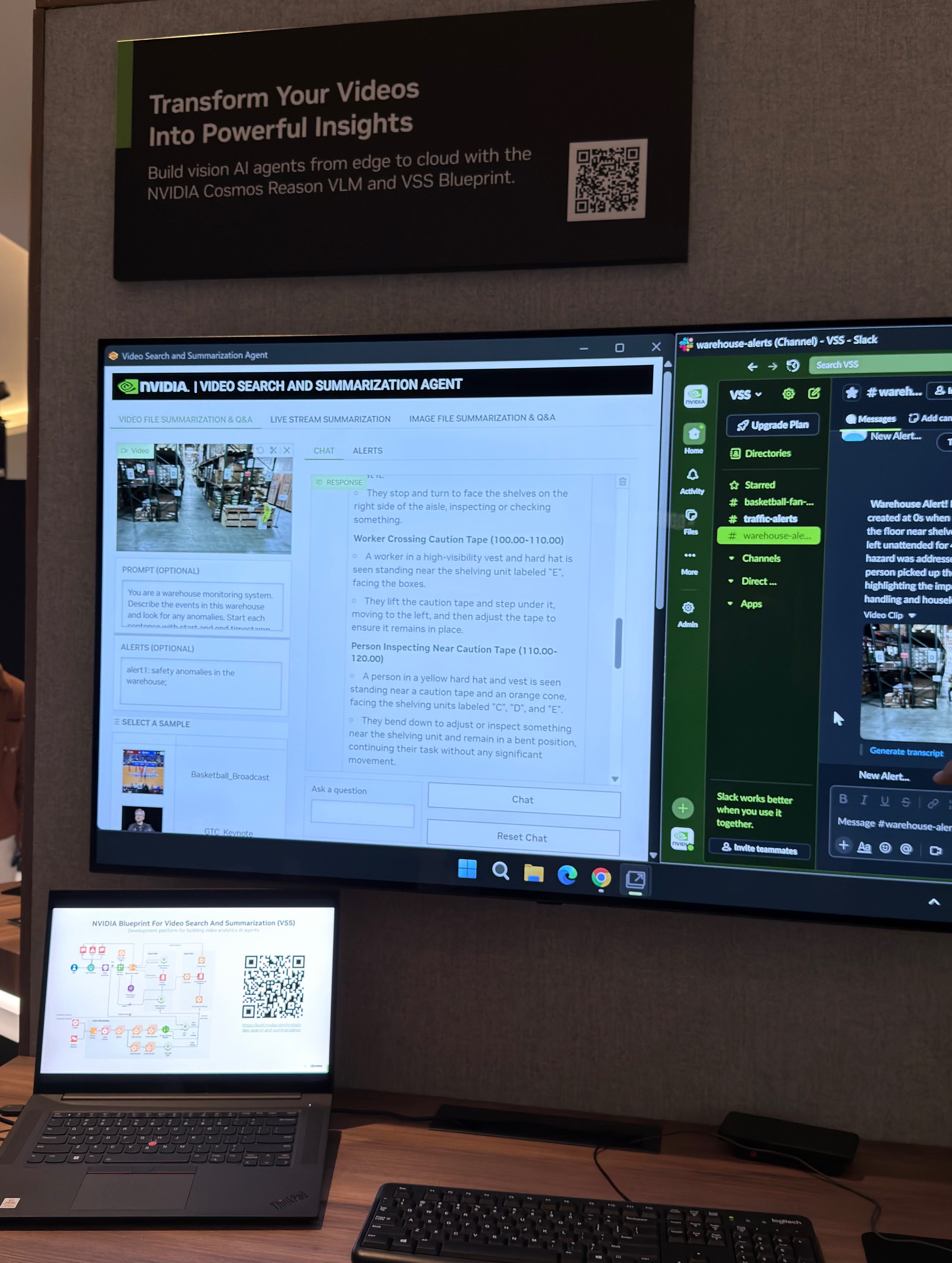
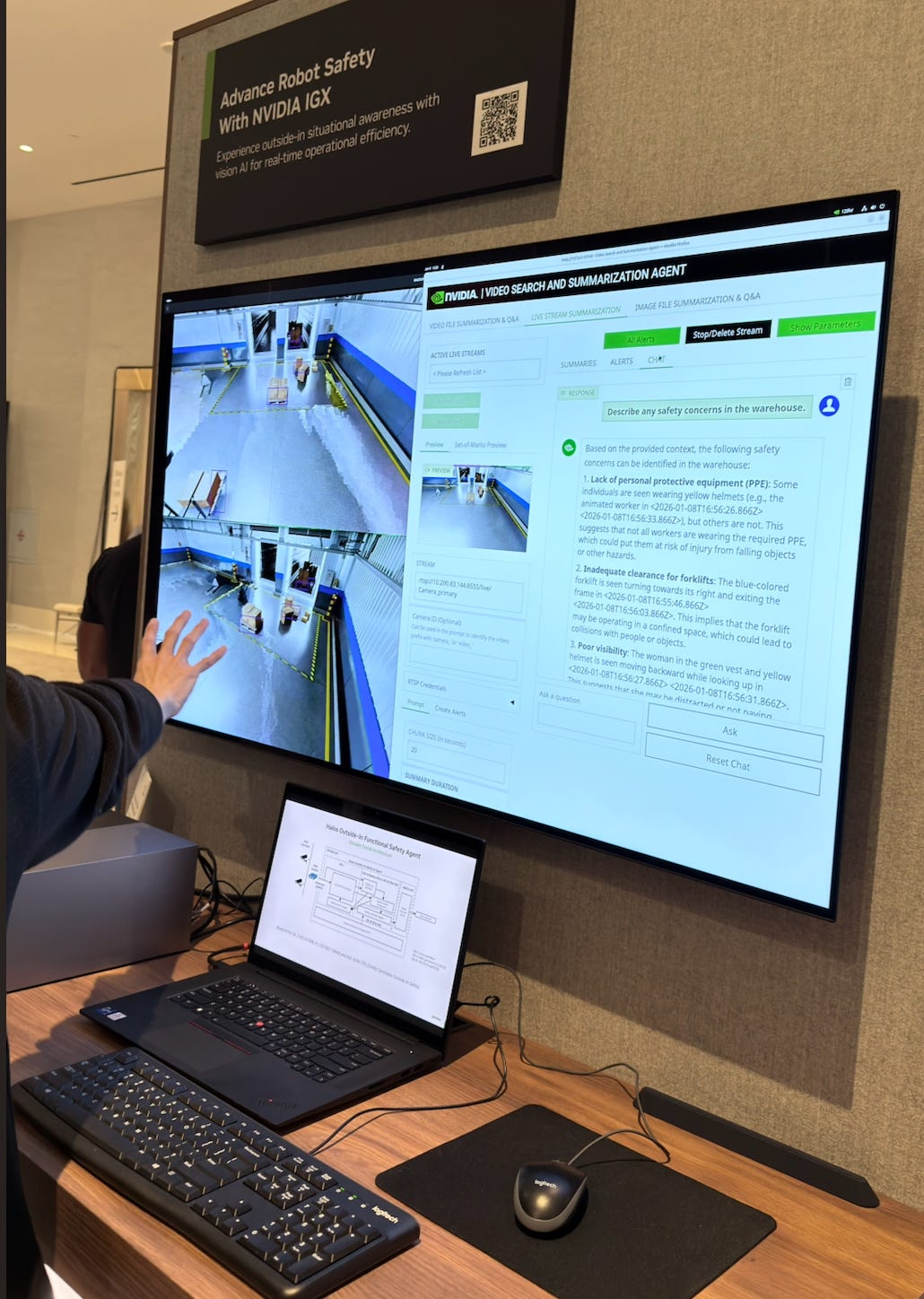
Below is an example that can be seen in many contexts (security, manufacturing, etc.) of real time video processing but what you can see here is the “platformization” of this technology – the hardware, software, device integration, all coming together. It’s just one example. Another example follows which is another full-stack showing integration with robots for the purposes of ensuring safety.
There is a separate section below on PCs/Tablets showing traditional PCs. Nvidia was showing where PCs are heading. While AMD might also play a role here and fingers-crossed that Intel can pull something off, the modern PC is being defined right in front of us. A modern PC starts from the assumption that AI compute will happen on the PC where it will be free, low latency, private, and continue to improve exponentially. The modern PC will do a lot of what we call inference today on device. And like every era the most important step is when the device can bootstrap—that is the device can be used to build itself. We’re already seeing that and it is almost certain that soon enough it will be a routine part of development to do AI coding on device.
I know some will doubt that but I also lived through people saying a PC will never be powerful enough to develop PC software (note, the first versions of Word and Excel were only debugged on Windows but cross-compiled and Windows graphical tools were not used by developers until the 1990s and even then most did not use Windows until NT). I also lived through people saying the PC would never be a powerful server, yet here we are.
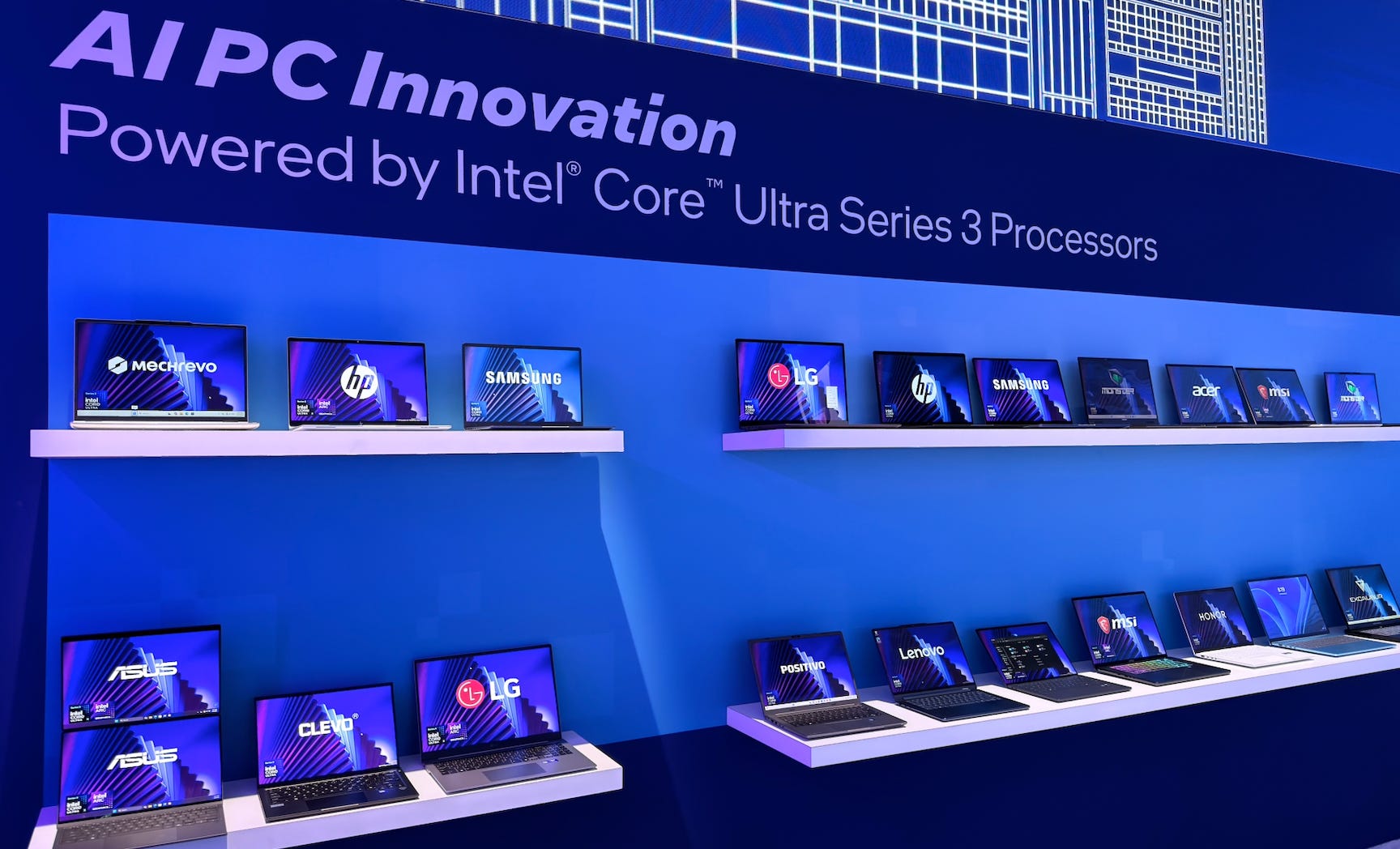
With that context and building on the Nvidia announcement a year ago of the Spark DGX platform (a full stack computer running with an NVIDIA GB10 and MediaTek CPU, etc.) was this full display of DGX compatible devices from all the major OEMs. If this sort of display looks familiar it is because it is exactly what Intel was showing for laptops. This is the sign of an ecosystem bootstrapping. This year we’re seeing the tower version with a GB300 with Dell and Gigabyte announcing them. While these might be seen as developer machines or just “OEM packaging” that is how the Windows ecosystem works today. These computers can be used in labs, for deployment of apps, and for developers.
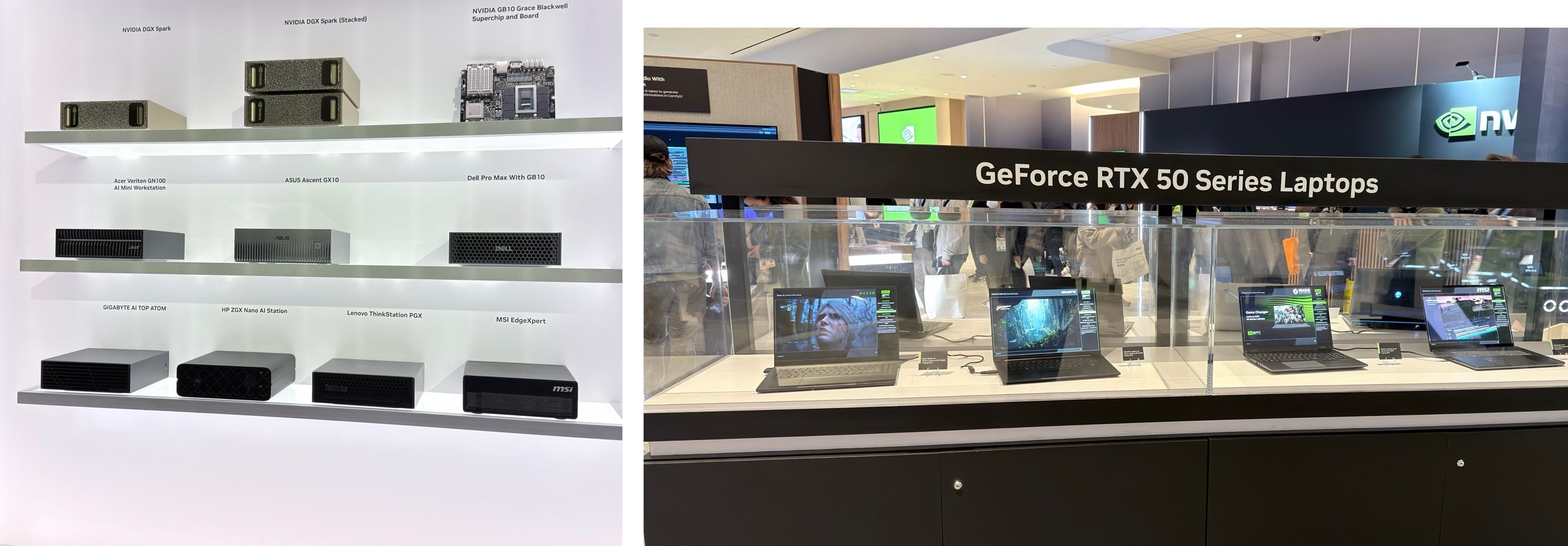
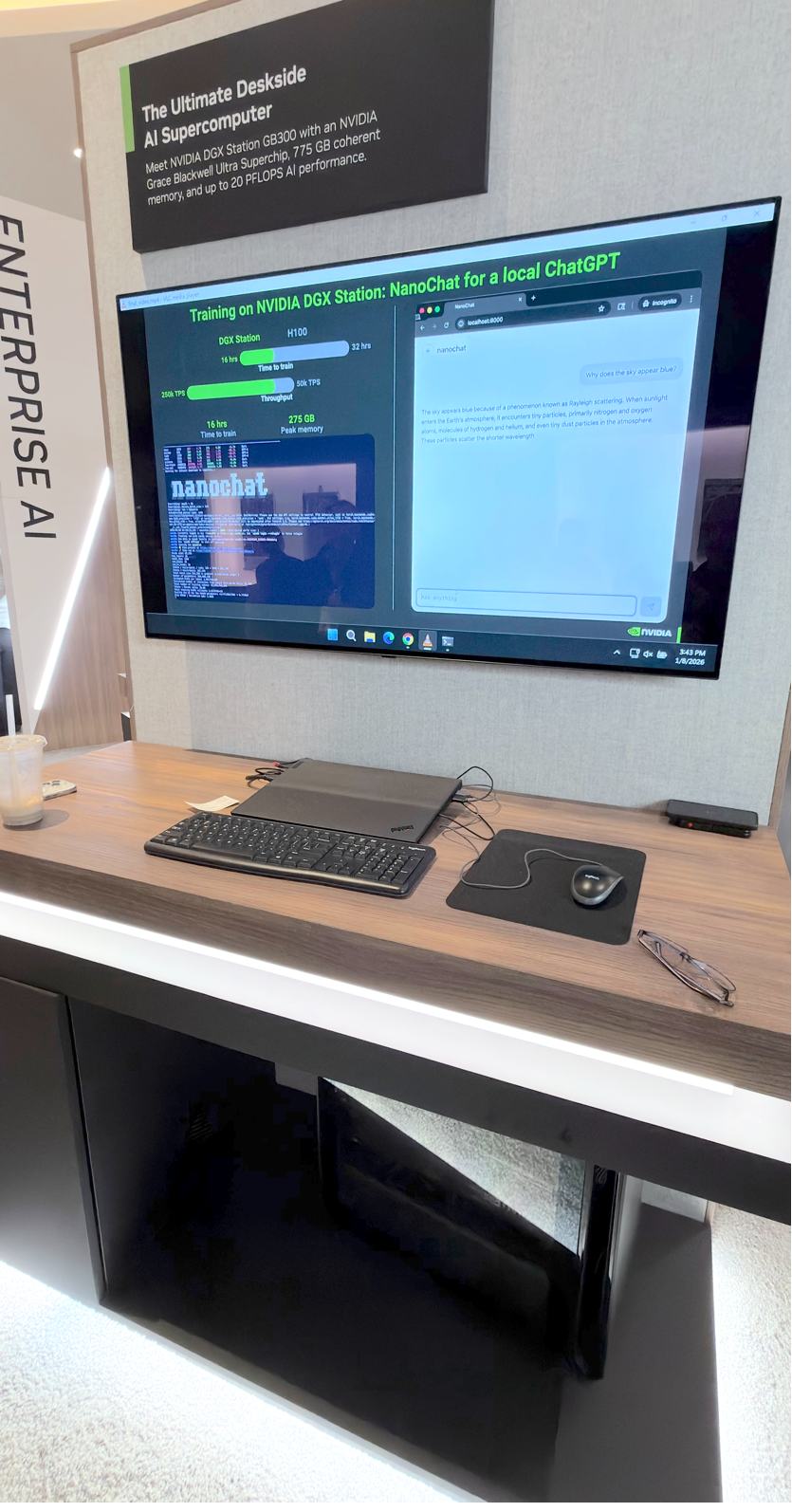
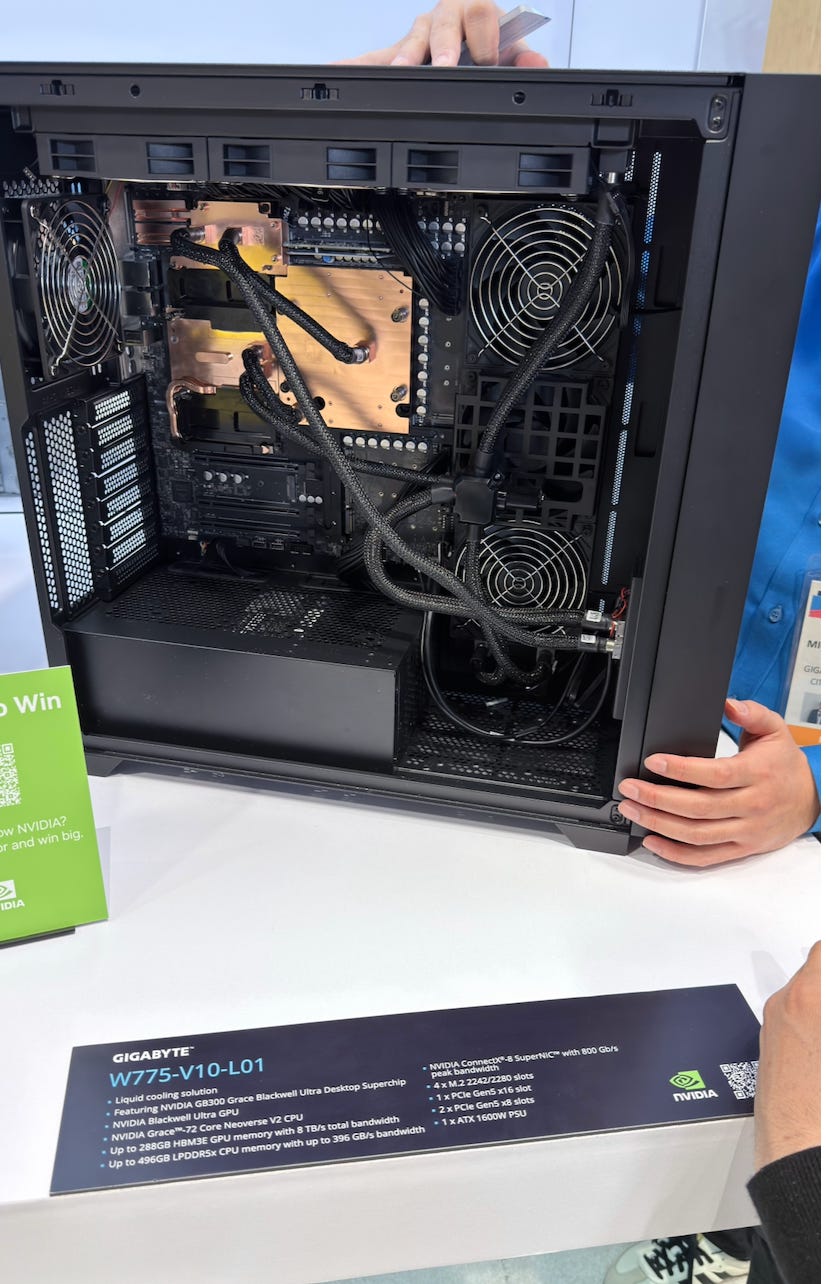
At the other end of the spectrum is where Nvidia is positioned in traditional PCs and here you can see Nvidia penetrated at the highest level. While these are often positioned as gaming (or professional graphics) level PCs, they are also indicative of the demand for Nvidia’s APIs across devices. It should be clear that the Nvidia software layer is becoming more mission critical to the kinds of applications being developed today, and while simply running AI in the cloud and relying on a traditional browser might be enough, I am convinced more and more will migrate to a local device where it will be more economical, more private, and more responsive to end-users.
AI Broadly
If you take my assertion that AI is the platform technology and Nvidia is the key enabler and first software on that platform, the next area to observe is what is this technology being used for. Below will describe mobility, home security, health, and more. We are seeing literally everything get touched by AI. People will want to know or assert the killer application. It is clear chatbots and generative text, video, audio are wild new applications but that is just the start, and it isn’t even clear if those generative applications will be the anchor. AI will be an ingredient in all existing areas software solves problems and will also create whole new solutions breaking down existing barriers. This is just like the graphical interface or internet or cloud.
The key inflection point we are at today is debating whether AI brings new solutions or is simply an ingredient to be used by existing solutions (and importantly software companies). If you were around in the late 1990s this was exactly the debate that was had about the internet. Then in the 2000s that was the debate about cloud. Reality today tells us that those were ingredients and by and large the software and hardware in use today are new companies and categories, even if the large existing companies continued to dominate the markets they created by using the new technology as an ingredient.
Across the show floor, particularly in the startup and smaller country booths (also startups) there were thousands of companies essentially doing “AI for <X>” where X was as broad as you can image. AI to:
diagnose a disease, read scans or labs
review or summarize an industry document
secure web traffic, detect phishing and spam
translate, dub, transcribe, caption text or video
choose ingredients and cook food
determine nutrition of a meal
water and fertilize plants in a pot or in the largest of fields
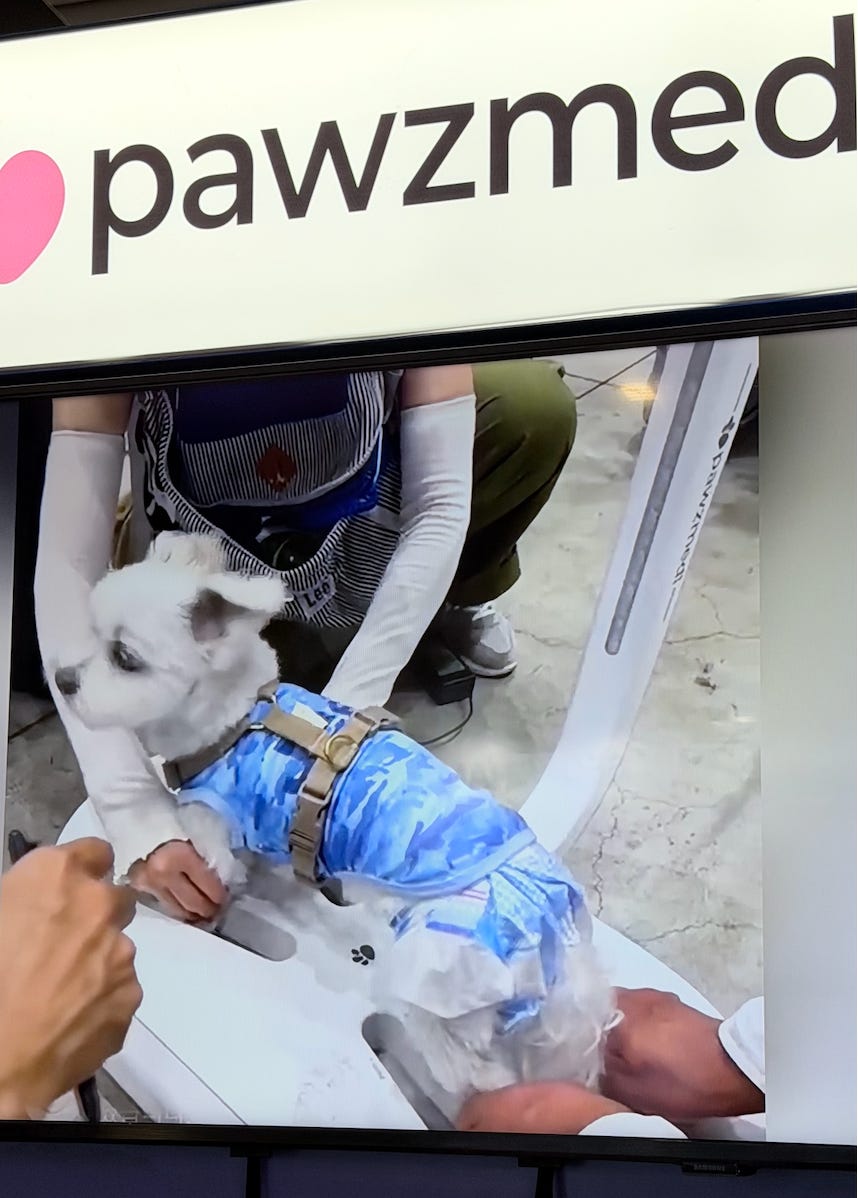
monitor and manage pet behavior and health
select proper lighting and enable a vast range of lighting scenarios indoors and outdoors
profile car and truck tires for wear and safety
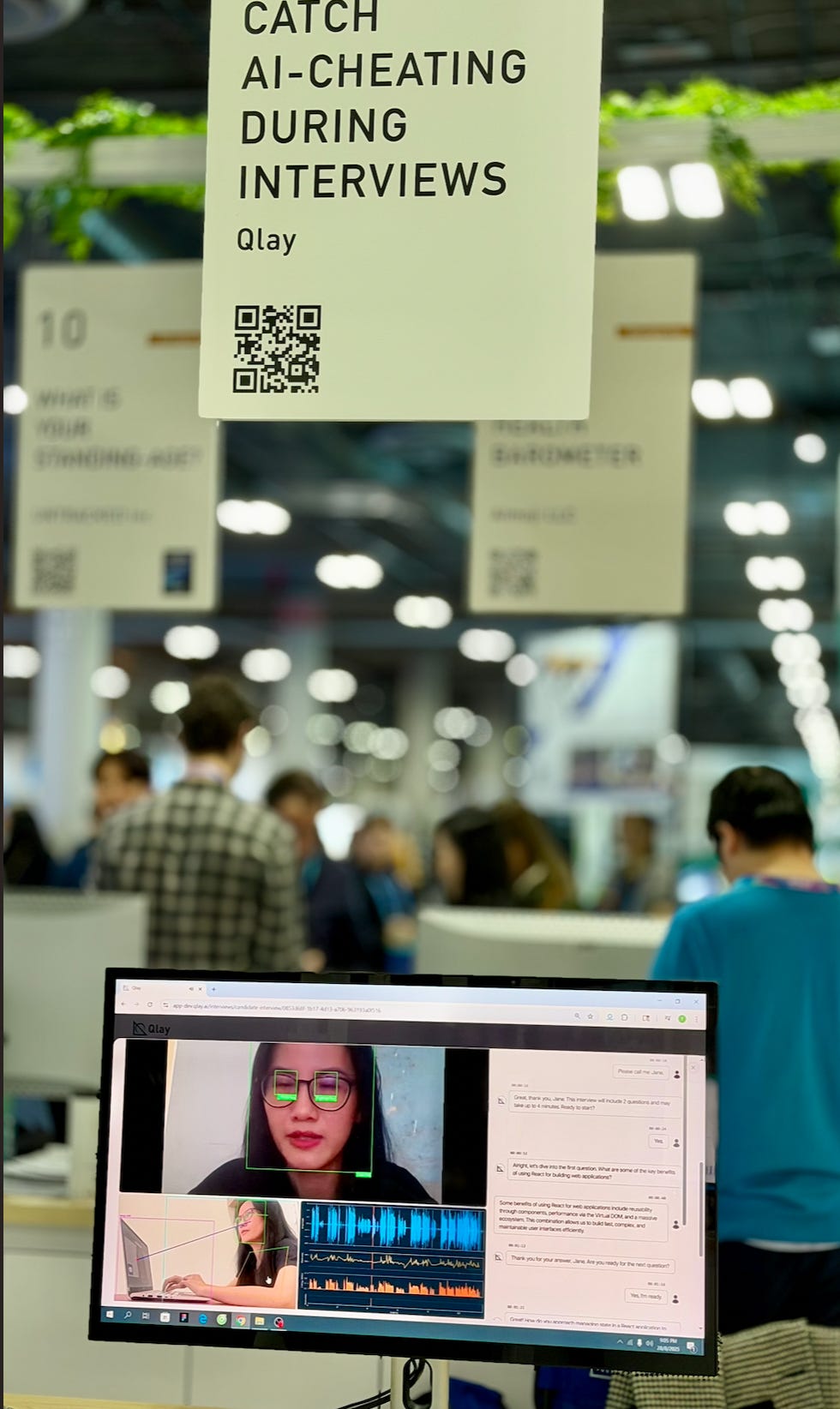
detect cheating on exams and in interviews
coach people at work after an interaction with a customer, partner, or collaborator
improve support documents for readability and utility of complex “manuals”
As I walked the floor at every corner I was blown away by the companies with specific AI enabled scenarios solving actual problems in what might seem like narrow domains requiring domain knowledge to even approach the work. A few readers might know, but the original software market included highly specific software for farming, medical offices, construction, and real estate management (check out an early RadioShack catalog or here). The sign that something is a new platform is seeing all the above reimagined or done for the first time with the new tools.
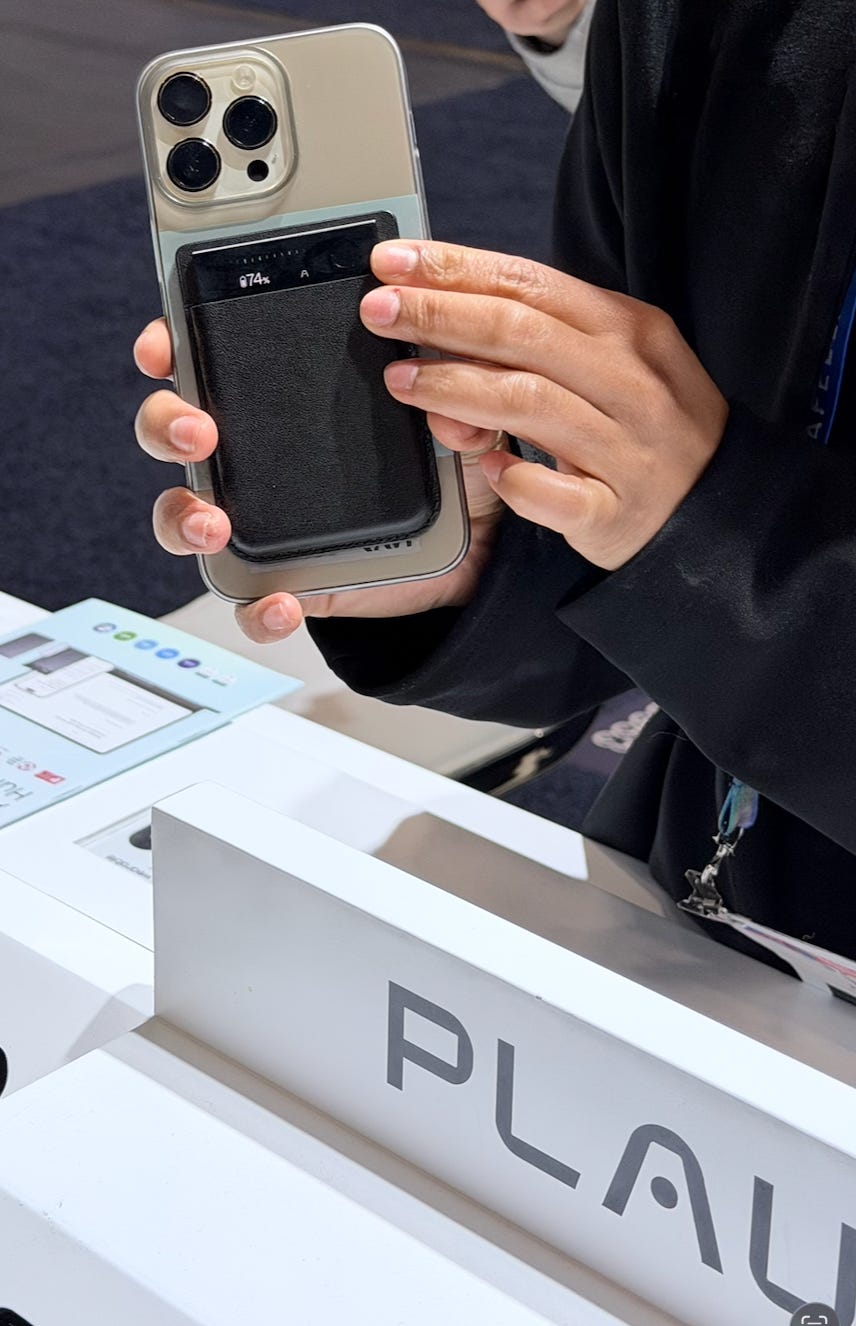
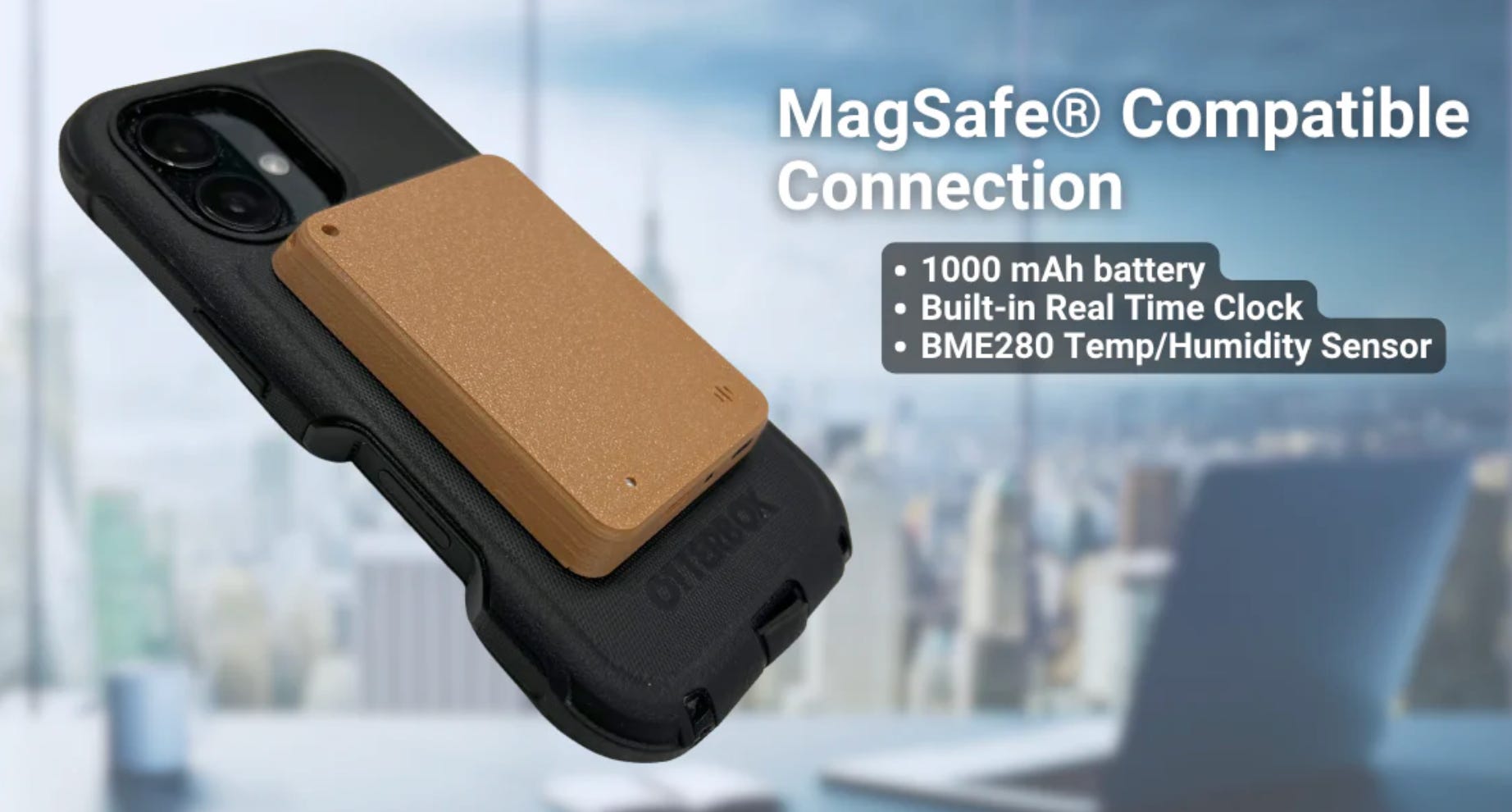
There are also many solutions using a frontier LLM platform directly. I saw a dozen devices that in one form or another recorded conversations or notes to myself then with a phone and app provided transcription, organization, and follow up. These even took the form of MagSafe connection to the phone. This one by Plaud is an example.
Amazon recently acquired Bee computing and was showing off their Bee Pioneer ambient computing band. I think we all expect this space to see a resurgence as the models have dramatically improved.

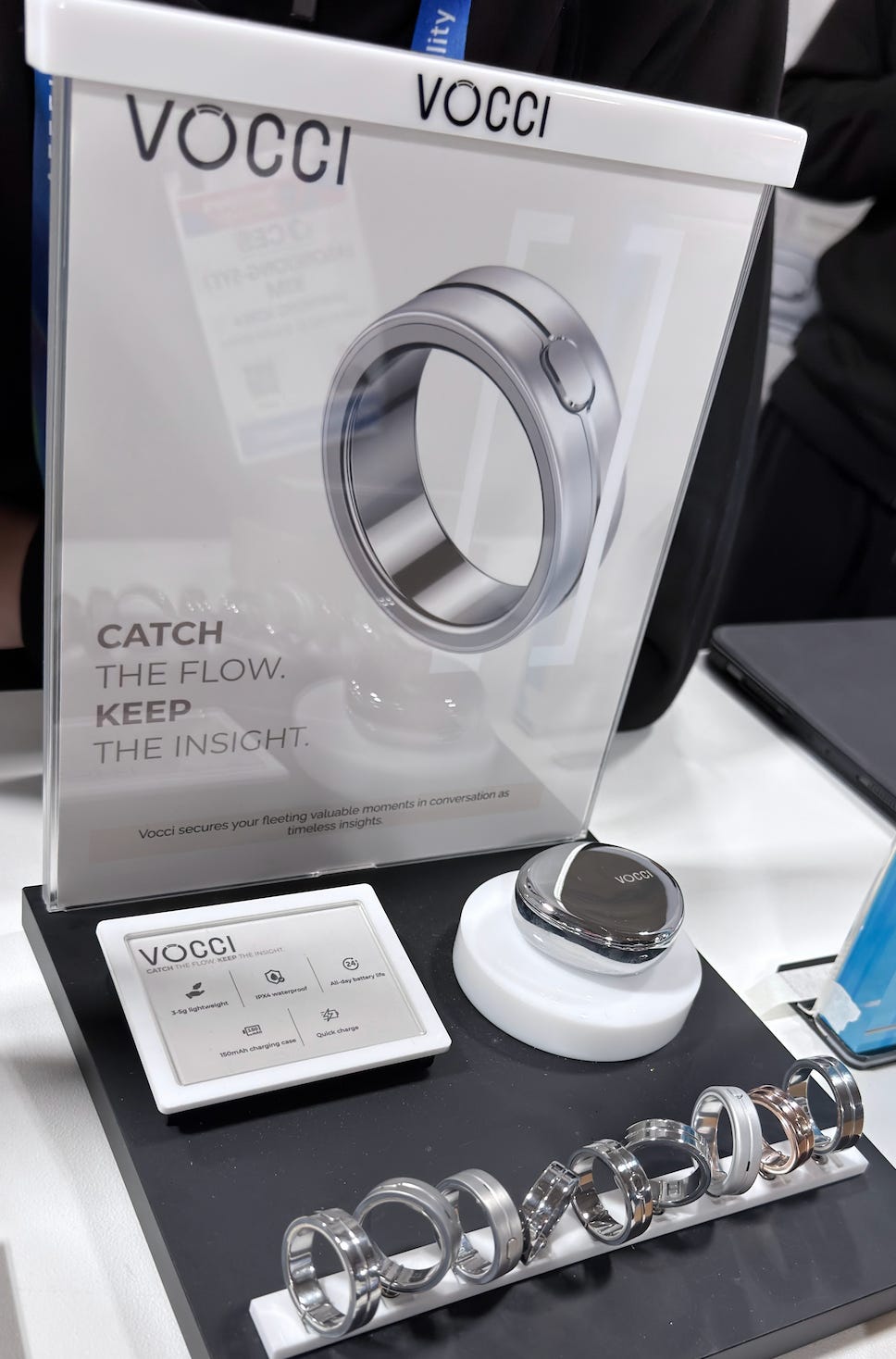
Vocci expressed ambient computing in a ring form factor. The ring has a tiny button on it to start/stop recording and a companion app to provide transcripts, summaries, organization of notes. I am extremely uncomfortable with this sort of recording without notification.
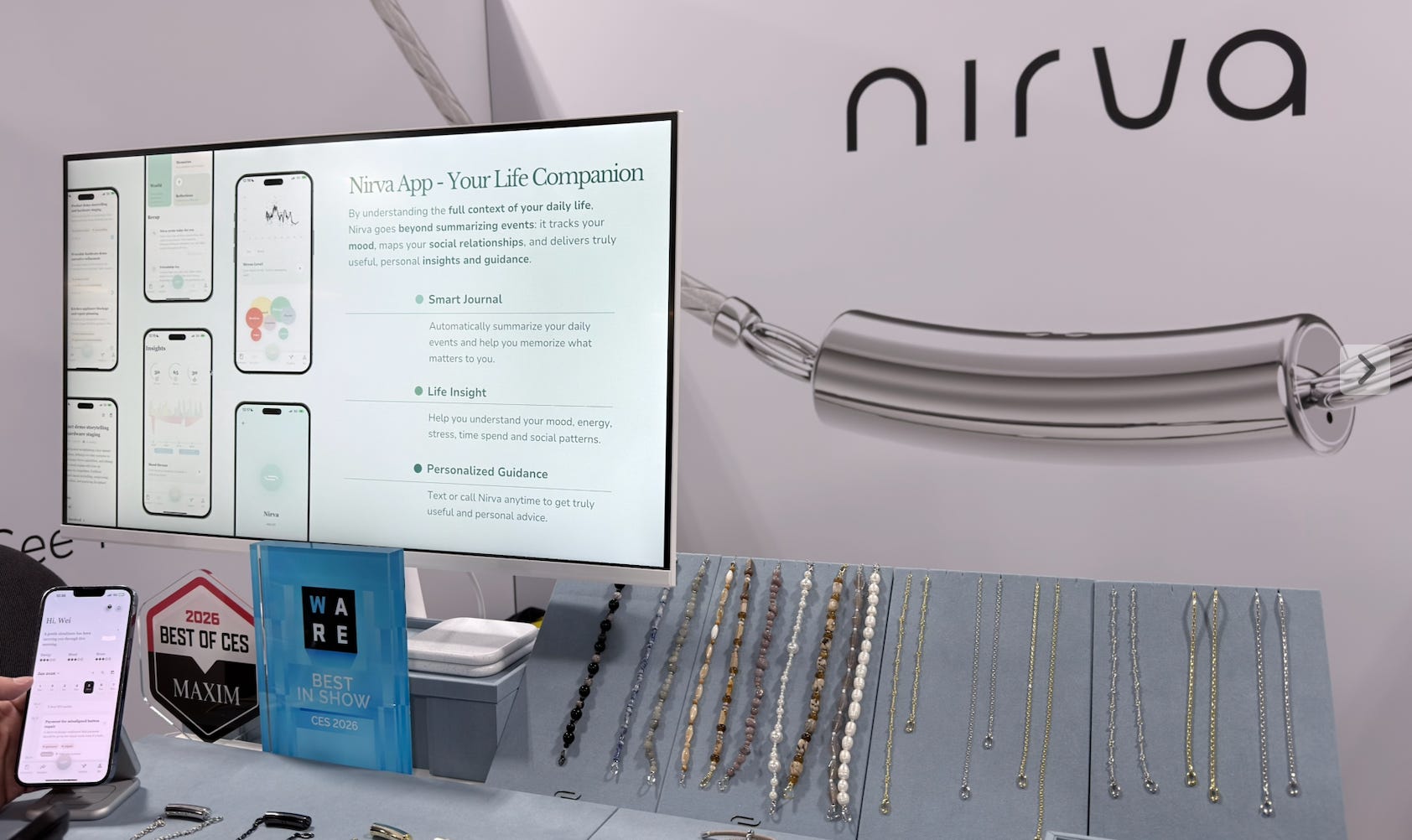
Nirva is a company more focused on journaling and mental well-being with jewelry providing the microphone and recording. It aims to go beyond recording and summarizing as “it tracks your mood, maps your social relationships, and delivers truly useful, personal insights and guidance.”
One thing many new AI applications are confronting is the concern over privacy, particularly when using the frontier models. This is driving a wave of innovation where capture and processing are happening on devices or even as a private cloud. For me this continues to reinforce that what was fancily call “the edge” today is really about having a device that does the work locally will be cheaper and more private.
In that spirit there were quite a few “devices” that are essentially AI-computers, which are really building a new kind of PC that has the GPU-compute capable of running the AI software that matters. We saw the full devices on the Nvidia platform but there were others. One I thought was cool was Tiiny AI. Tiiny connects to your existing laptop and provides a local web interface to the compute engine capable or running an array of models locally. The software layers is essentially an AI workspace. The hardware in the small box provides a long-term memory of your work, connection to your local data, along with 80GB RAM and almost 200 TOPS (whatever that might mean!)
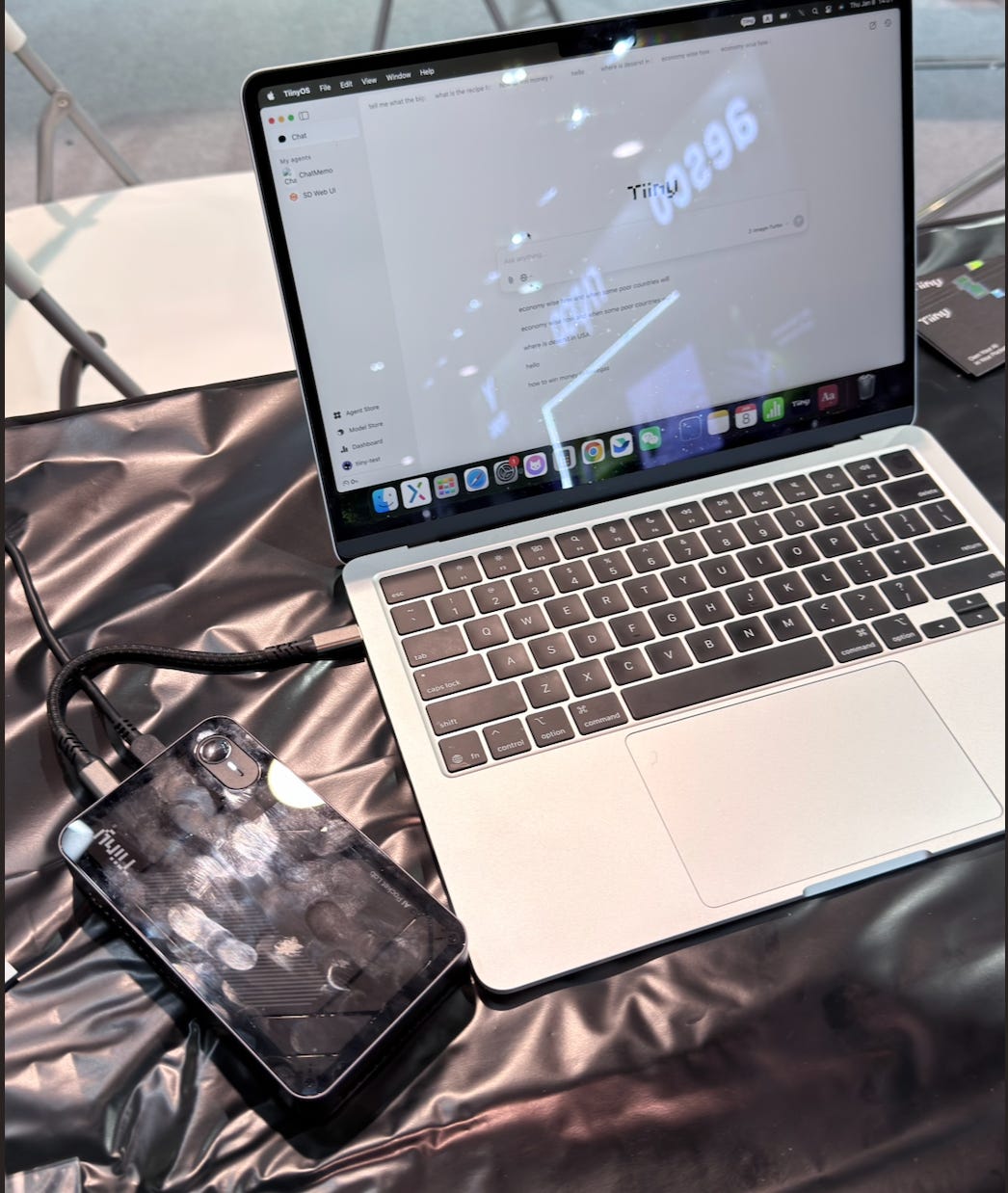
Tiiny is a companion device. At the higher end are mini-pc form factors like the Minisforum MS-02 which is a full PC form factor that can be stacked/daisy chained for even more capability. While a variety of these exist, they all run Linux and open source models on top of combinations of AMD, Intel, and Nvidia hardware. My view is these are a stop along the way to a more converged hardware standard, aka Nvidia.
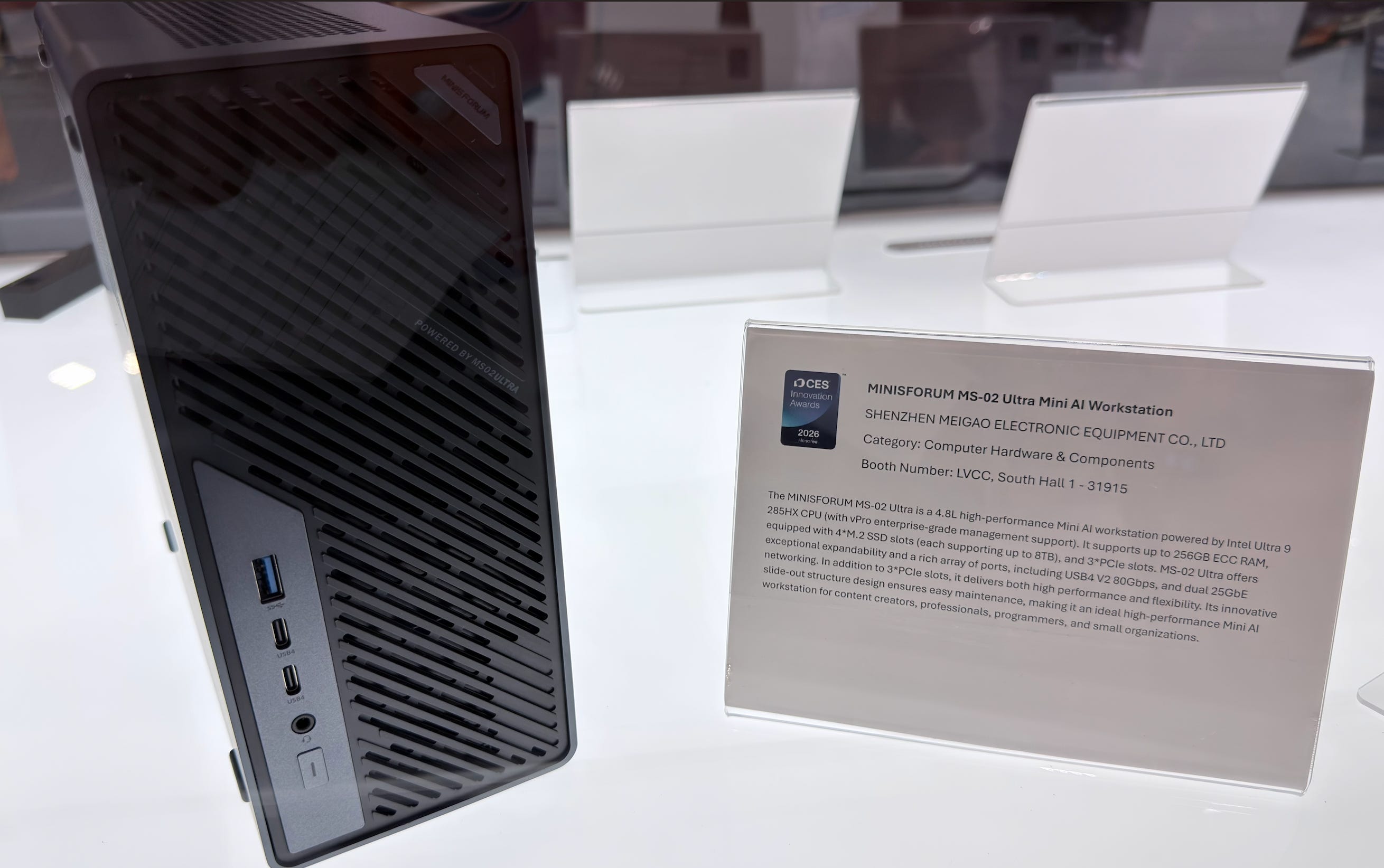
I don’t see this activity for local compute abating even as the frontier models from hyperscalers continue to dramatically improve. One could point to the increase in “on-prem” data center efforts for either traditional workloads (private or secure cloud) or new AI workloads.
Finally, in the first year or two of chat and LLMs there was a view that many of the newest “applications” were simply “LLM wrappers”. This was a common claim at the early days of the graphical interface as well—new products look like most of the product is just surfacing intrinsic capabilities of the underlying platform, in that case windows, icons, menus, and so on. This is because there’s a perspective that the new capability from the underlying platform is the “hard part”. One look at Excel and we can see that those claims were never really true.
Still, CES had quite a few products that early on might appear to be easily subsumed by the model itself. Time will tell. For example, there was Loona a consumer robot that is essentially a friendly interface to a GPT model. It provides a speech and expression-based interface to GPT capabilities. It is a physical version of the prompt engine you interact with using speech and audio and a bit of vision.
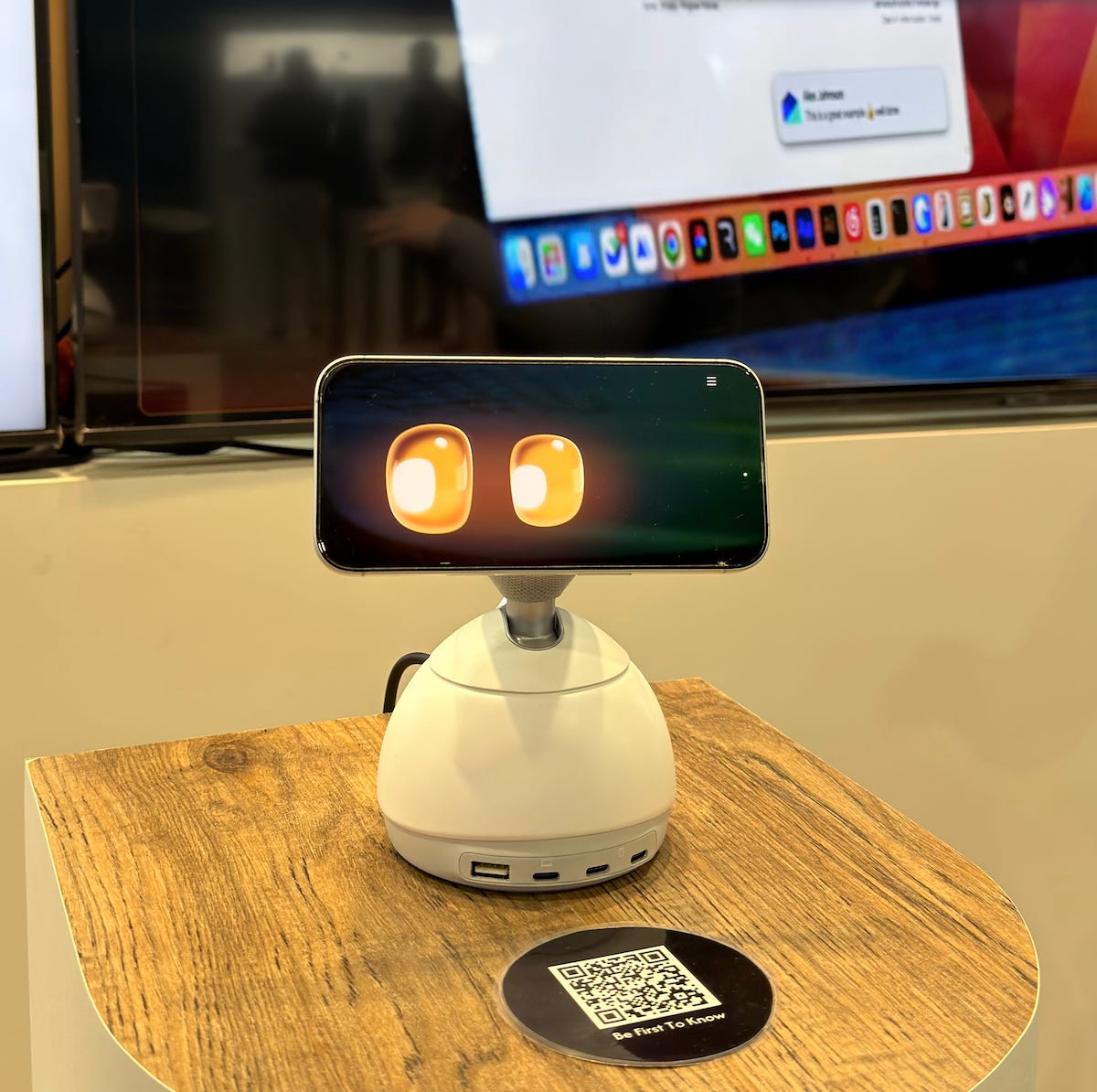
Very clearly CES lived up to its marketing and innovators in AI showed up in all forms. The debate over feature v. product v. company will continue. I would assert the answer to that will not change the fact that all of these scenarios will indeed be solved with AI-enabled software.
Television and Display
Some years of TV are about form factors like flexible, curved, or 3D and those years seem to come and go. Other years are about thinness or bigness as the main theme. You walk about not so impressed and think “these people aren’t doing anything”. Then in really tragic years it is all about “smart” and TVs try to turn themselves into computers and most people get frustrated and wish they would just make great displays because the idea of signal has been completely separated from TV and 100% of tv buyers have a phone and/or a streaming box. All while we’re thinking this as consumers the number of displays in our lives compound exponentially (we carry and wear one, drive with several, and there are countless in the home and at work). Even so, the business is absolutely brutal and has leveled massive companies in the past – RCA then Toshiba then Sony – and has proven difficult for even the biggest Chinese companies to break into (Haire, ChongHong). Today Korea overwhelmingly dominates between Samsung and LG.
This year the two companies showed exactly what we all want to see which is innovation in picture and sound. The new displays are really incredible in color, thinness, size and soon price for early adopters. The buzzword this year was “RGB” with modified of Mini and Micro. In fact, if you take RGB, Mini, Micro, and LED you can mix and match and create any sort of new display tech you want. I was so confused. And the vendors all add modifiers like EVO (evolution) and Next Gen to confuse even more. Here’s the best I could do to explain for a world where we know LED and OLED and “O” is better:
Some of the permutations and combinations of LED, RGB, Mini, Micro, and organic include:
(Today’s Best) OLED self-emissive (no backlight) display where each pixel produces its own light and color, enabling perfect blacks. Can be made FLEXIBLE.
(Today’s mainstream) Mini LED: LCD that uses tiny white LEDs as a backlight, improving brightness and contrast through zone-based local dimming. Rigid.
(Latest) Micro LED: step up from OLED with self-emissive (no backlight) display made from microscopic inorganic RGB LEDs, OLED-like rendering with might higher contrast.
(Latest) Mini RGB: LCD approach that replaces white backlight LEDs with red, green, and blue mini-LEDs, allowing more precise color but still has an LCD layer.
(STAY TUNED) Micro RGB: self-emissive (no backlight) display where each pixel is made of microscopic RGB LEDs, making for super thin and near borderless panels with near-borderless.
The bottom line on displays is we’re in for a step function increase in blacker blacks, whiter whites, thinner bezels, and much thinner TVs.
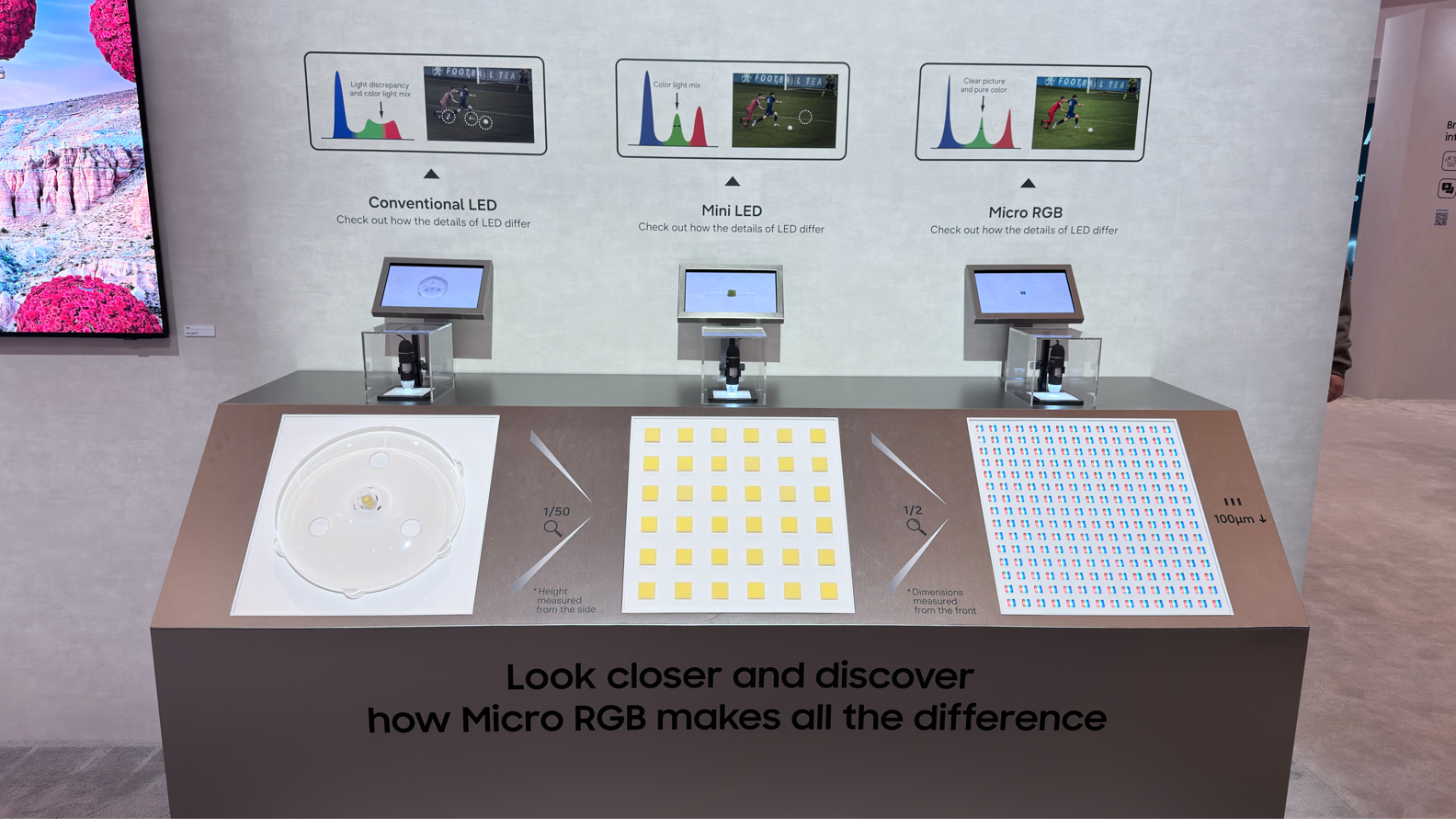
Are you still confused? Me too. I’m sure I messed that up. I swear if you wanted to confuse a staff person ask them to compare/contrast or even define which tech they were showing off.
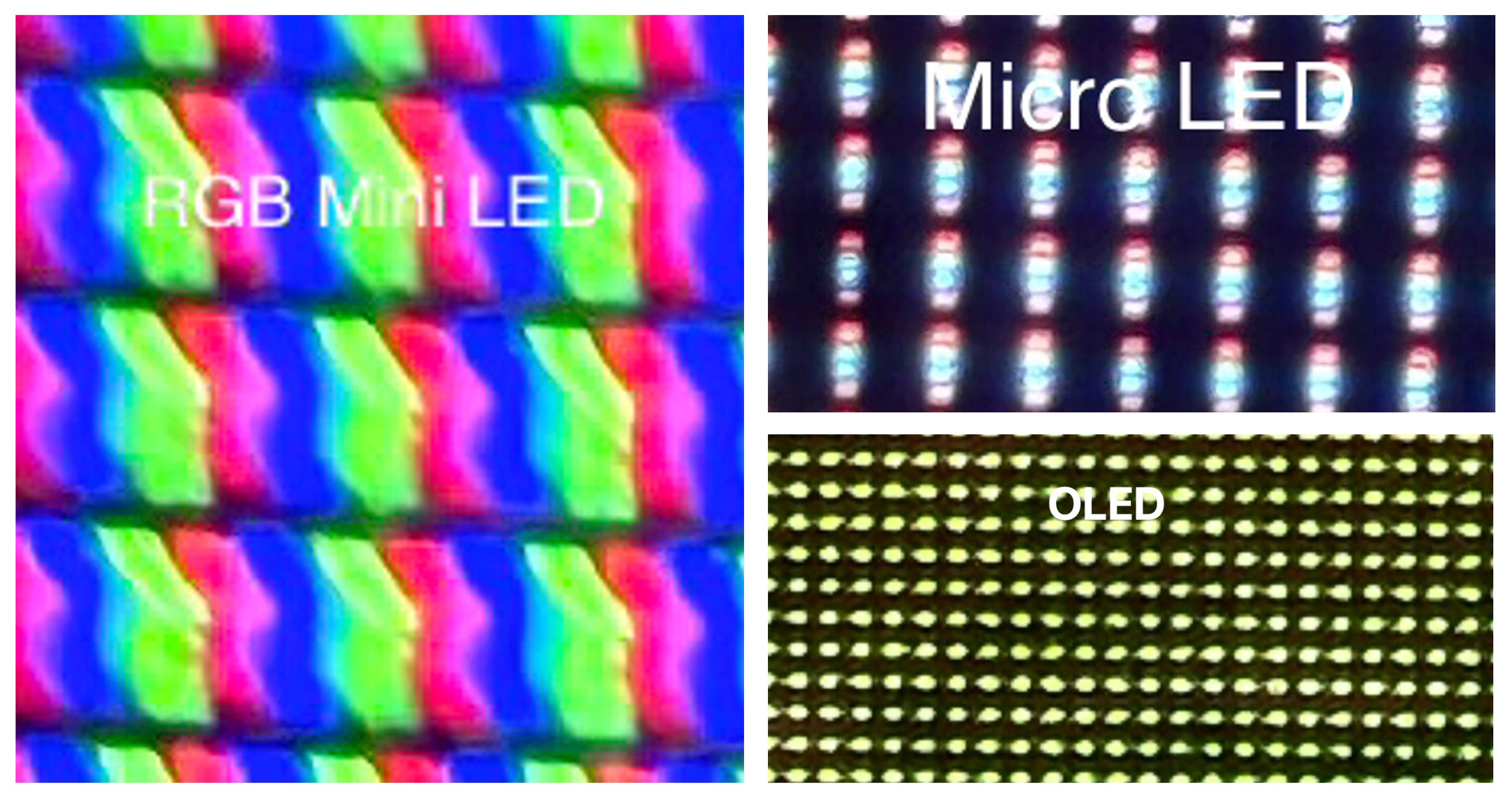
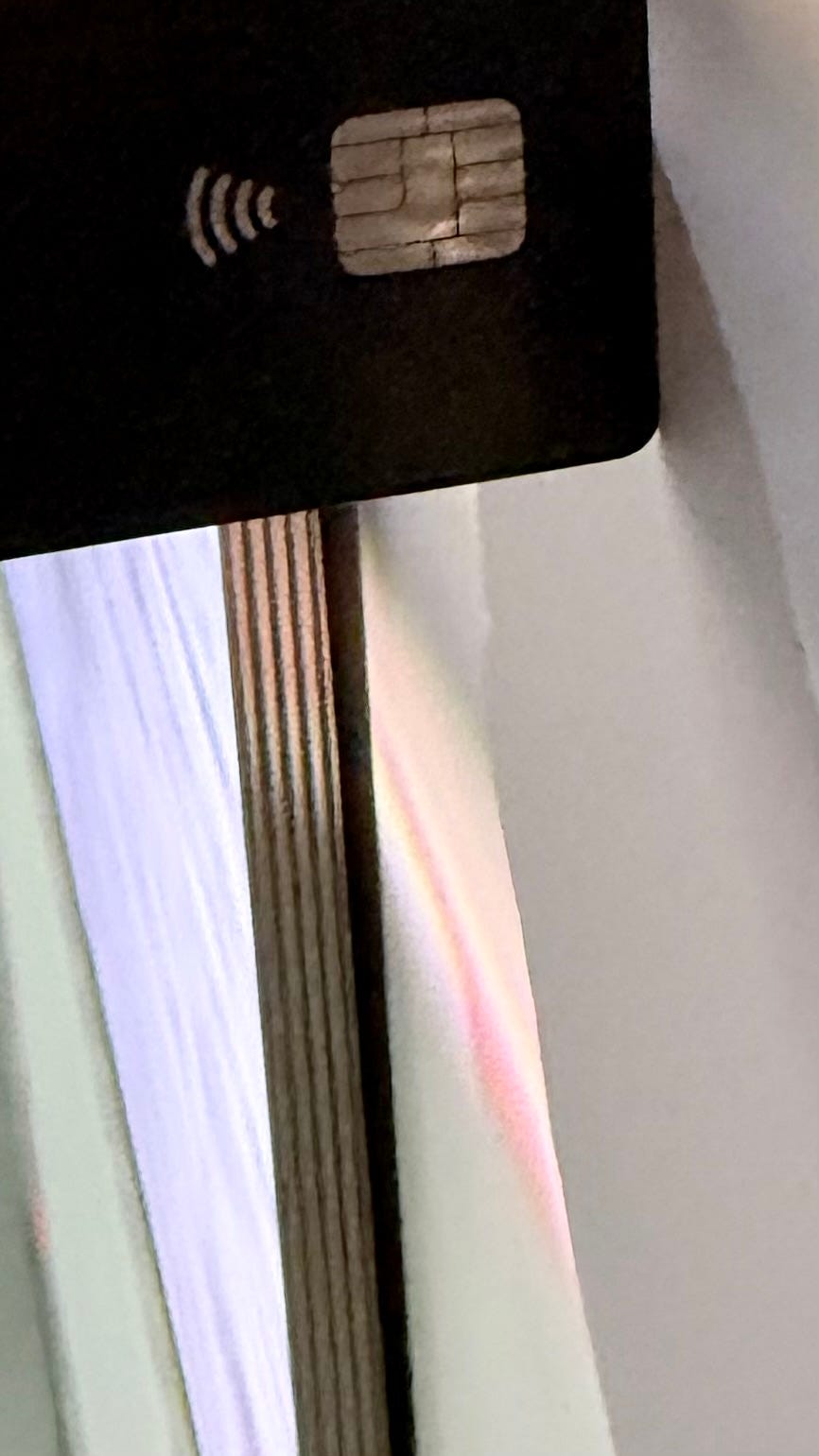
Here’s some up close photos showing different kinds of pixels. I got in a lot of trouble taking these so please appreciate them:
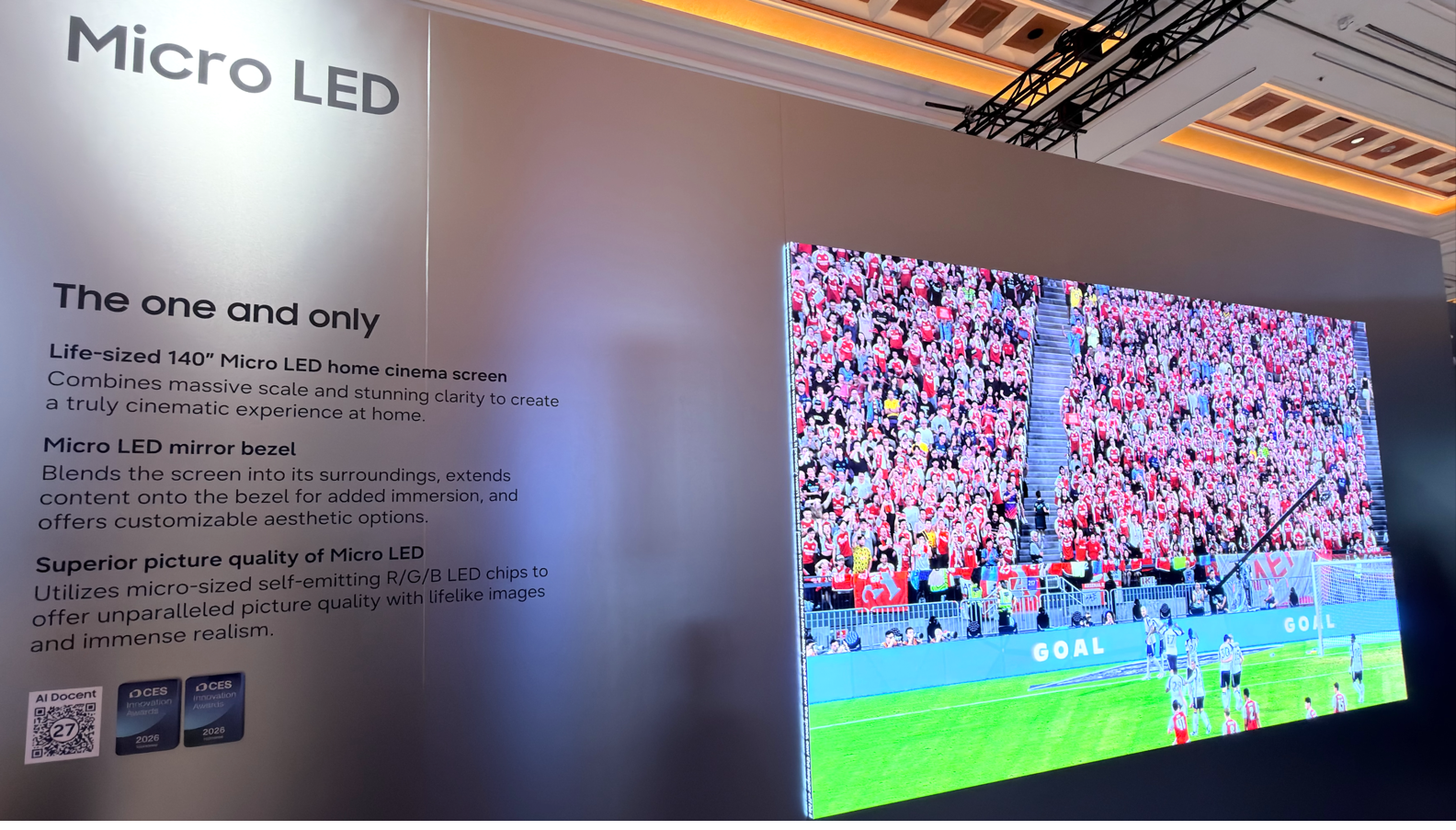
Below was the best TV of the show and will most probably cost as much as a Tesla should it make it to market. (Note: I learned after the show you can order the 115” 4K version for $30,000).
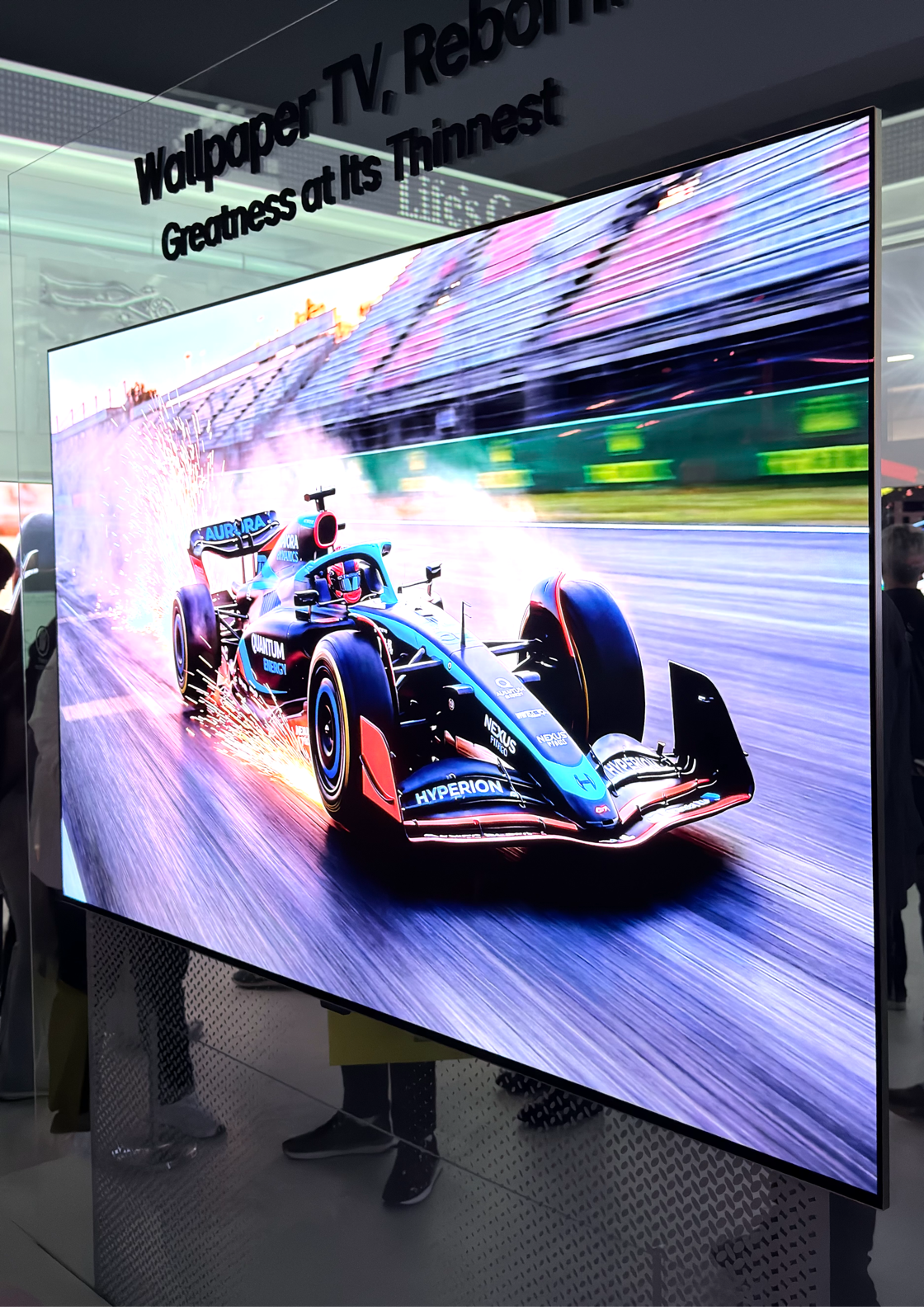
How thin will the TVs get? Micro RGB is the ultra-bezel-less ultra-thin technology on the horizon but still must go through manufacturing ramp up so is a way off. Here’s a 9mm thin bezel-less display from LG. I couldn’t figure out how to visualize the thinness but here’s a smart IC next to it which is just under 8mm along with a shot of what that TV looks like on a wall. I got in trouble taking this photo.
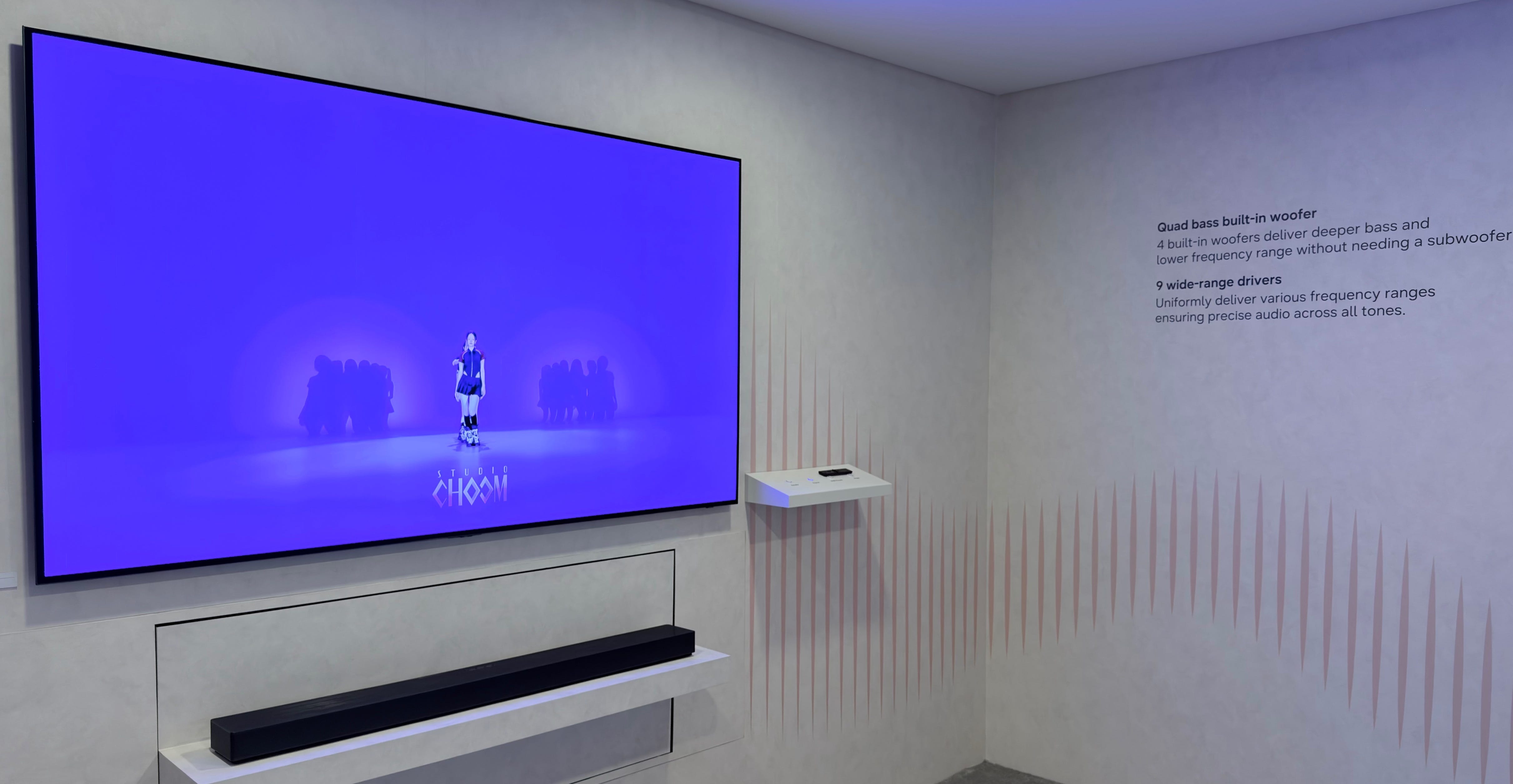
It isn’t just picture. When outfitted as TVs (v. computer monitors) behind these displays are now a full wall of rear firing speakers designed to bounce the sound off the wall and simulate a full range of audio capabilities normally heard from a set of speakers. Samsung declared it “The Year of Audio” with a soundbar containing what they claimed eliminated the need for both surrounds and a subwoofer. But if you get their latest wireless speakers you can add up to 4 for a full range effect. Sounded incredible in the booth of course.
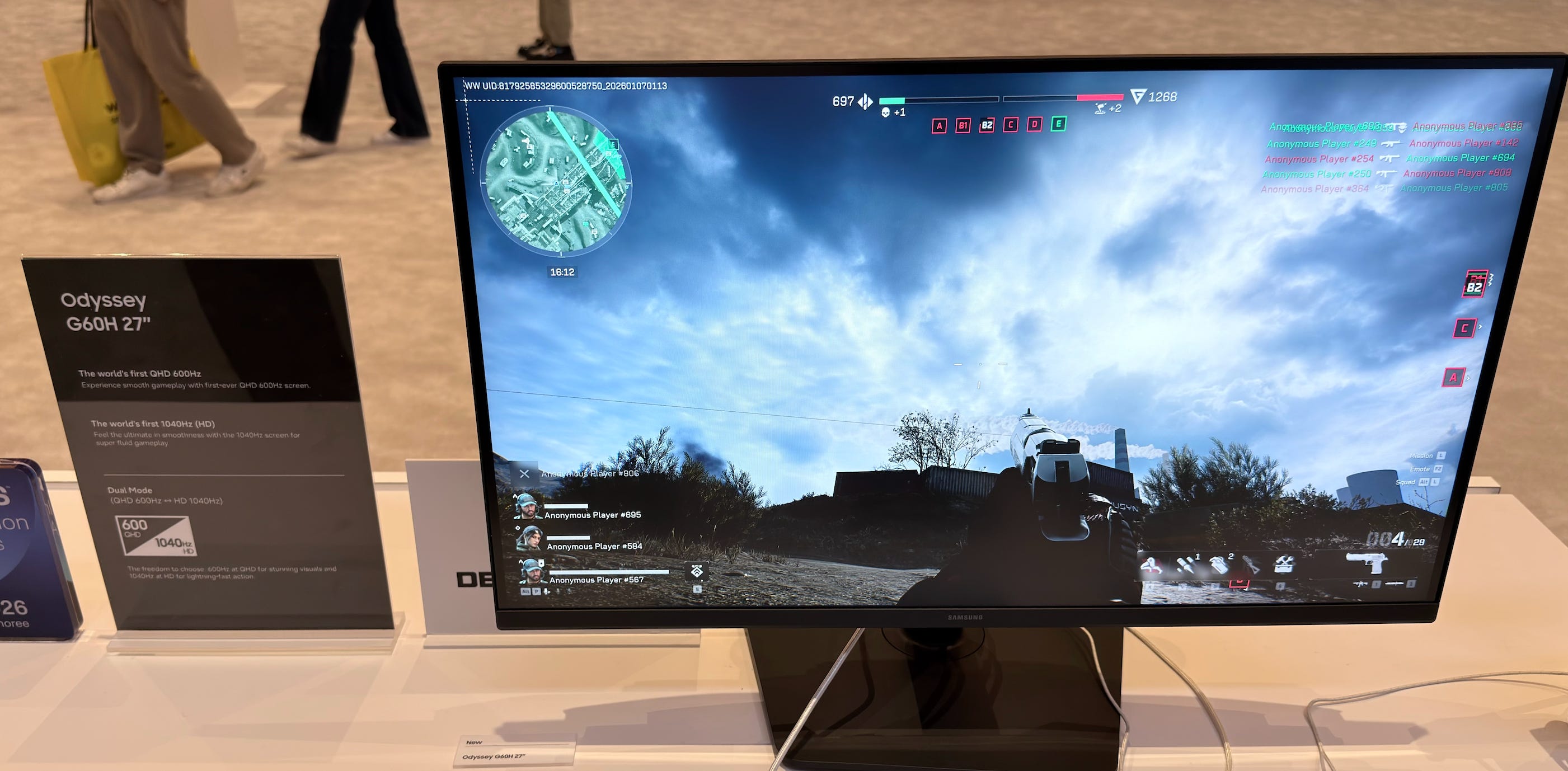
The TVs and resulting monitors are getting ever-increasing refresh rates as well. There’s a caveat with these in that they are starting to create synthetic framerates (the same way Nvidia does with the GPU) by computing extra frames. So, you get absurd claims like 1040hz which kind of sounds questionable to me.
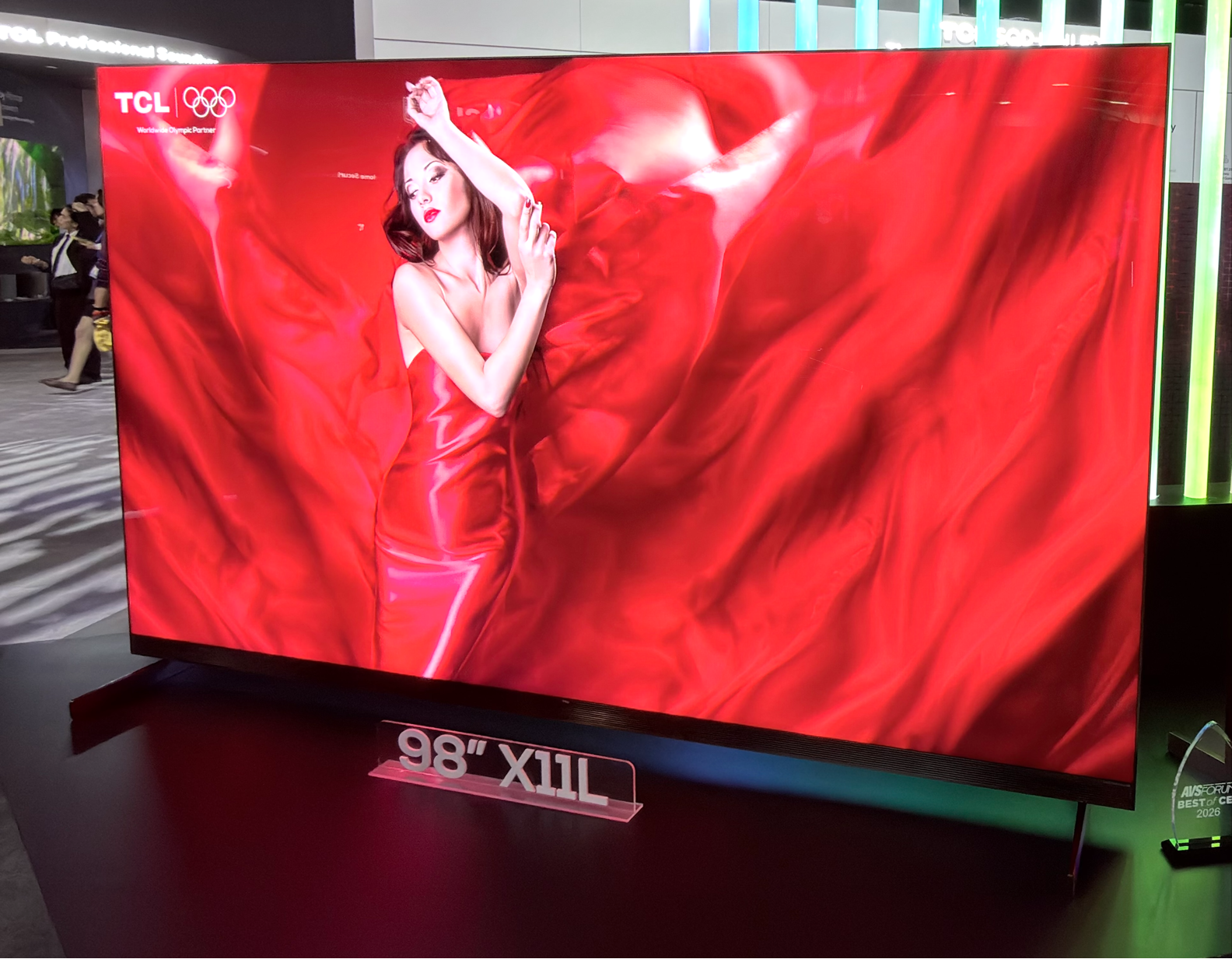
The other thing going on is the size of TVs continues to rise as fast as the lift on American pick-up trucks. TCL has found its niche as the mainstream (read: Costco, Walmart) supplier of ginormous sets for relatively low prices. They routinely sell a 98” unit. These are monsters that you really can’t hang on a wall or put on the second floor. But boy they are fun.
The big negative is that each vendor is attempting to apply AI to the image being displayed. So, this is going to drive A/V enthusiasts nuts and provide endless hours of “disable” at family gatherings. Here’s HiSense (Chinese maker, usually highlighting their laser projects which are super cool but still seem niche) using AI for everything.
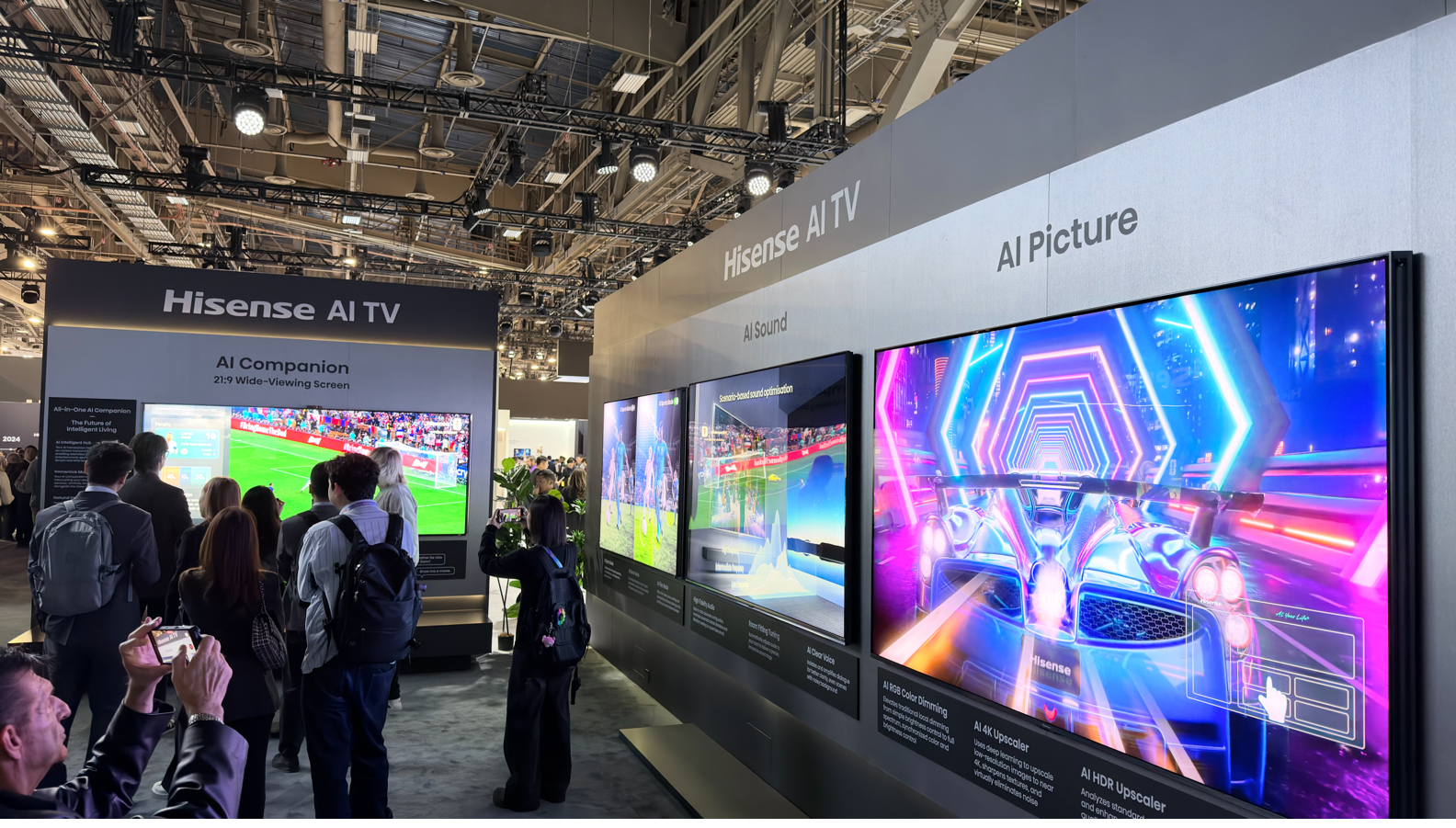
Even with all this, there’s an effort to truly extend the viewing experience. While many of us see these with sports or Youtube TV, like everything the TV makers want to embed it into their platforms. This can make for some interesting experiments. HiSense was showing a 21:9 aspect ratio which allows for all the extra information while not scaling the main show, which you can see in the above photo on the left. This particular feature has made appearances a number of times but is usually blocked by the inability to build this into an ecosystem. YouTubeTV is doing this for sports by scaling the main event.
That might have been enough but there continues to be a push with 3D as well but no glasses or goggles. Here’s a Samsung commercial 3D display for signage, particularly retail. Obviously, the photo doesn’t capture the effect, but it is rather remarkable. This can be done live as well as they were showing it with people lined up to add themselves to a 3D display ad.
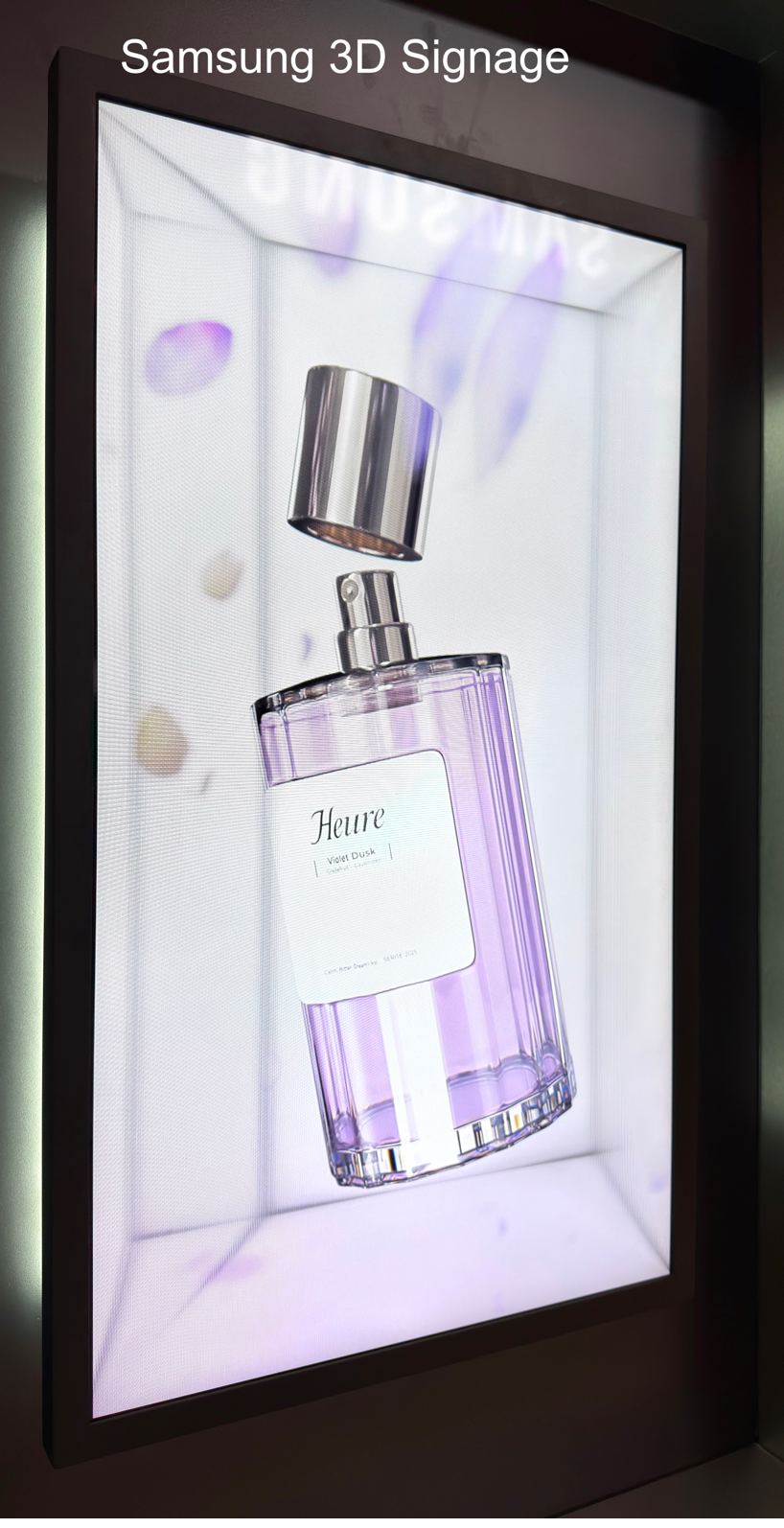
Bottom line is there’s a lot of innovation going on in display and TV and it is aimed in the direction I think most consumers care about which is better picture and sound. Given how much of our video content is now watched at home yet the era of “home theaters” (with $20,000 “RUNCO” projectors and a $50,000 rack and a remote that doesn’t work) is long gone replaced by a giant flat screen in an open-plan living/dining room with people sitting in random places with their phone in their face, I am hoping there’s a potential to do great setups with these broad consumer TVs so we don’t go back to building out rooms that cost more than the house itself. If we’re going to spend $30 on a first run movie in 4K HDR Dolby Atmos, we should have a fantastic audio/video experience approximating what the director had hoped.
PC and Tablets
I can’t help but seek out the personal computers even though they are a tiny fraction of the show. Except for Computex in Taipei there’s no real forum where PCs come together anymore, which is a weird feeling. CES sort of picked up PCs when the COMDEX show (think Halt and Catch Fire) failed to make it through 9/11 and the dot com crash.
In keeping with the show delivering on innovation, like TV, the PC world is delivering solid improvements in the hardware. Like TV these improvements will not redefine the category, create new use cases, or drive early replacement, but they will be better.
This is about Windows PCs. Apple is ubiquitous at the show but has no public presence. US people walking the show get a good reminder though of Android market share outside the US, especially in Asia, when seeing all the folding phones in use by attendees. Make no mistake, easily the majority of PCs in use in booths are Macintosh and don’t think I don’t notice this. It hurts.
The Windows PC faces two structural issues:
The spreading of effort over ARM v x86 today is unnecessary. The gains from ARM will not materialize and the edge compatibility cases keep it out of the enterprise. ARM was about a new software ecosystem and new hardware capabilities with a break from x86. Merging them was always going to cause these challenges and gain none of the benefits.
Windows doesn’t carry the APIs for new scenarios in AI and there’s an Nvidia ecosystem gaining momentum as a true replacement in a browser-based world. That isn’t an enterprise thing, but it is a developer thing and is easily, as Chromebooks demonstrate, a consumer thing.
A symbol of this second point is that the chip companies and some OEMs are offering AI accelerators for offloading compute to dedicated chips when running APIs not generally part of Windows. Note: TOPS is a meaningless number comparing across architectures and operating systems just like megahertz is.
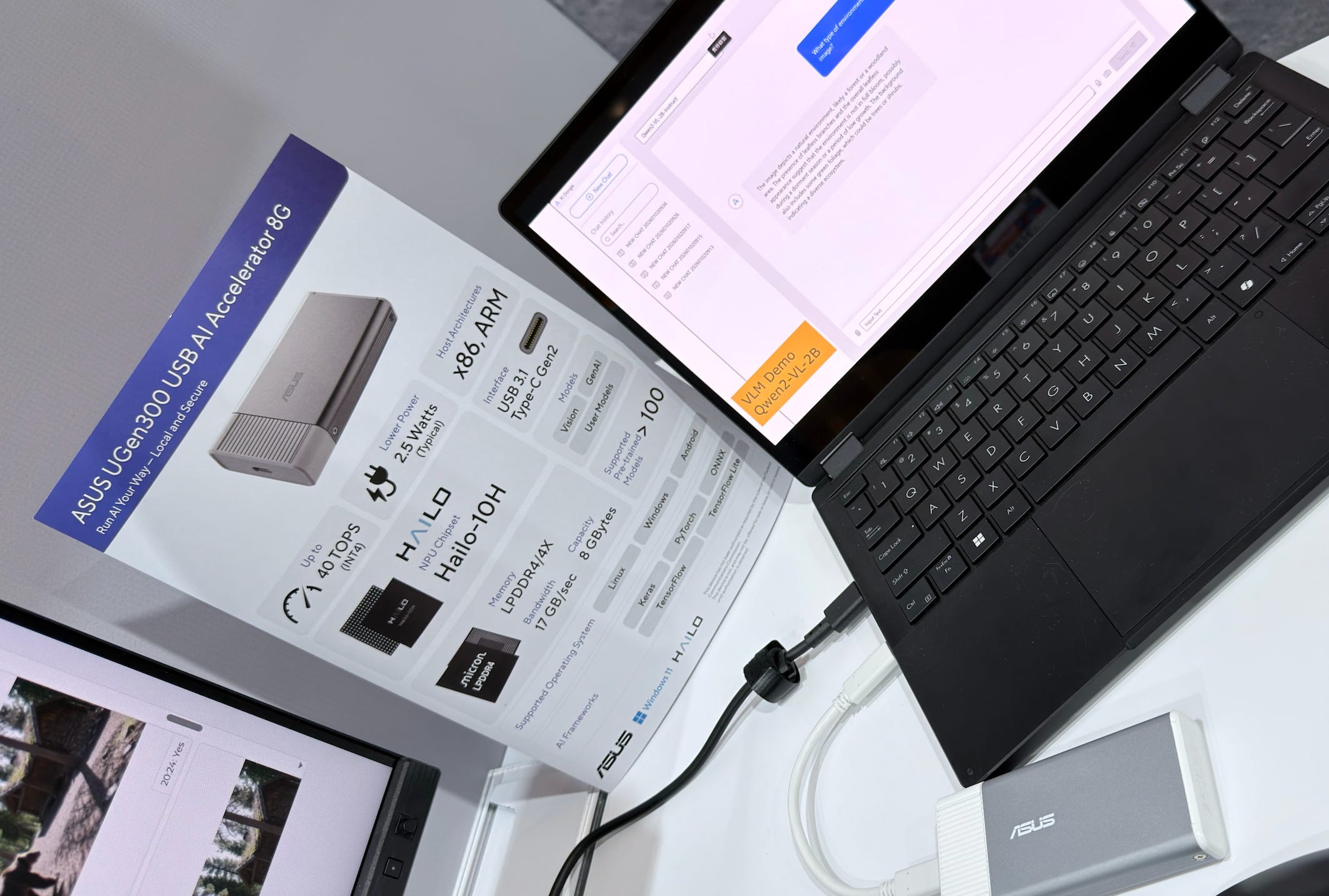
Additionally, PC enthusiasts would also chime in and talk about the evolution of the Windows user interface itself but that is a bit like the TV software platforms (Tizen, WebOS, etc.) and not core to the issue. The taskbar, explorer, start menu, and so on are not going to alter the trajectory. Worrying about those is truly rearranging deck chairs.
That said, what is being delivered by Dell, Asus, Lenovo, HP, and others working with Intel and AMD are very nice PCs. While I certainly have offered the cliche “these are the best PCs ever” this year is particularly good. I believe they represent the right kind of innovation in the market given where PCs are. If you’re doing “PC things” then these are the best ever and you probably have no need to try to make them do things PCs are not so good at these days.
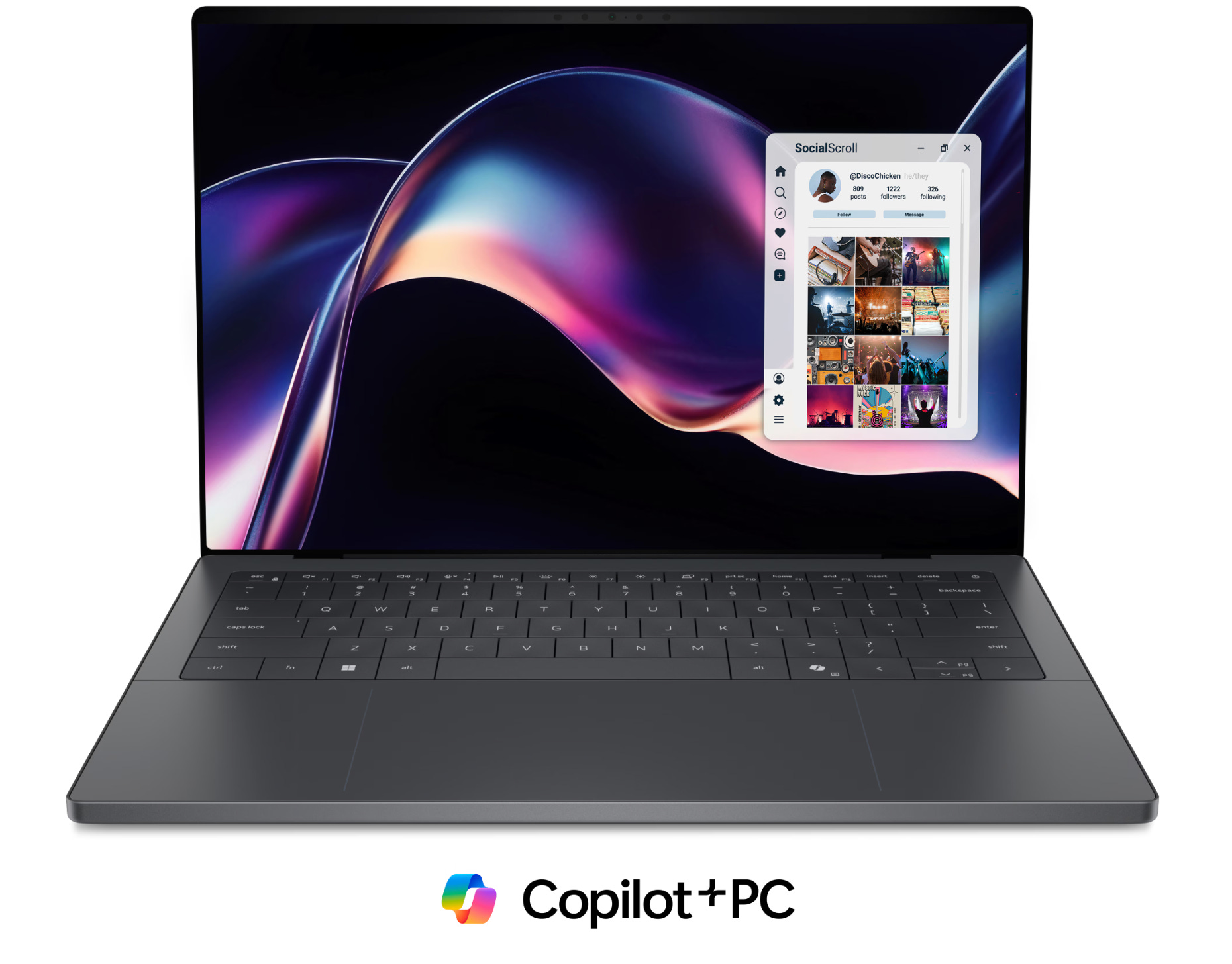
Dell relaunched the XPS with an absolutely rocking model. Real function keys. Thin. Light. Solid. Great display where Dell has been executing fabulously. It is premium and premium priced especially if heavily specified. The Dell XPS 14 has long been my PC recommendation and I’m glad to have that back. Dell also continued to do stellar work on monitors announcing two mind-blowing products: UltraSharp 52 Thunderbolt Hub Monitor, a 52-inch 6K display, and the UltraSharp 32 4K QD-OLED Monitor, focused on performance and color accuracy.
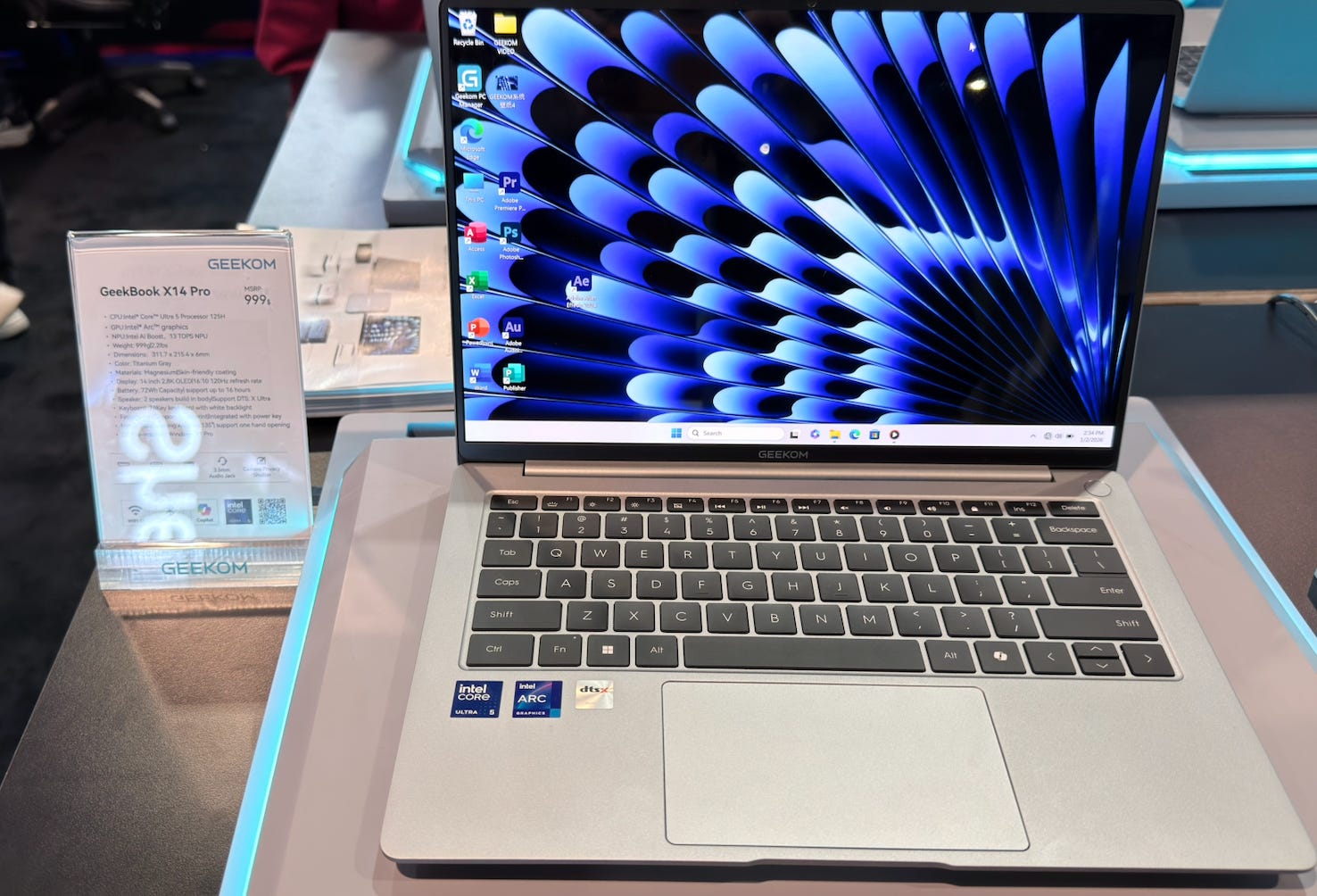
Geekom produces a full line of performance and price favorable PCs. Their latest X14 Pro is only $999 (half of the above Dell) with an Intel 125H processor/ARC graphics, weighing only 999g.
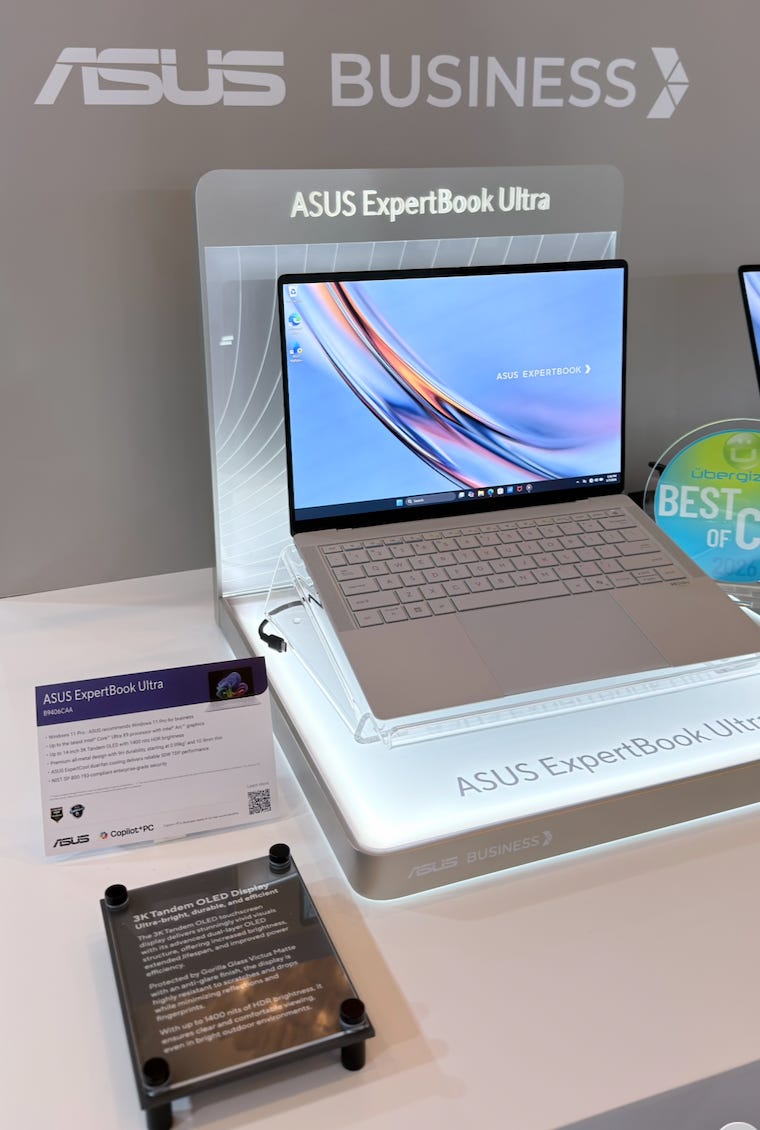
Asus introduced a line of business-customer focused PCs, which means they are a bit more durable and overall premium and come loaded with Windows Pro. These were quite nice.
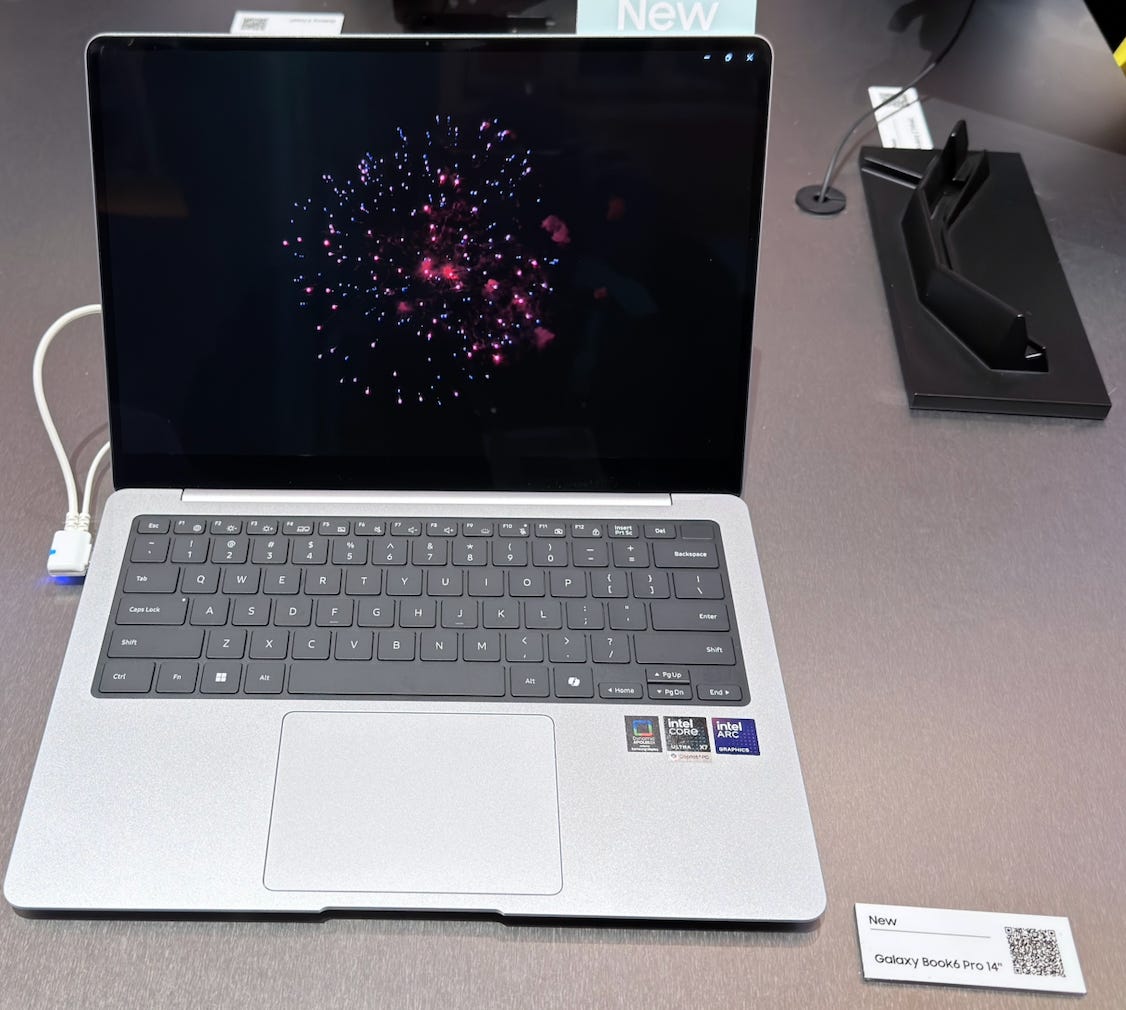
Samsung and LG both offer premium PCs as well. Here’s the new Samsung Galaxy 14.
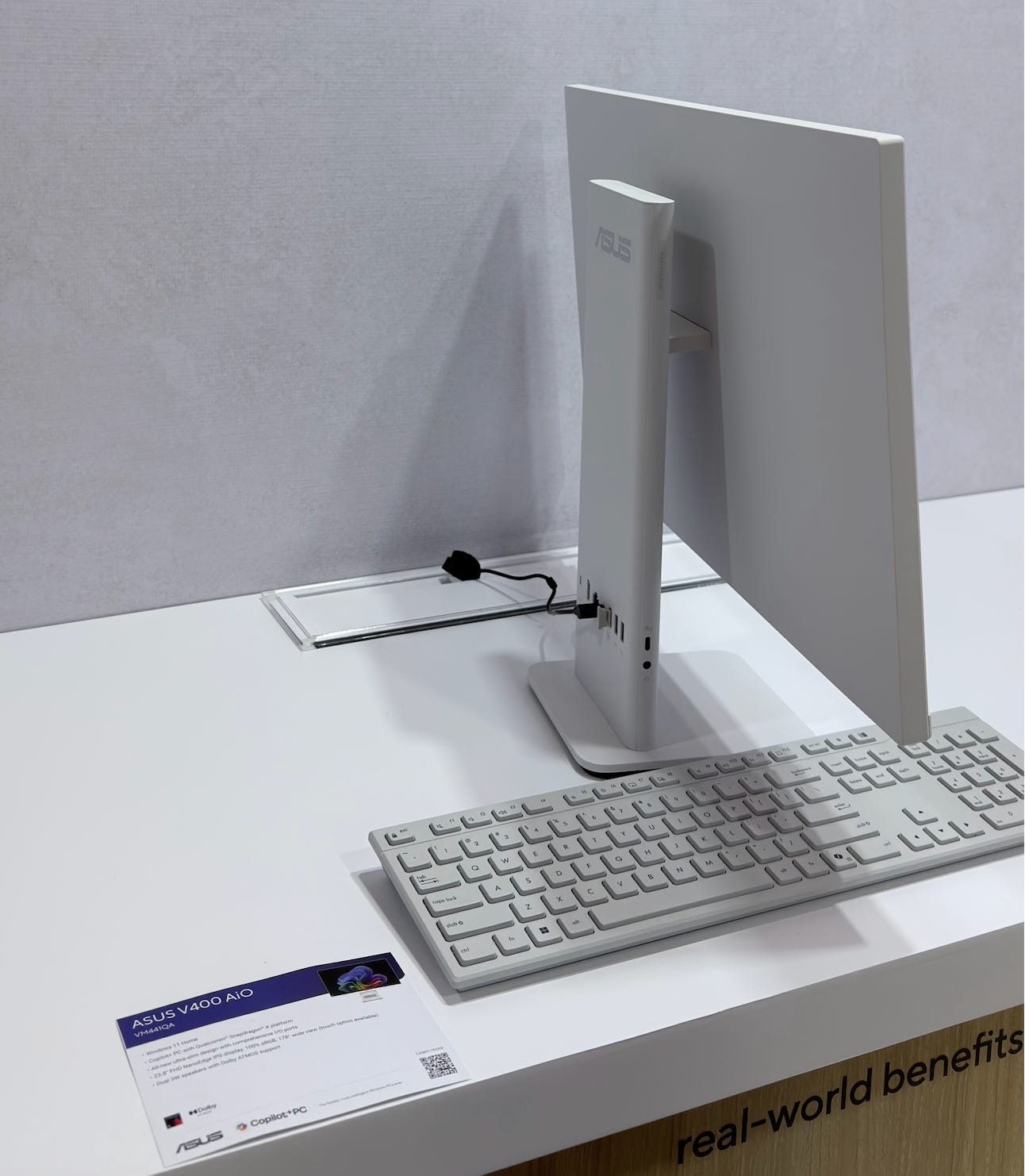
At home I have always been a fan of All-In-Ones when you want a big screen for a stationary PC. The market is limited as laptops are now equivalent in capability and in fact the AIOs are just laptops in the base or behind the screen. Still this ASUS model was super nice. Lenovo introduced an AIO with a large dual screen format with almost a square resolution for creators. The screen is a dual letter sized stacked landscape. You either think this is an ideal size or it needs to be tilted 90° sideways. I think it is ideal for productivity like XL or PPT (aka sheets or slides).
All of the above are mainstream PCs that do a great job at PC things. I think that is where the market is and pushing PCs to be more creative in form factors really requires new software and the investment in new capabilities at the app layer just isn’t there compared to devices on the edge with companion mobile apps. That’s causing people to bemoan the lack of innovation in PC form factors.
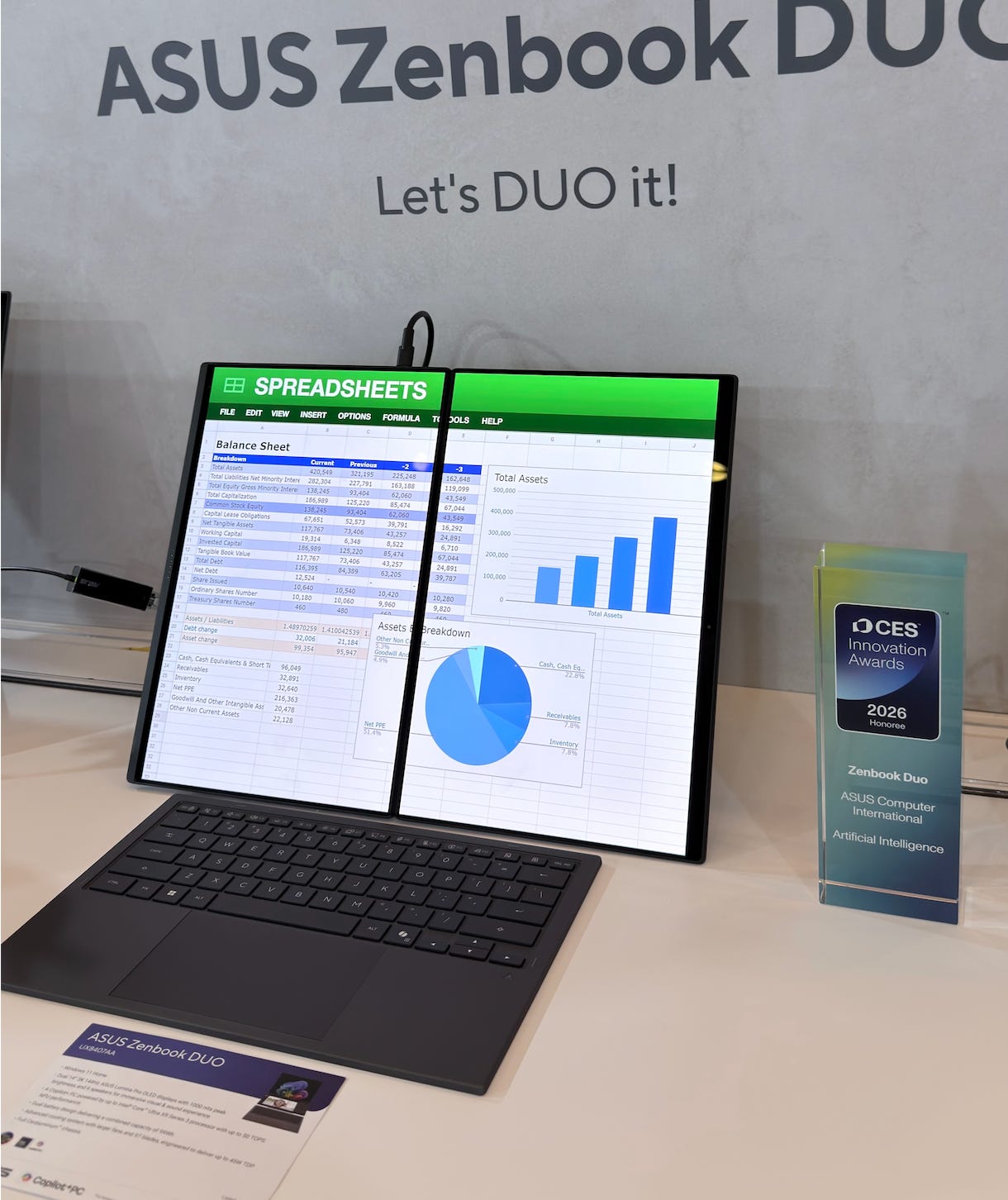
That said, Lenovo showed off (again) a flexible screen laptop. People went nuts over this prototype. Asus had a more practical product in this area, the (updated) Asus Zenbook Duo. This is a two part tablet/laptop with a big folding screen that can be dual or full screen. The way they make this practical is that the keyboard magnetically attaches/detaches for sure and the screen has a stand. They don’t try to make it a tablet, just a dual screen laptop. If you’ve seen those USB-C powered folding screens in Instagram ads it is basically that sort of screen with a high quality laptop built-in. I like it because it focused on what laptops are good at without needing software updates that won’t happen.
The presence of tablets at the show is substantially less than previously. In the Apple world, tablet evolution is clearly one where the improvements in PC silicon and software as a result of silicon (power management, security, etc.) have made their laptop value proposition a superset of the iPad even as iPad run rates continue to be enormous. In the non-Apple world, tablets seem to be used as utility screens for point of sale, signage, and in other places where touch and durability are key.
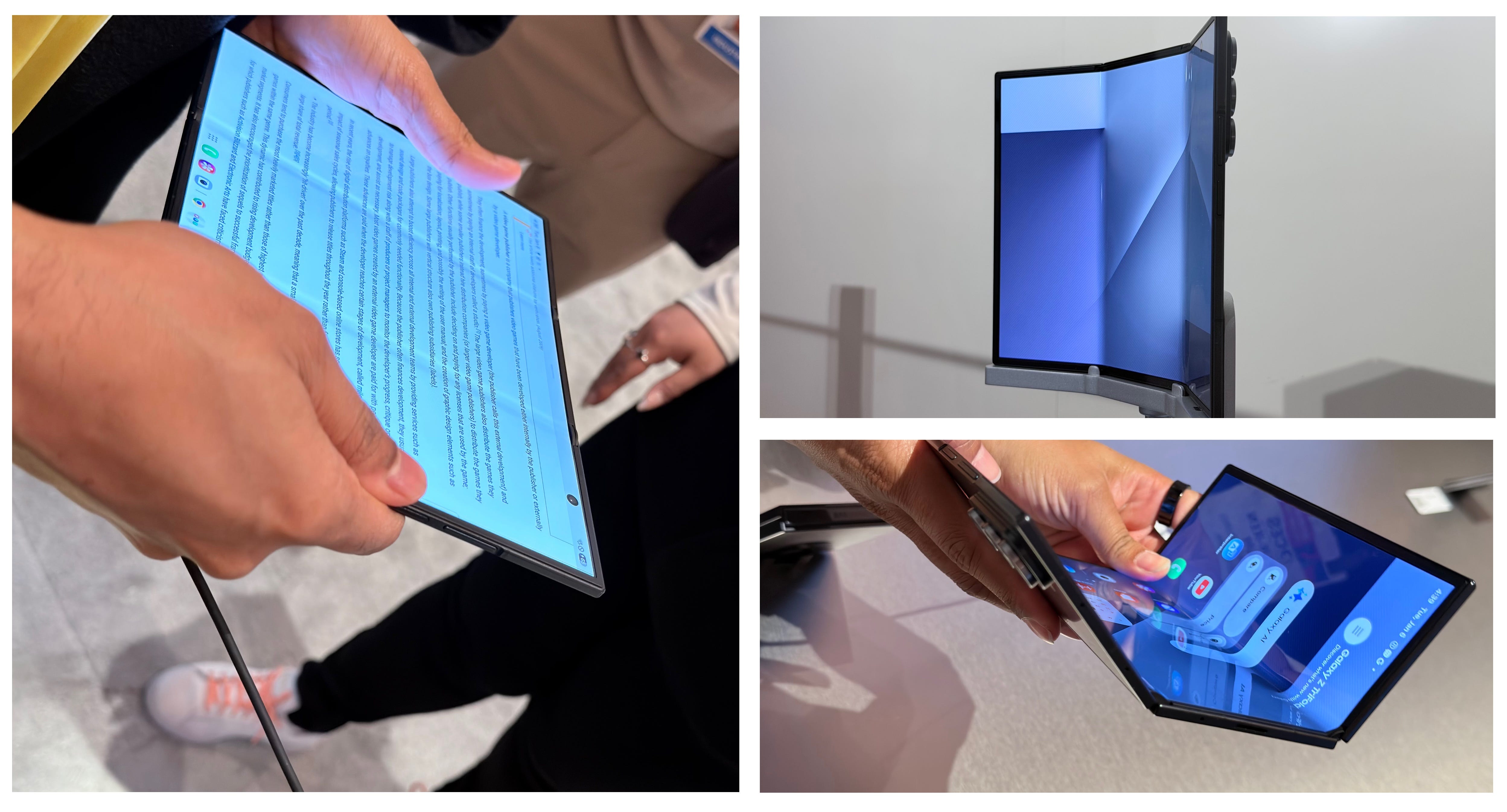
The biggest presence for a tablet on the floor was the Samsung Galaxy Z Trifold. This is a case of the industry continuing to pursue folding screens. I swear the industry is going to will this form factor into our hands one way or another. Around the show you casually see way more folding devices than you would in any crowded space in the US in general. The presence of much of the Korea GDP in attendance might have something to do with this!
The Z Trifold is no doubt an incredible device. Geeks love folding convertible devices and always have (Surface!), and the trifold has it all. It’s a phone. It’s a bigger phone. And it is a tablet. Just keep unfolding it. Samsung has done a bunch of work to enable the Android platform to somewhat gracefully handle the screen dynamics including a model that basically runs three apps side by side. My general issues with double or triple folding are overall futz factor and the size. As with a PC versus iPad having windows can be helpful but more often than not you have to devote cognitive energy to arranging and managing windows that just isn’t that beneficial. For me the bigger problem is I can’t figure out how to effectively or efficiently type. I generally fold the device to type. I love the idea of having a big screen for video but maybe I just don’t watch enough long form video on a phone. For productivity I struggle with the bigger screen. Needless to say, right now in the tech scene I’m the minority and Reddit went crazy over this device.
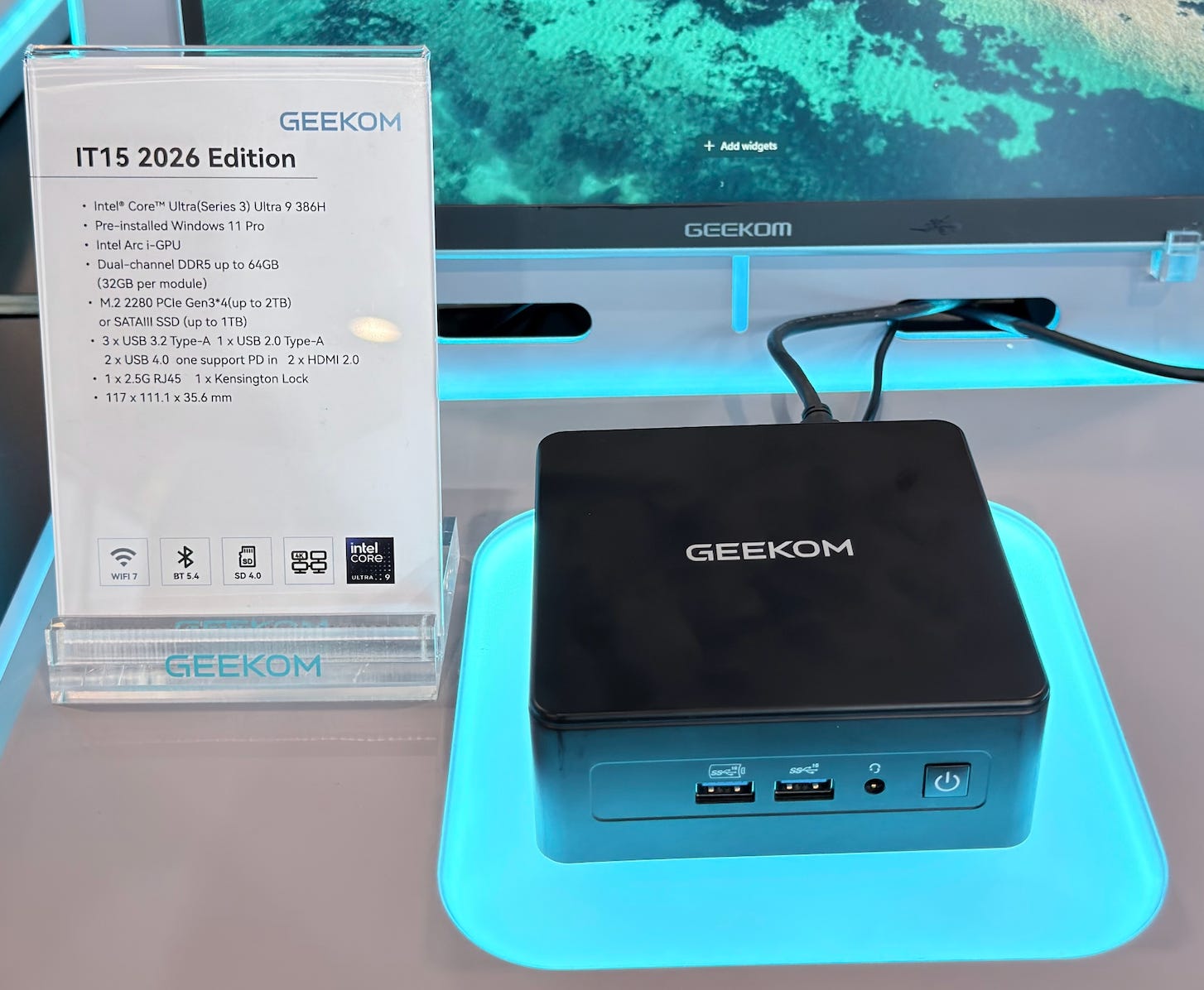
The mini-PC form factor was everywhere and not just for AI PCs. In many ways these are the modern PC desktop outside of gamers (which I’m not going to cover in this trip report though there was a big and significant presence). The benefit of the mini form factor is for ports and ergonomics in a home or office environment especially with multiple monitors. The low power consumption and mostly laptop-level fan noise are great. Enterprises love these for ease of transport and because the useful life of a display is even longer than a PC. The price is great too. Below is a Geekom updated one. I’d get one like this.
Home, Automation, Security
Devices for the home represent the heart of CES after television and audio. If you’re not a professional installer with dedicated shows (appliances, security, custom homes), CES offers the best chance to see the evolution of this broad range of devices but also the complexity being pushed to the home.
The continuing challenge with the home remains integration of devices classes (power, switching, plumbing, lighting, locks/doors, cameras, major appliances, and safety/disaster). There’s a fork in the road with all devices. Do you go with major existing brands and wait for their own “smart” platform which almost never integrates (for example, garage doors)? Do you choose to make a device smart by going with a brand-new vendor in an area that often lacks a long-term track record for maintenance, parts, repairs and is often disconnected from all legacy approaches (lighting is the best example). Or do you choose a class of smart add-on capabilities that integrate with legacy infrastructure (like a Nest thermostat).
I’m basically a fan of the latter. I literally can’t stand the wholesale “new” stuff for a home because the last thing I want is 10 years from now needing replacement parts that don’t exist from a company that doesn’t exist with preconditions I can’t replace. I currently have that problem with Lutron (a MAJOR manufacturer) light switches which I scour eBay for needed replacement parts. In the past I have covered the non-integrated smart platforms but that’s another area where I’ve been burned as a consumer (aforementioned garage door, Chamberlain, which cut off HomeKit support). I have no patience (literally) for this type of home futzing and no tolerance for a poorly integrated home experience which I define as “an app for every system or device”.
In this context, CES made substantial progress this year and that is where I’ll focus. The Matter standard—championed by Apple HomeKit—has seen fits and starts but is really coming together. Even if you don’t use HomeKit, the presence of Matter has elevated platform support and integration across devices. Plus, it has made setup much easier. The main integration points are Google Home, Apple HomeKit, Samsung SmartThings, and Amazon. Across those there are many common devices from third parties but first party devices when they exist often don’t hop ecosystems.
In the following you can see how both SmartThings and Amazon have continued to expand partnerships and first party devices. The partners across all the platforms are mostly the same which is great for everyone.
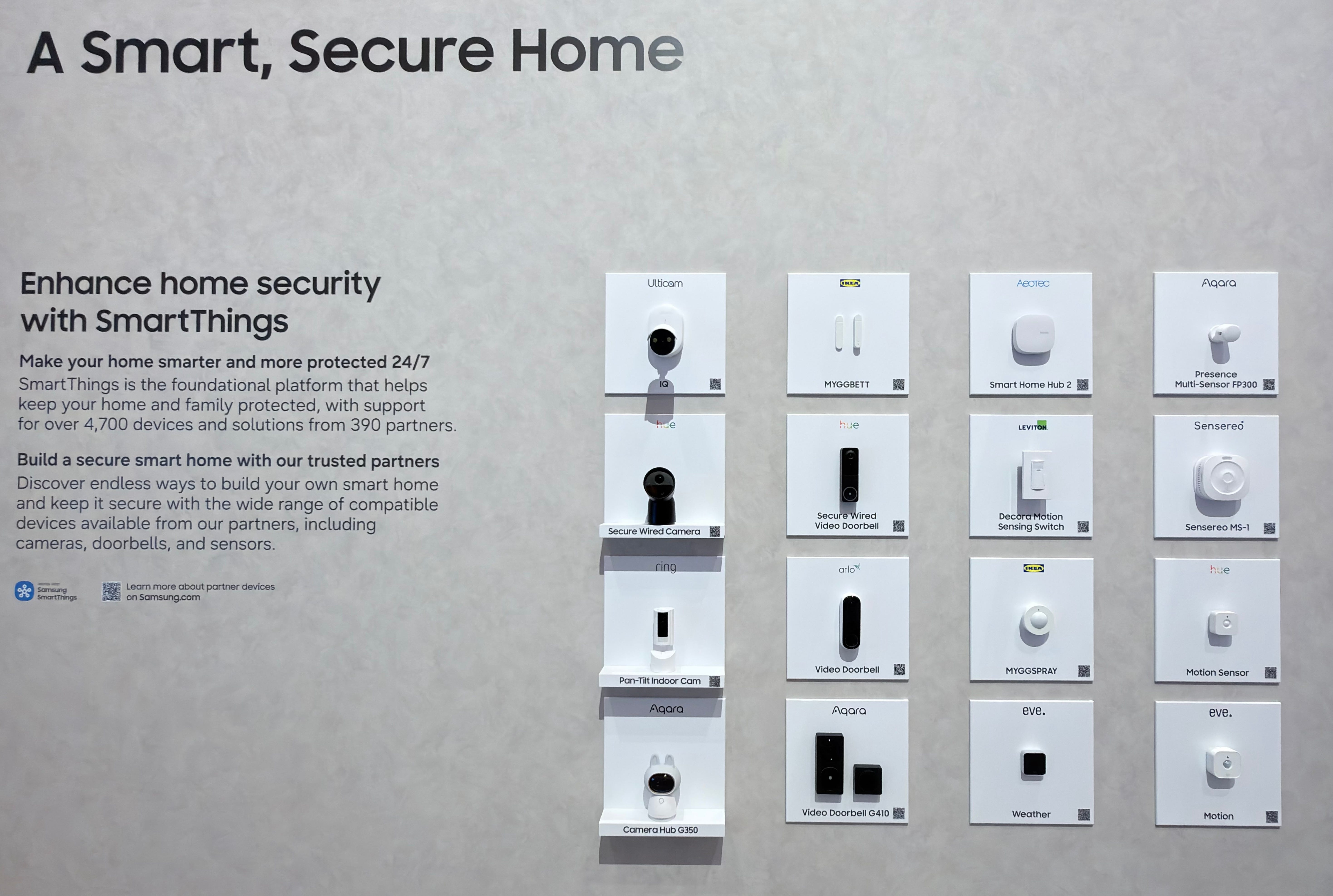
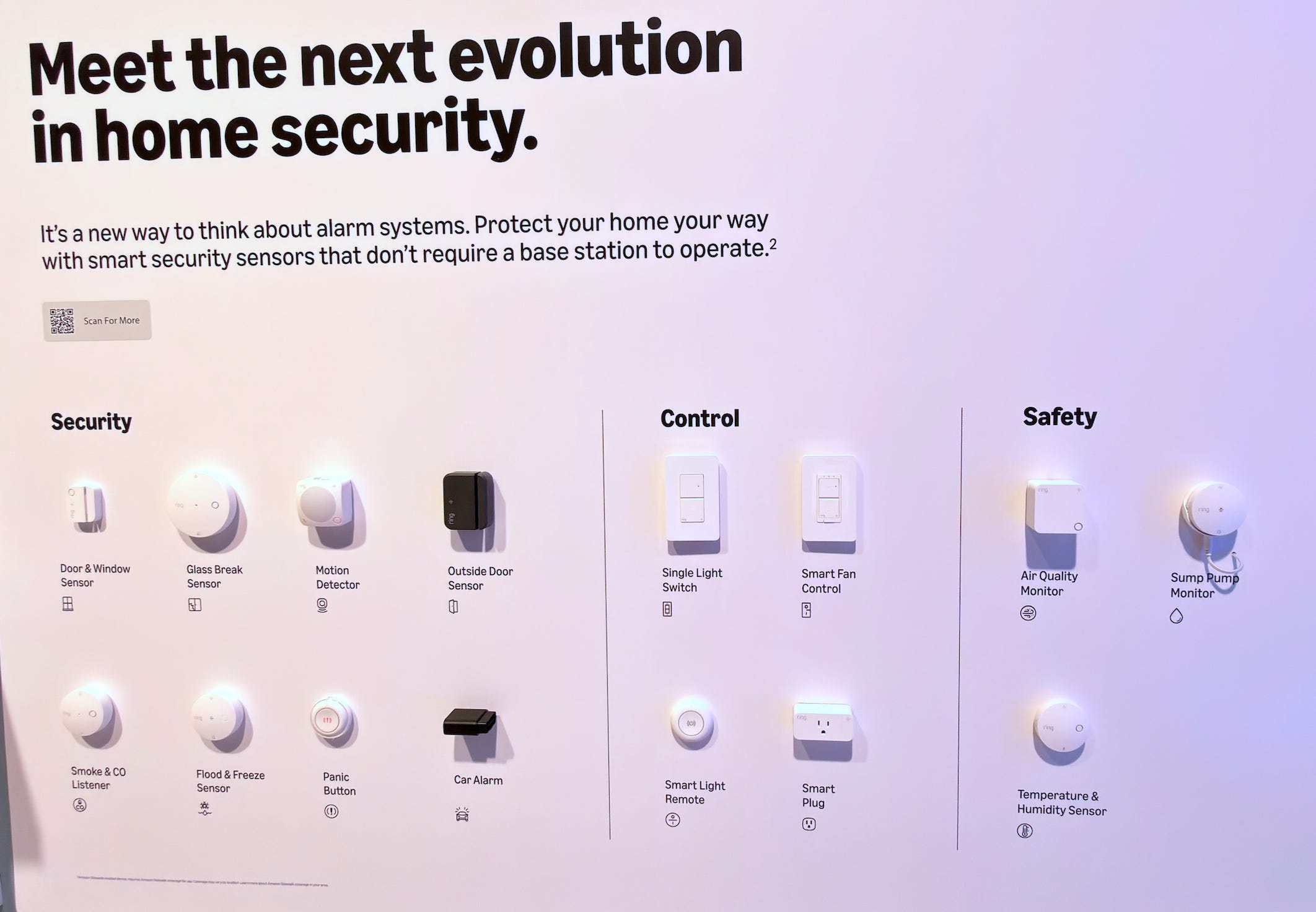
Looking above, Amazon added several first party sensors announced at CES including an OBD2 car alarm, air quality monitor, and sump pump monitor. Amazon has done a great job integrating with legacy sensors especially safety owing to their work with professional installers. For example, they have a Ring Alarm add-on that can replace a wired alarm and use those door sensors. They have a smoke alarm sensor that listens for the alarm and reports that in your Ring App/Alexa as a fire alarm.
There were many new models across door locks, thermostats, switches/plugs, and more. Many companies offer complete product lines of these that integrate across Matter and older standards. Buying these on Amazon itself is easy as well. The only caveat is you might get cut off from firmware updates if the company vanishes and some might see the security risks of these devices as noteworthy. I do.
Security cameras and systems are like plumbing, HVAC, and electrical in the sense that few of them integrate effectively into a single home app from the platforms. Even Amazon which offers Ring cameras and home control (and Wi-Fi) still show many integration seams from acquisitions. HomeKit has limited camera support so far. That said, home cameras are becoming a requirement and the various world events that took place during CES show how those security cameras are a vital part of home ownership.
I have been a Ring fan since the earliest days and find the experience great. That the doorbell is part of an incredible array of cameras and the alarm system is fantastic. Amazon does sometimes get a bit complex as to whether they are a direct to consumer or professional channel-supported brand and the products often teeter. The new 4K home cameras are great but have too much of a low-end consumer industrial design for a device that should be a bit more robust, professional, and stealthier. At the extreme they added some big outdoor cameras that will look great on a loading dock even though you’d probably love one for the whole back yard.
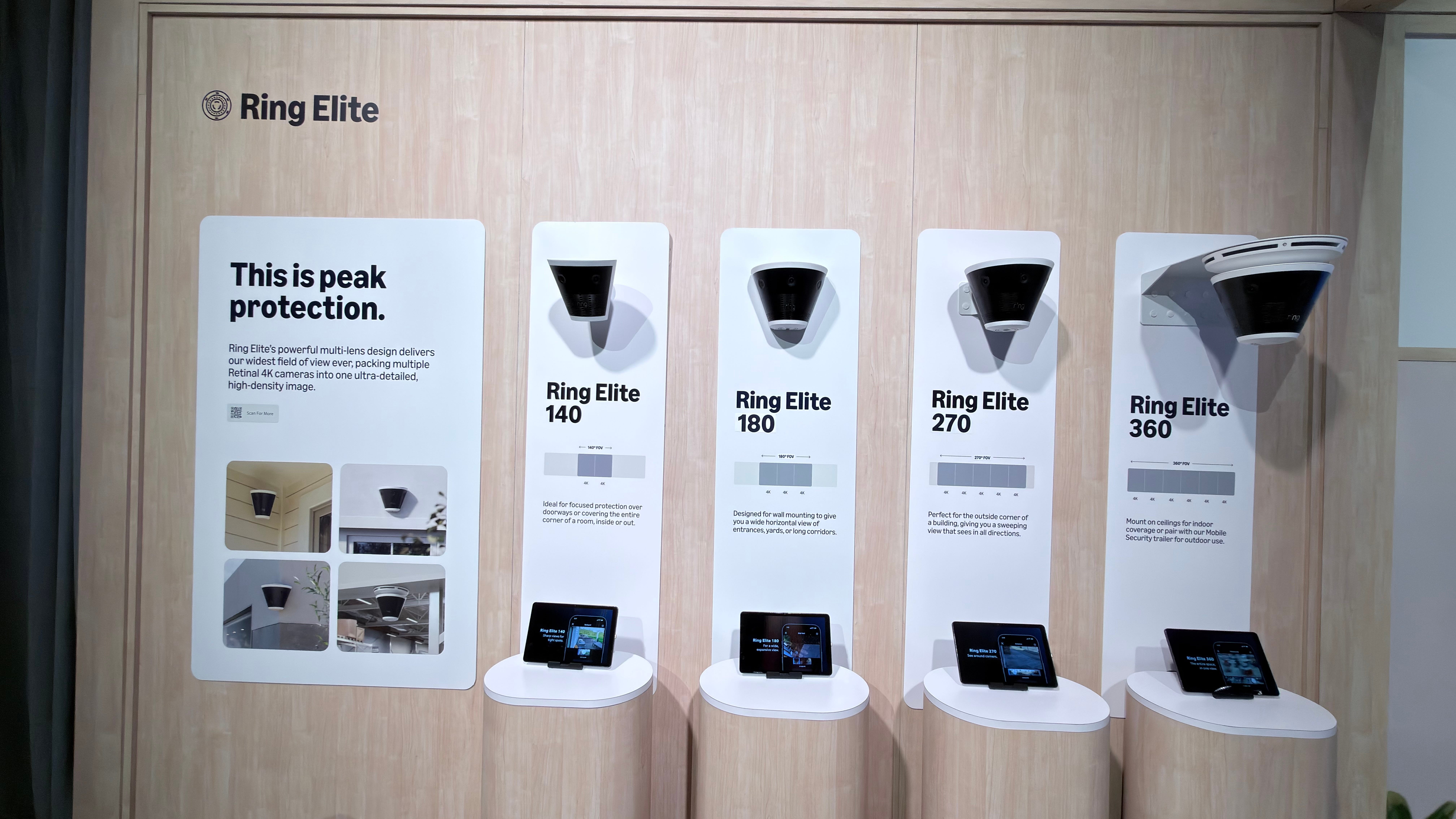
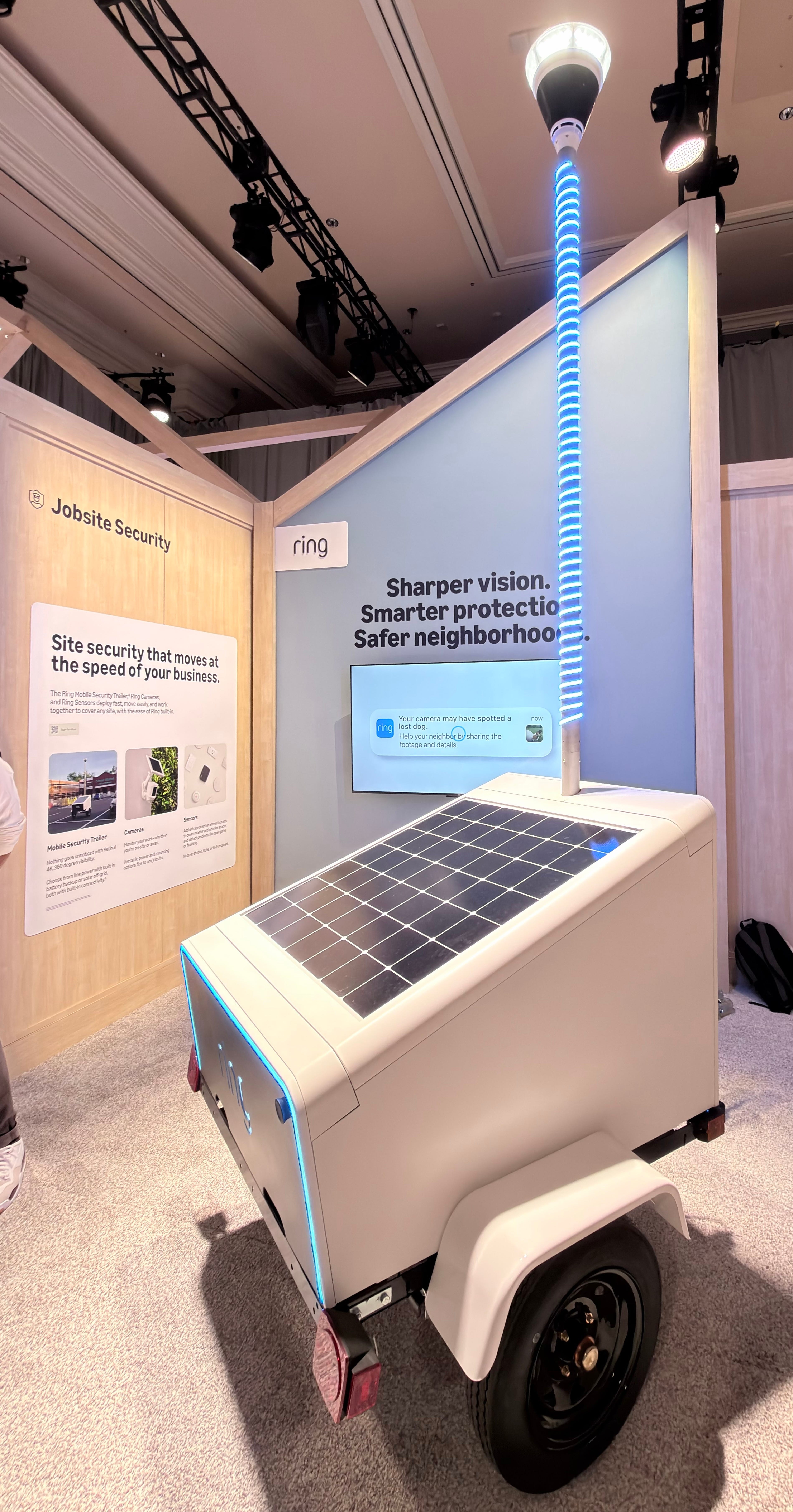
At the extreme Amazon introduced a job site security system on a trailer! This seems to go with the job site Eero introduced at a previous CES. I kind of wonder if the primary customer for these might be Amazon itself? Below is a trailer with a solar panel, battery, and giant outdoor 360° camera.
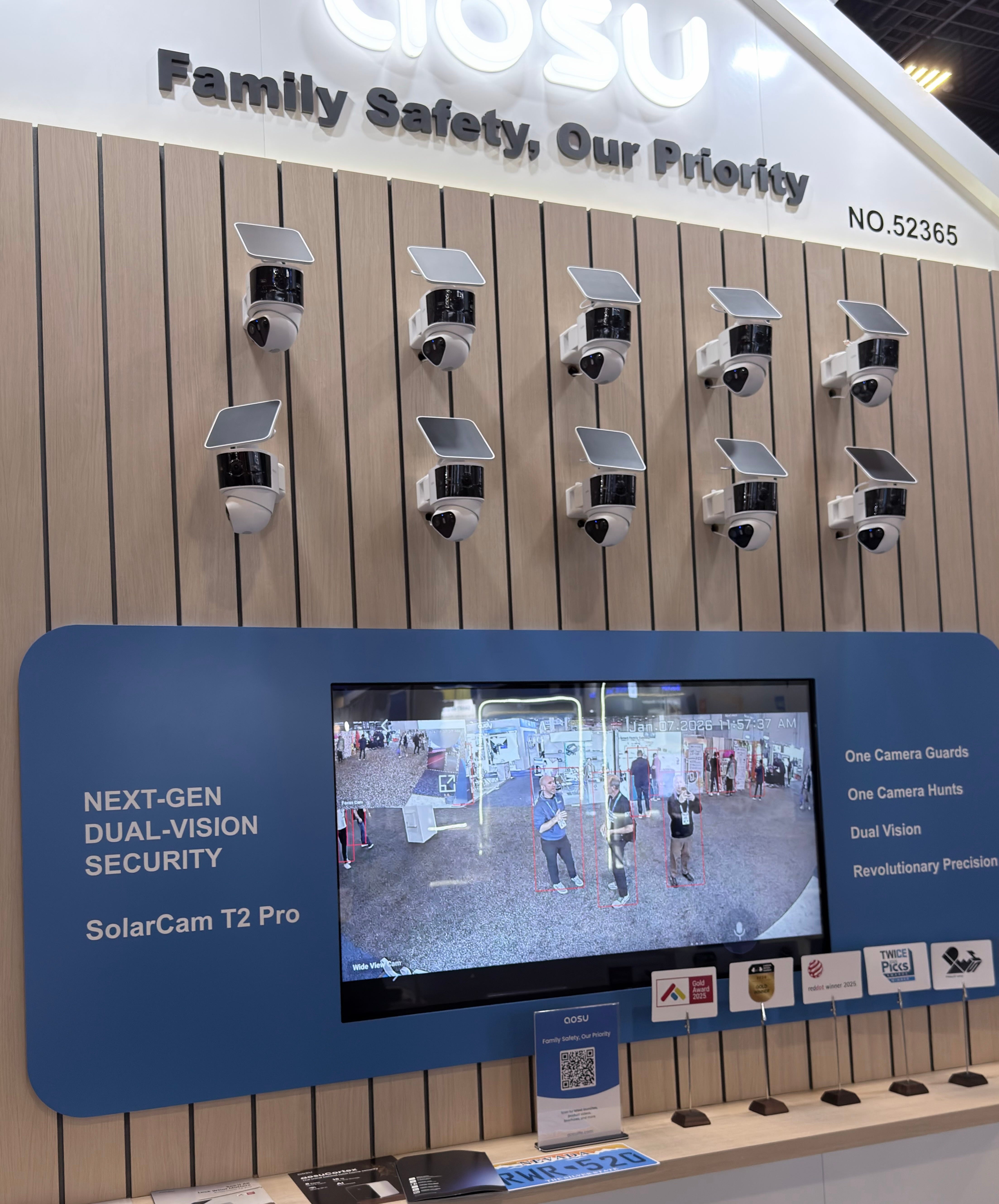
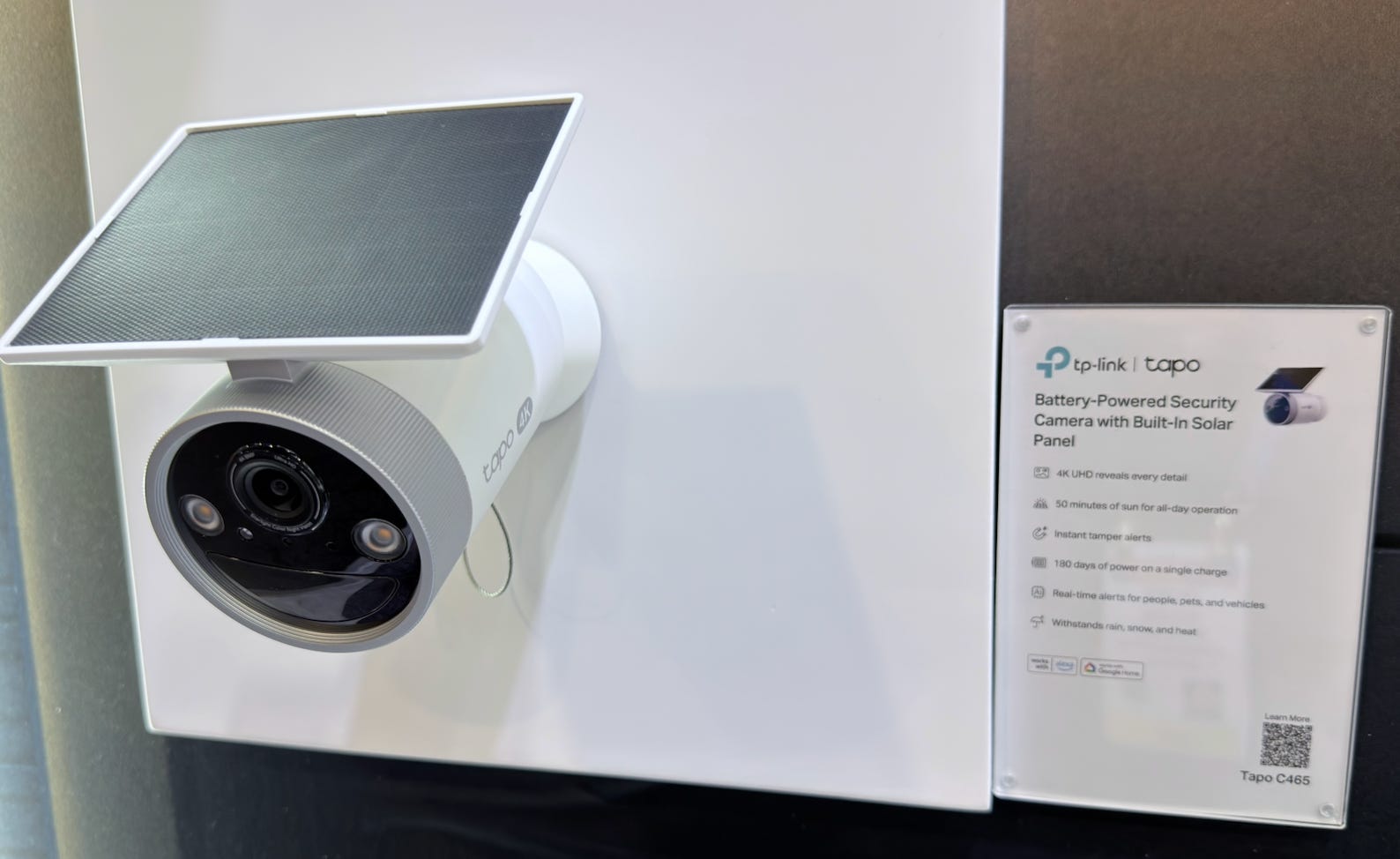
While there are some standards that connect third-party cameras, you still have to buy into a hub and with that an app and potentially third-party monitoring. All of the cameras at the show are now doing some sort of AI image recognition, owing to the fact that most come from China where this is a primary scenario. This year all the new cameras are 4K. What I found most interesting is the addition of integrated solar panels (versus the add on panels of past years) and the addition of secondary cameras for more field of view or even infrared.
Finally some companies are adding 4G/5G connectivity thus making the cameras completely wireless.
Cameras are becoming AI “edge” devices. In fact many commercial systems are themselves either incorporating edge style AI computers or equipping legacy cameras with an edge style endpoint providing computation and connectivity. This system below from Sixfab is using the equipment shown to process the many cameras on the screen to do scene and person identification.
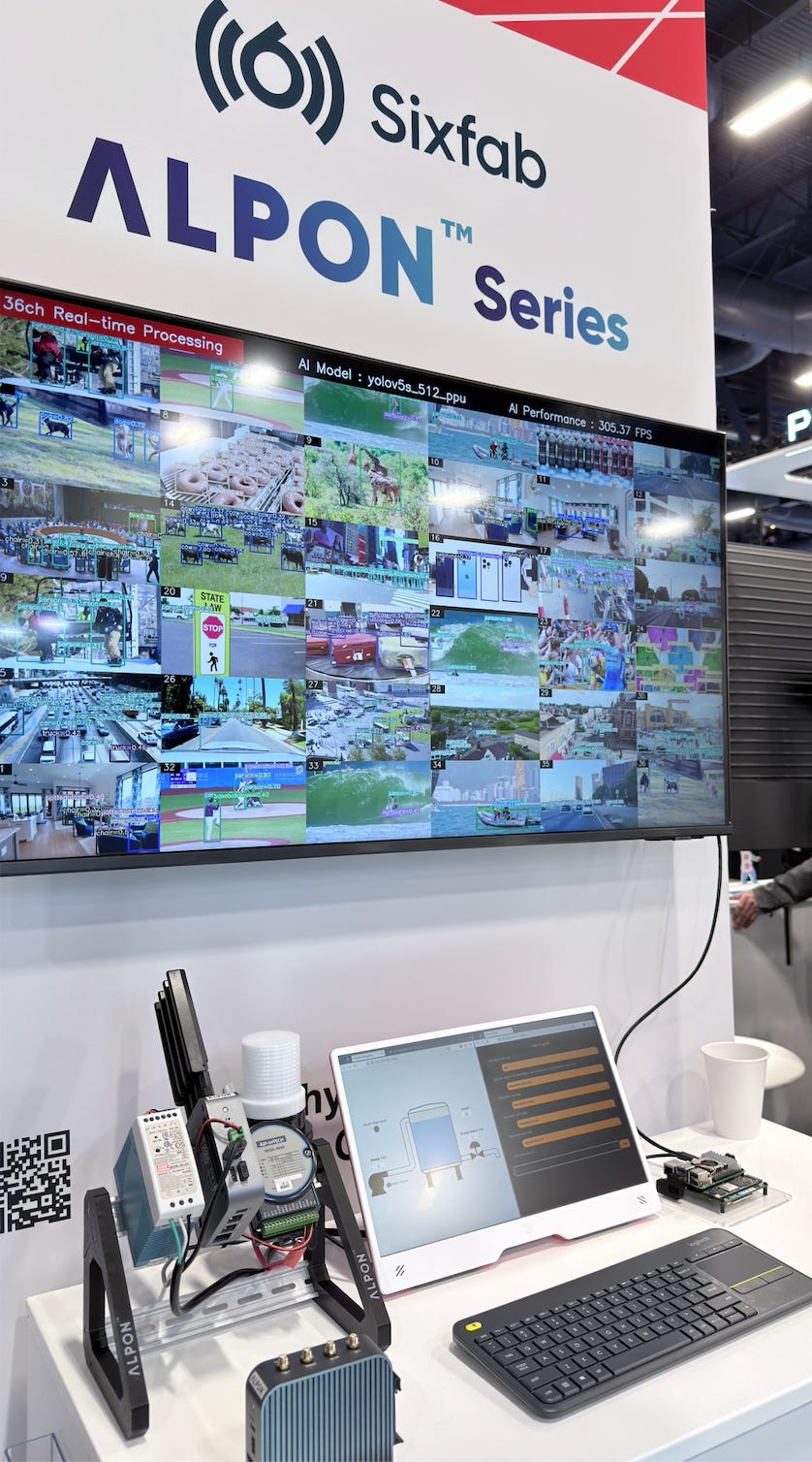
What is most interested with respect to cameras, however, is how security is evolving to NOT use cameras. A number of approaches were on the floor using mmWave RADAR or even Wi-Fi signals to monitor a home or public space so as to preserve privacy while providing real time monitoring.
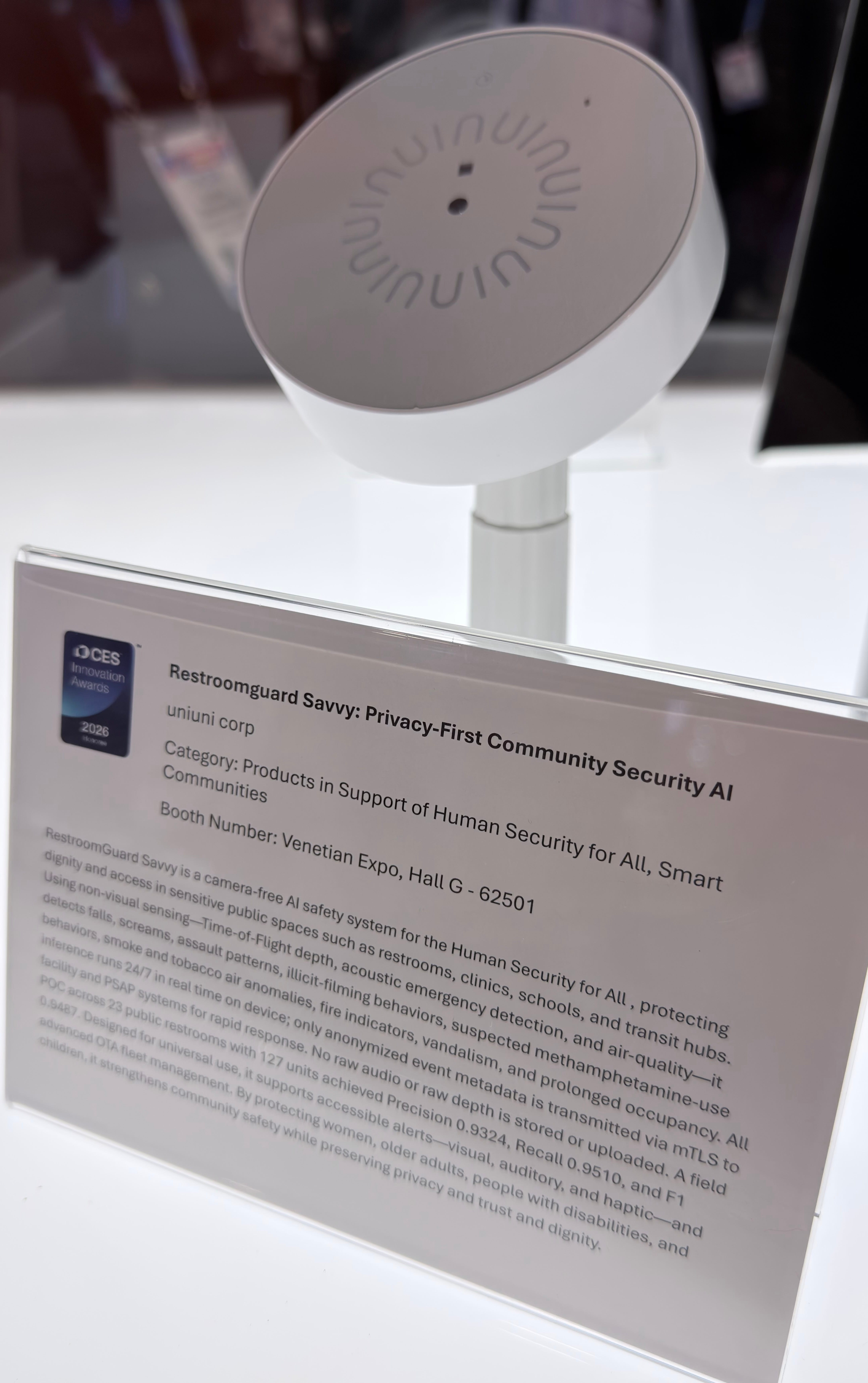
A kind of scenario where this matters is in the home where you don’t want to constantly video monitor the living room or a bedroom but want to know presence, breakin, someone falling, kids or pets fighting, and so on. These systems put a small device on a table or shelf that connects to an app. They use AI to transform the sensor signal into alerts. They can monitor sleep (or sleep walking/waking), nursery, changing in lighting, entry/exit a room, falls, or in a public space even crime or unwarranted contacts.
Restroomguard is one such product that provides security for public restrooms, clinics, or dressing rooms, and more. The range of sensors is impressive.
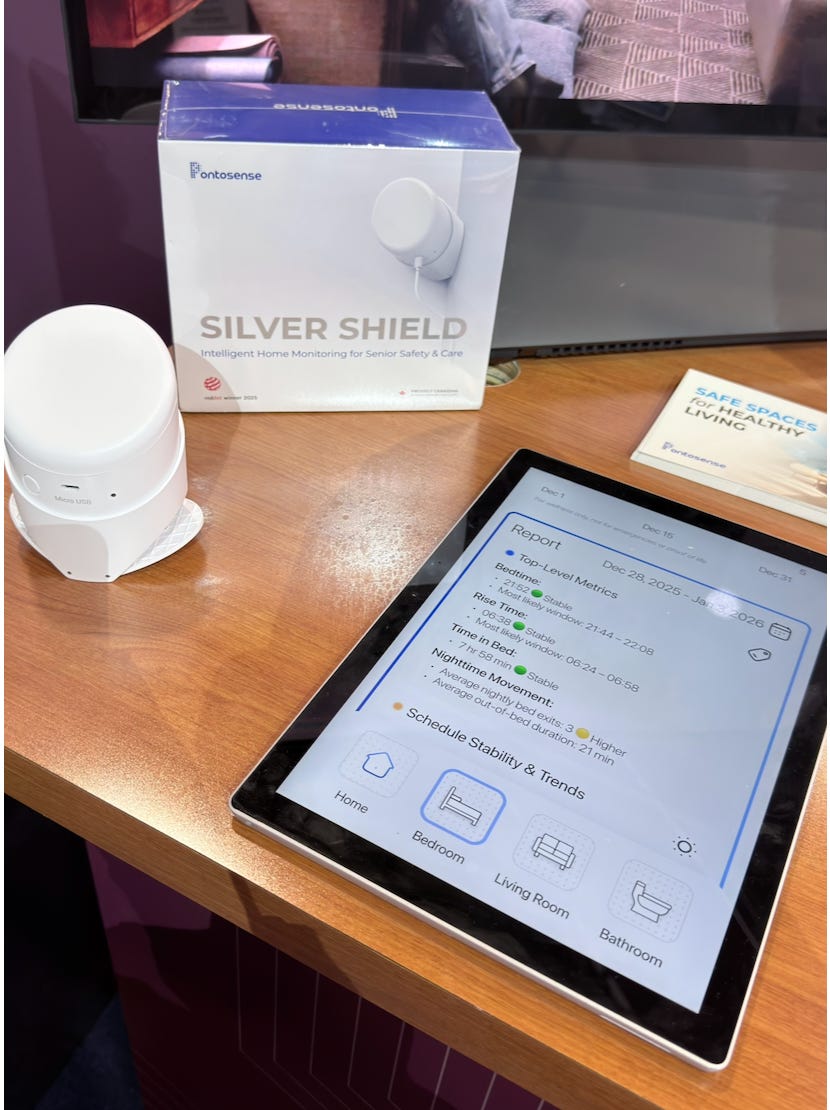
For the independent-living aged population, a number of solutions were shown. One of them—Silvershield—even uses the phone’s camera to map out the room and provide even more accurate representations of furniture to identify potential falls, bumps, or obstacles.
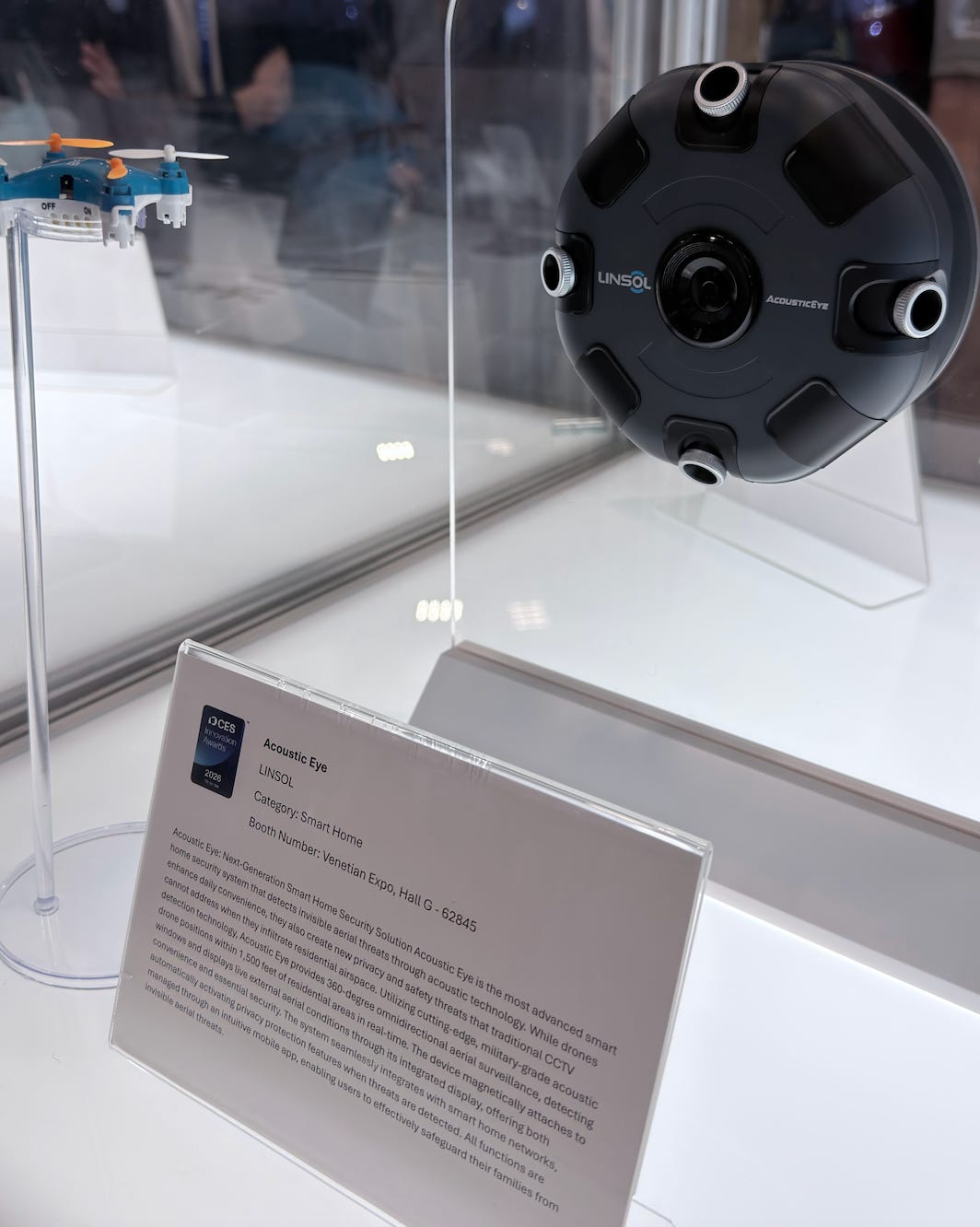
Acoustic Eye uses cameras and microphones to provide aerial coverage of a space in order to notify the presence of drones. The device attaches to a window. Cool!
Old-fashioned home appliances remain targets of the onslaught of AI. There’s been a desire to connect legacy style appliances to the internet and now to use AI. I found the internet connectivity for the kitchen and laundry room to be worse than a bust, but an actual negative. My feelings have not stopped the ongoing attempt with AI.
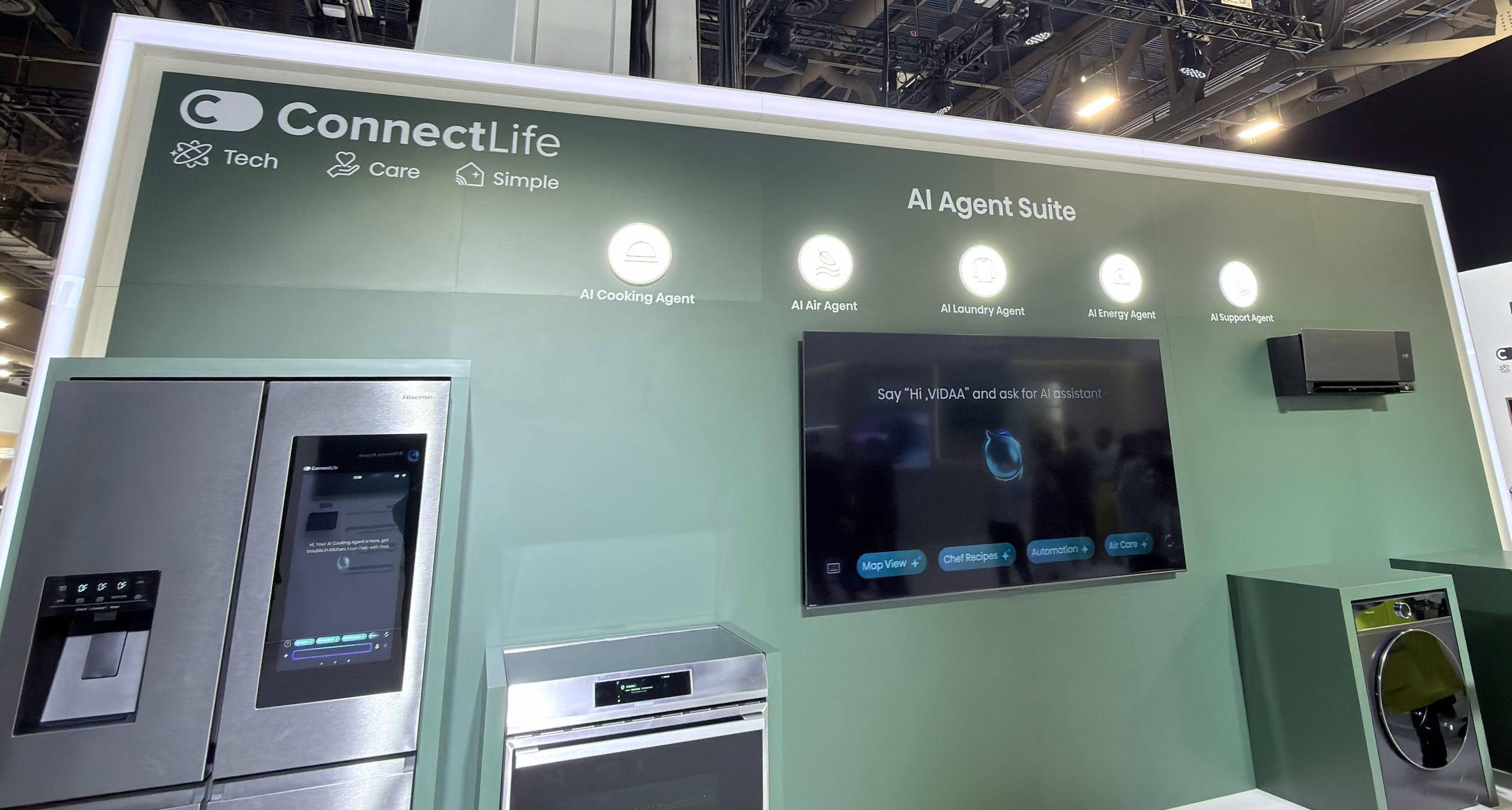
What bothers me most about the connected/AI appliances is that the claims are about cleaner, faster, easier, but that doesn’t seem to be the case in practice (for the few I have). But they are more expensive and they seem generally less well made and certainly will be obsolete sooner.
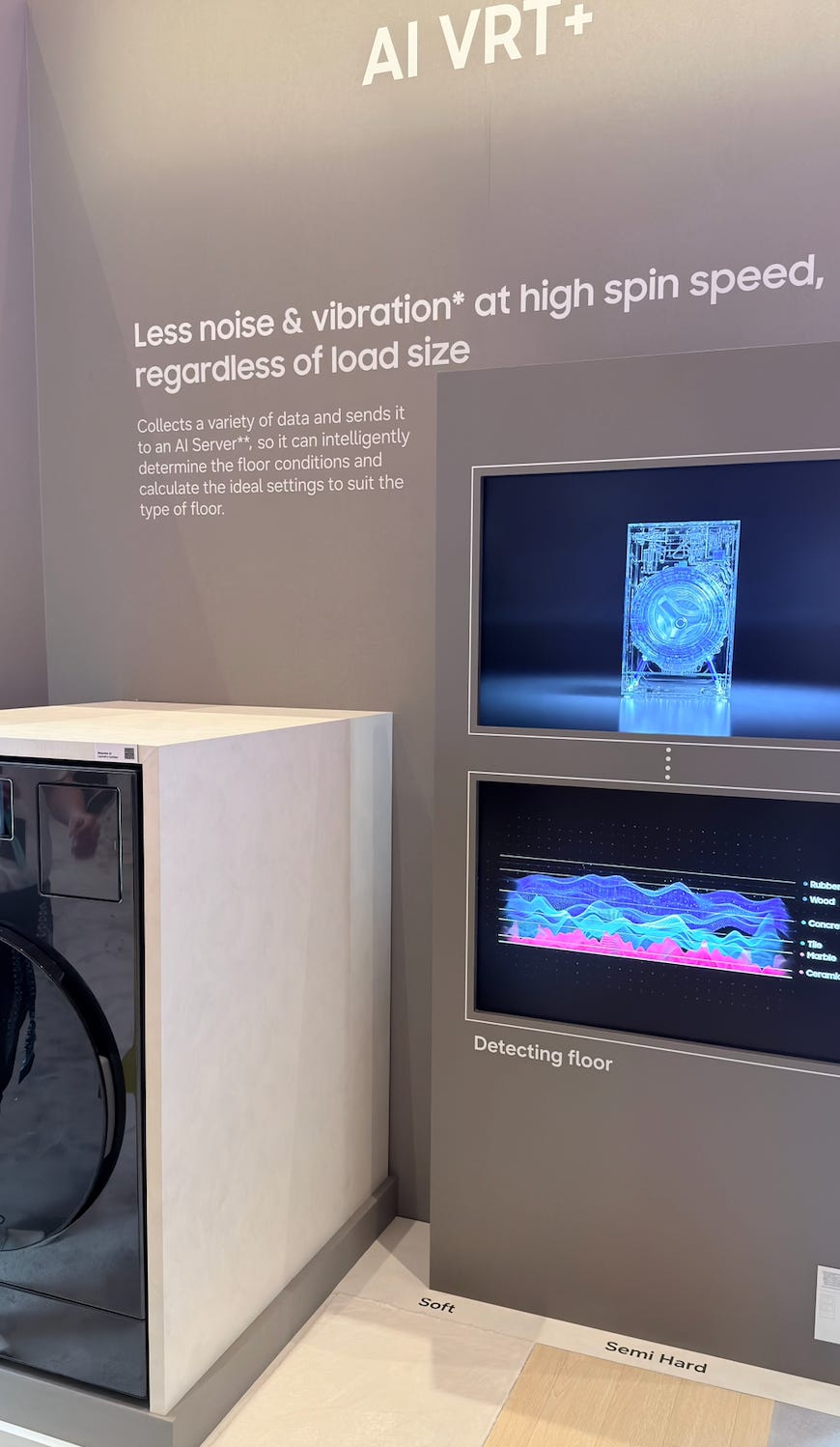
Using AI is great of course but also can be dubious. This washing machine uses AI to better understand the floor and adapt the W/D to the floor surface. But the floor surface doesn’t change underneath. I’m confused.
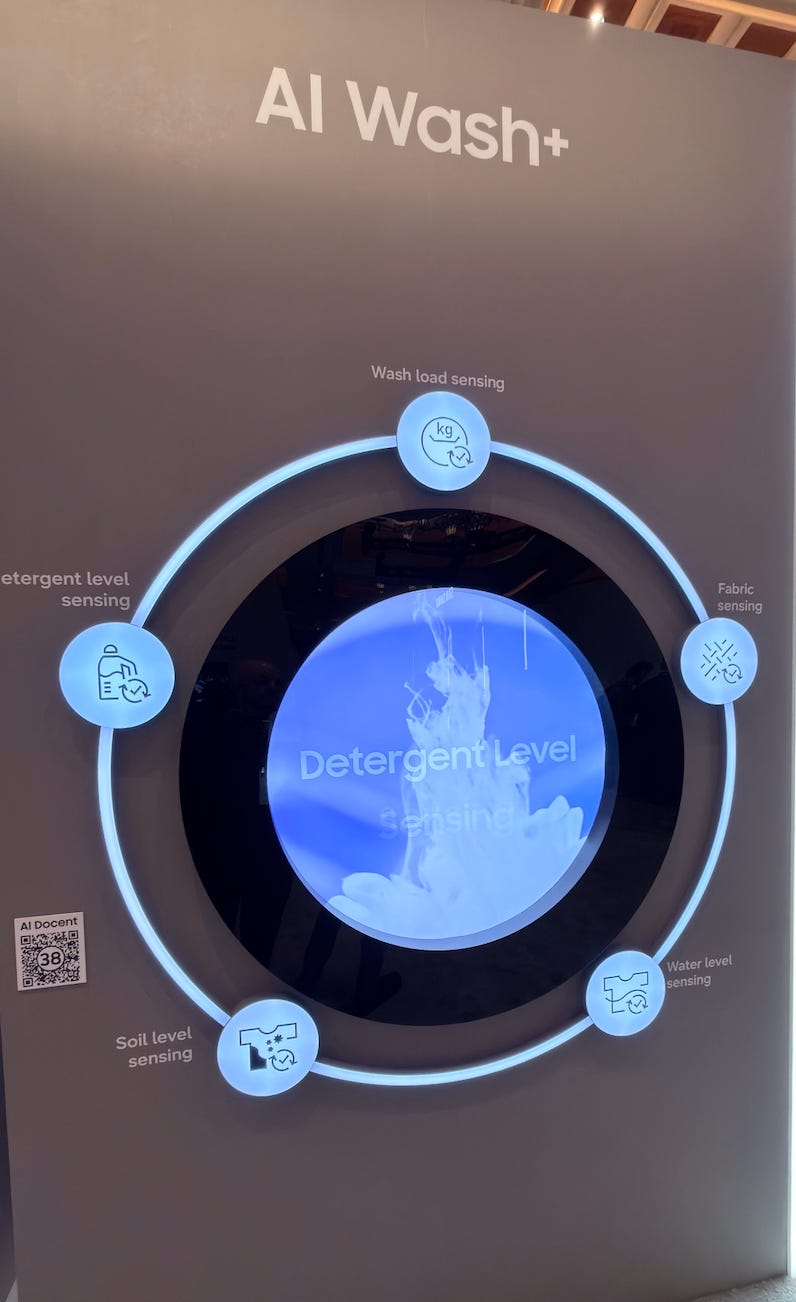
Does AI really need to be used to identify the clothes?
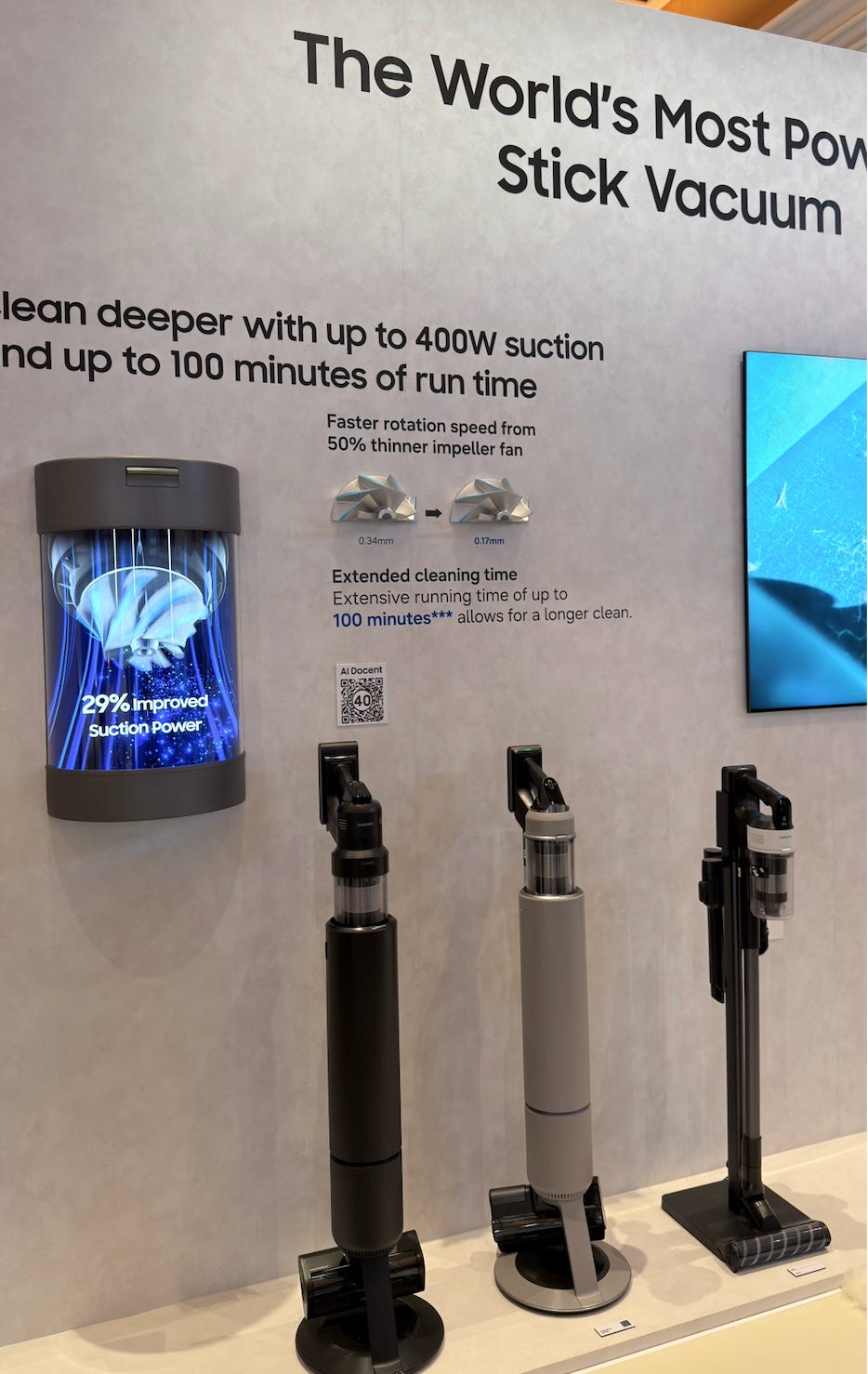
One category that seems to be getting better even without AI and connectivity are vacuum cleaners. The combination of improvements in understanding the physics of suction (!) and battery/motor technology is truly improving things. I do really like the new vacuums that have floor-based charge stations. The upright stick models that used a wall mount charger bugged me because I don’t like mounting things in the wall if it can be avoided. Even though the demos were just sucking up inordinate amounts of Cheerios, the demos were compelling.
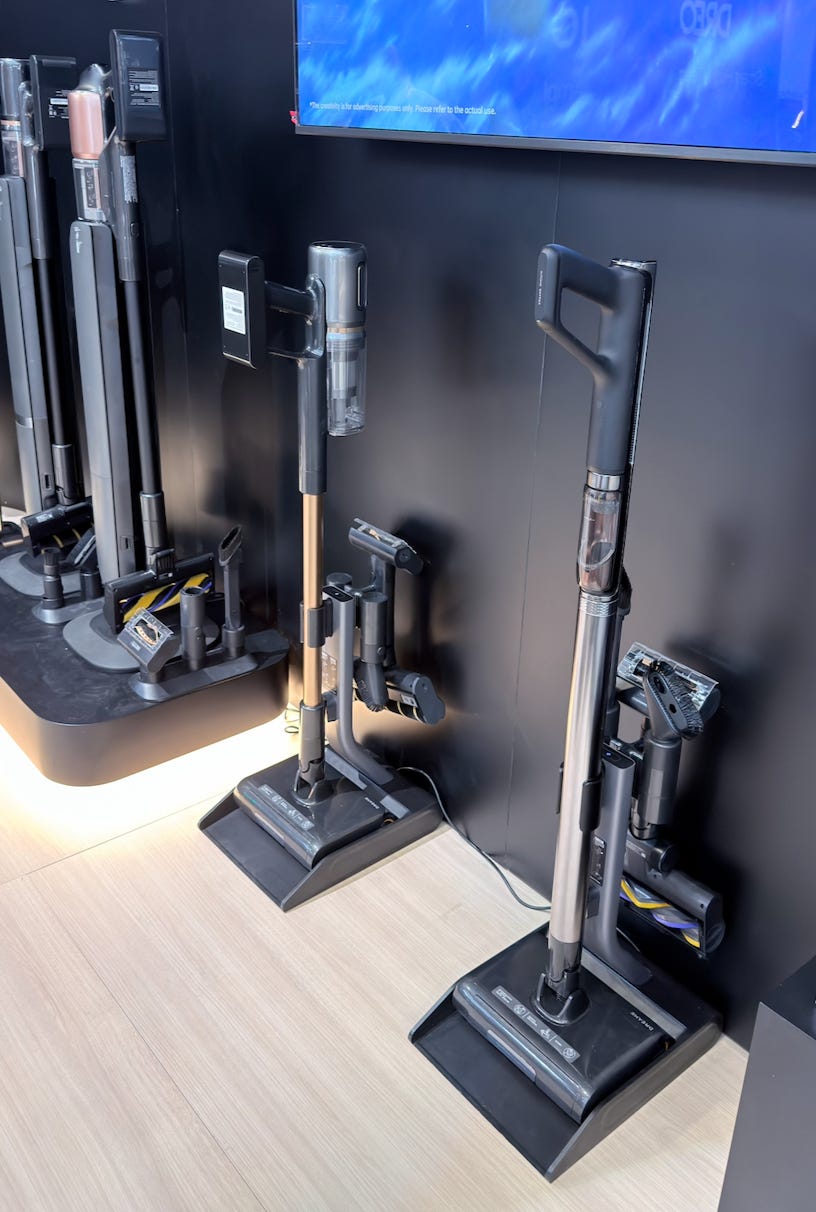
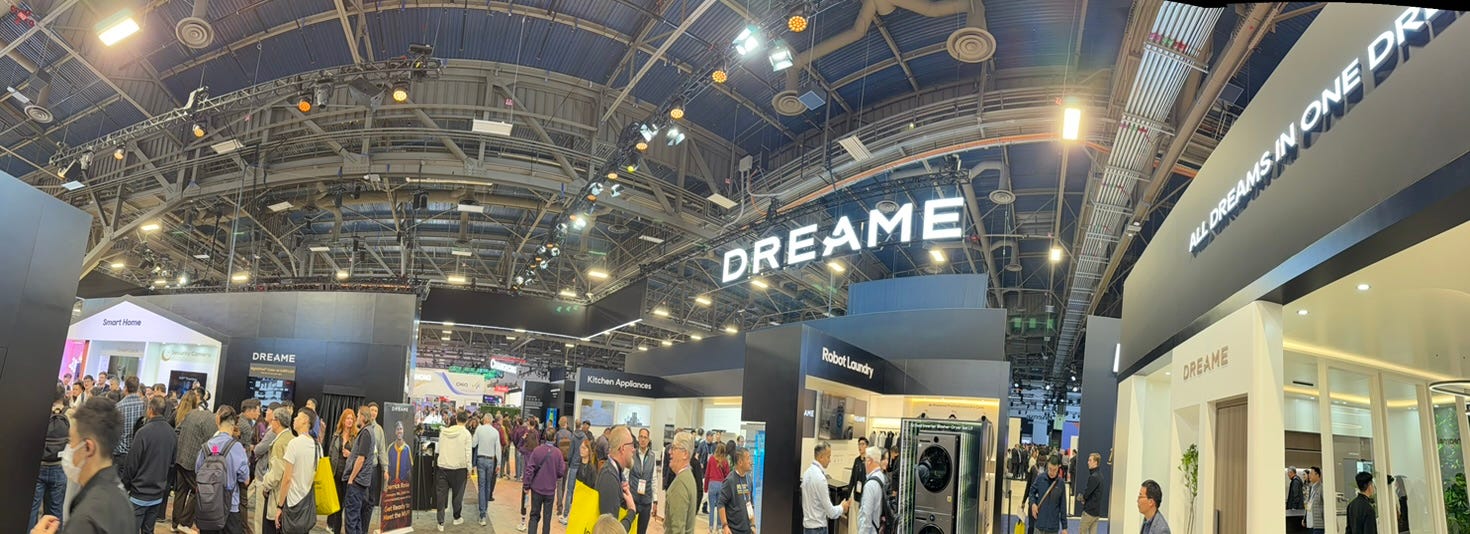
Finally, home appliances offered a great chance to see how a company can just “appear” to the US market but has been on a long journey. Dreame is a Chinese maker of vacuums that started a decade ago. This year they had an enormous booth and a product line covering everything: vacuums, TV, Smart home, small appliances, Air conditioning and quality, personal care, laundry, and refrigerators. They had a catalog the size of a paperback novel. Totally wild. Their booth represented a product line like Panasonic or Samsung and was at that scale.
Health
The biggest thing on display at CES has always been the divide between consumer health and wellness and FDA-approved medical care. Every booth is a discussion of either how a device is useful and valid even though it isn’t (and doesn’t need to be) approved by the FDA, OR it is a discussion of how it is in the process of seeking FDA approval. This year was no different. The show tends towards the non-FDA world which is why when I see something approved it is worth a good look.
The wellness trends have been huge, but are really in full force now. There were countless bands, rings, watches that measure body telemetry non-invasively and the process that telemetry to provide some form of wellness scores. It is impossible to provide any insights on these products without trying them. This is one where making a platform bet is a key decision. For many the form factor will drive the initial choice, a two-way phone-integrated watch, a discrete ring, or a sensor band are the choices today. There wasn’t much new in this area other than more of all of those.
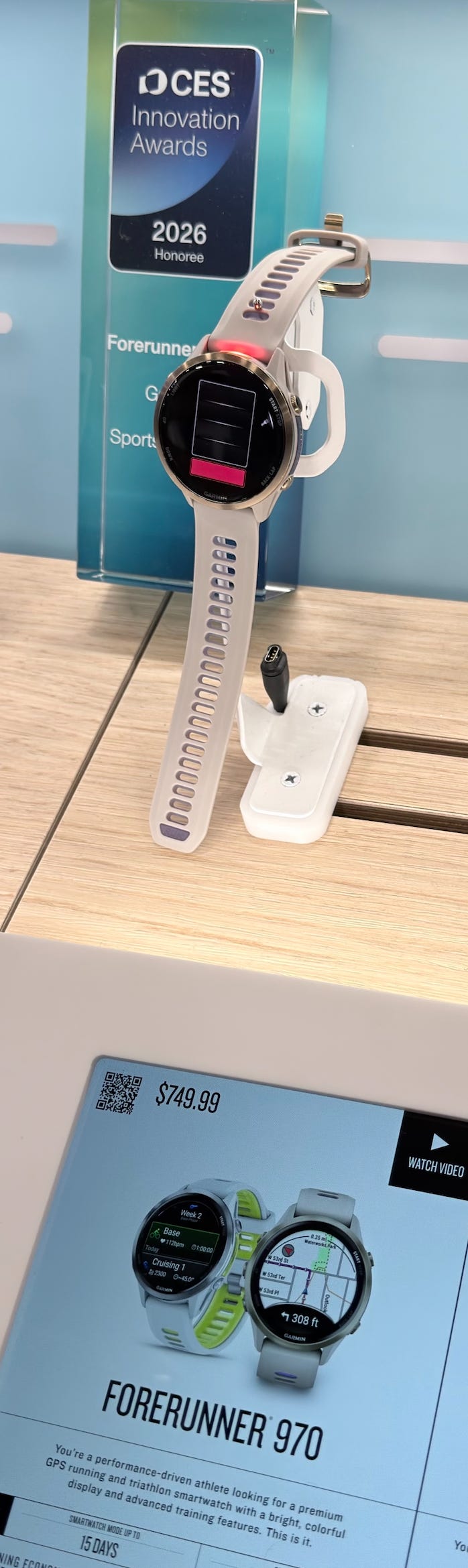
Many in the outdoor sports world are fans of Garmin. They introduced a new Forerunner GPS watch. It had a lot of new features. One of the cool ones was a red/white flashing light that serves as a safety measure when running. It has a long duration battery due it its huge size.
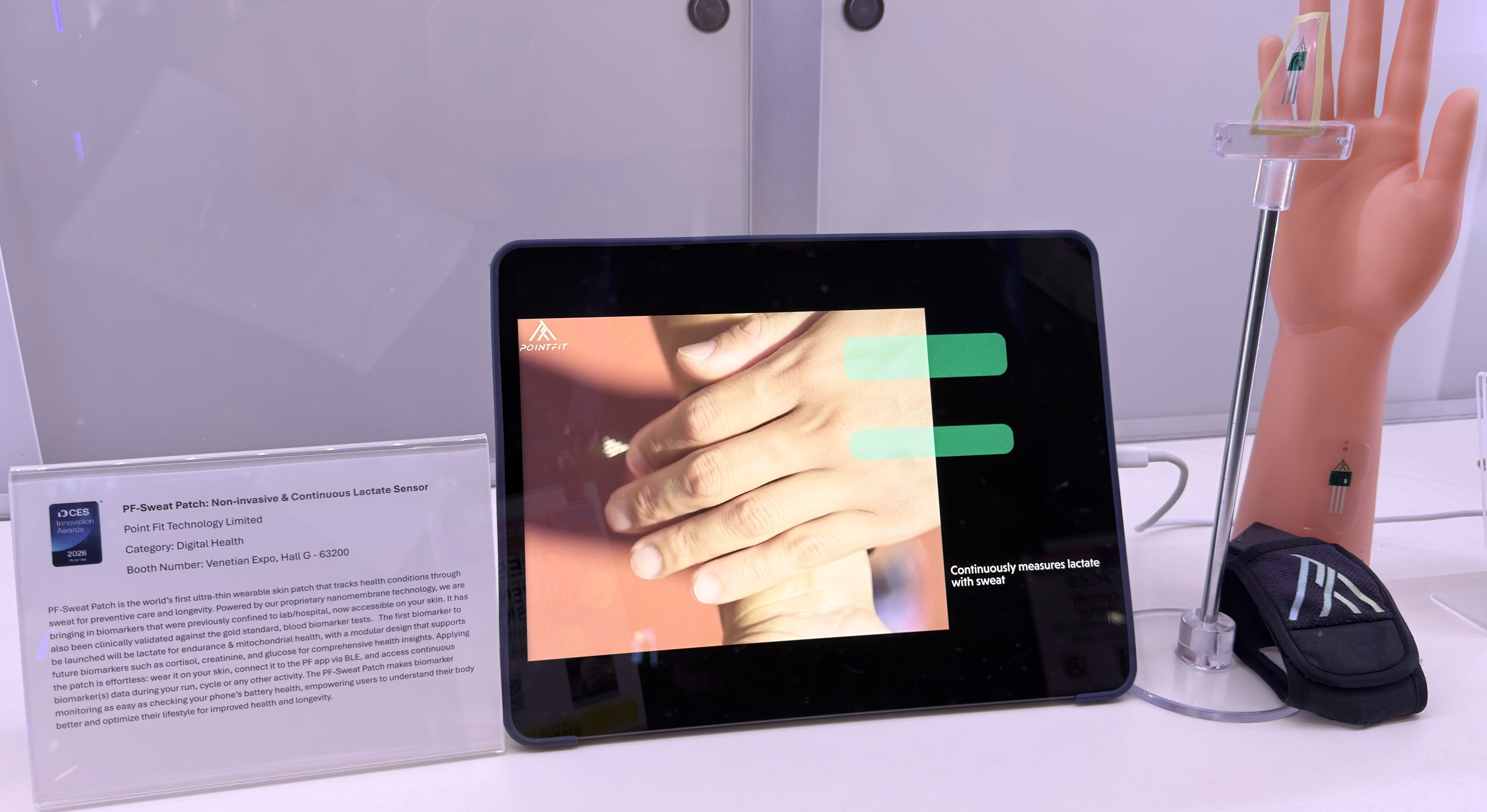
Also, for athletes (and more perhaps) is a new sensor that measures lactate while exercising. The noninvasive sticker sensor goes on an arm or wrist and measures the content of sweat. The first one measures lactate for endurance and mitochondrial health and primarily aimed at lifestyle improvements. The vision is to add biomarkers to measure cortisol, creatinine, and glucose for comprehensive health insights.
Sleep is by far the category with broadest coverage and also converging with AI. Every one of the above devices also acts as a sleep monitor. There were also countless mattresses and toppers that provide sleep measurement. I know for me waking up to two different sleep scores plus how you really feel is probably more stress than anyone needs first thing.
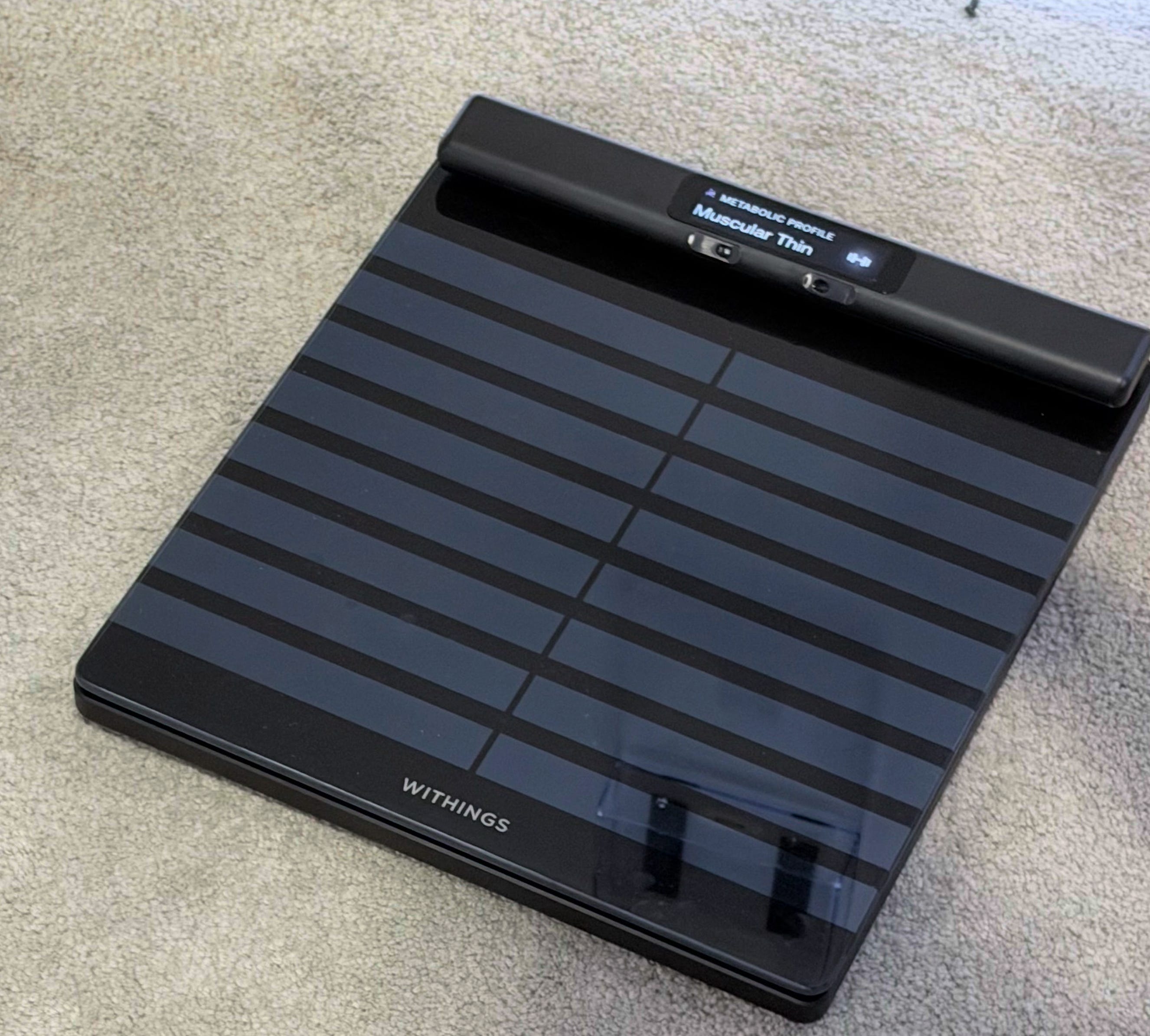
The most basic body telemetry is weight. Withings has had some of the earliest connected scales (along with other connected health devices). The company introduced a new Body Scan 2 scale. This is a scale with an extendable impedance grip device. The scale measures a whole host of biomarkers and does a longevity prediction that is more detailed and precise than the previous generation. It said “muscular thin”, so I was sold. The device connects over Wi-Fi and integrates data with Apple Health. They are definitely pushing a monthly/yearly plan and much of the analysis slides into paid-only so be on the lookout before buying.
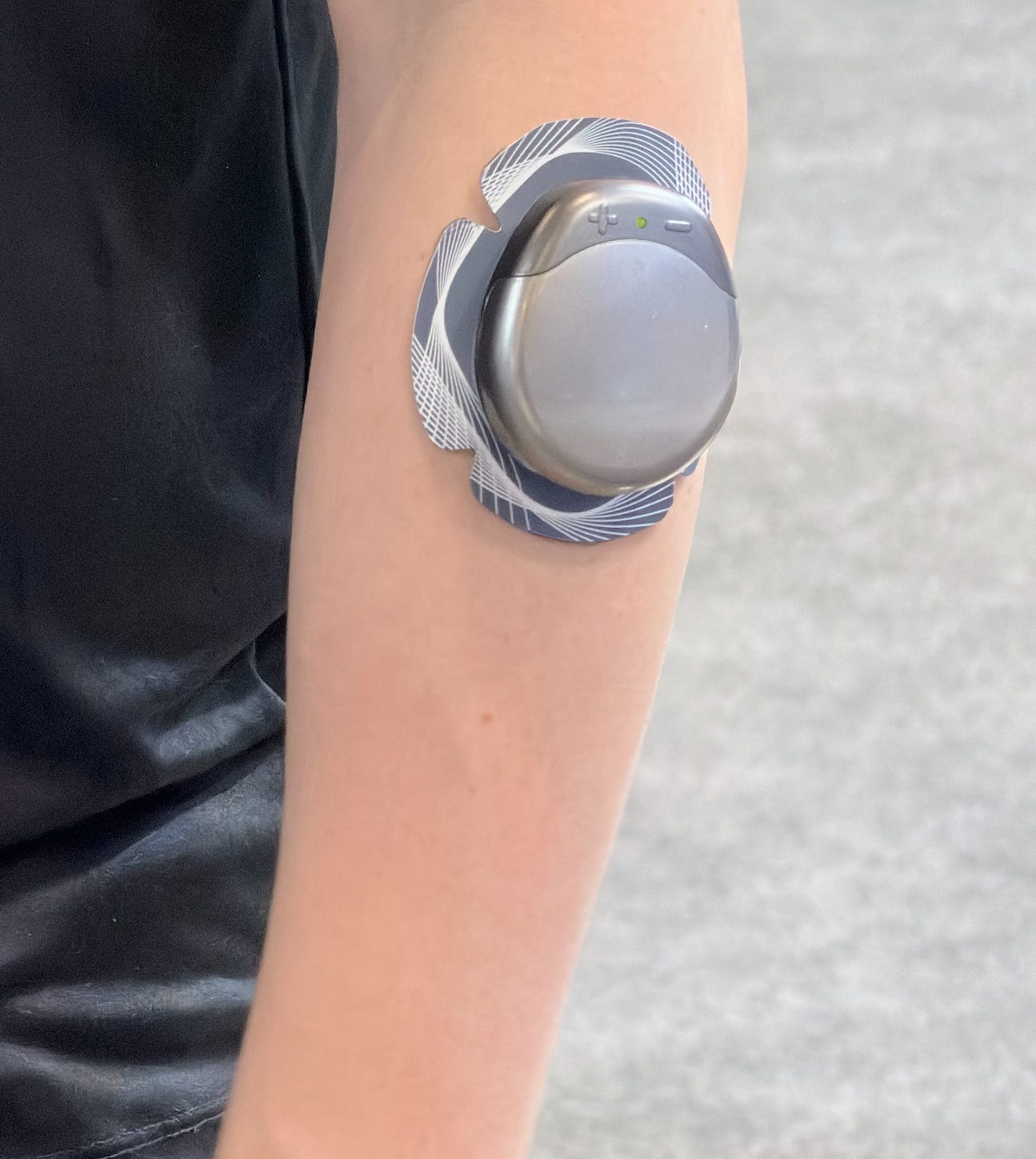
Quite a few devices especially those from other countries are designed to be deployed by and used with a primary care doctor. In many countries these startups are funded/supported by the national health services. One cool example I saw was a Korean company, exoFit, that designed a reusable stick-on patch that measures body composition, EMG muscle activation, gait, motion analysis, and more. It takes the collected data and provides “AI-powered” analysis for training and rehabilitation using the accompanying dashboard. The software is detailed and technical designed to work with a specialist. Thus, it includes the full occupational therapy/rehab plan and compliance.
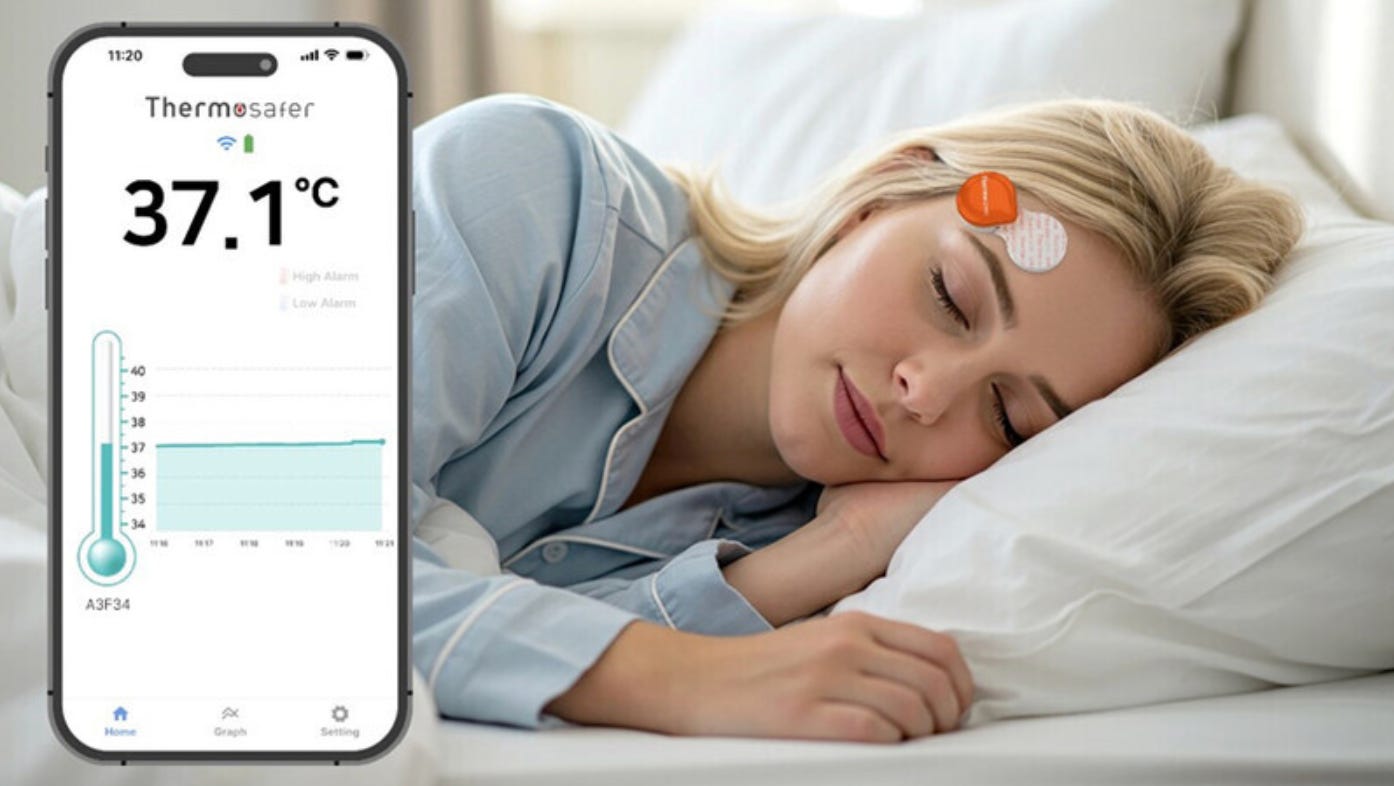
Many devices on display are just designed to be better at what we have always measured, but better because of form factor and connectivity. Another Korean device I liked was the Thermosafer XST600 (!) which is a core body temperature sticker that provides a connected and continuous measurement. There’s a little sticker you place on the body forehead) and a pair it with a gateway and monitor which can then display the temperature on an app or a multi-patient console (or feed the data to an EMR system). The motivator for the device was covid and viral infections. I love these simple improvements.
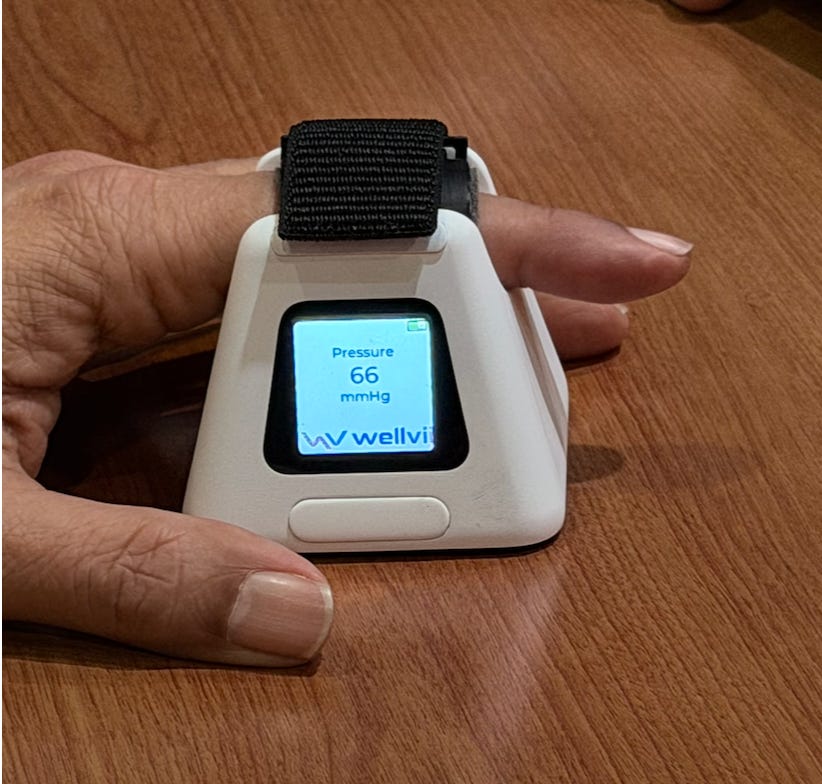
I loved this finger blood pressure monitor. Interestingly they created two models one with Wi-Fi and one with cellular. It is deployed via hospitals/doctors for monitoring where connectivity is important and with many patients, Wi-Fi isn’t an option at home.
One badly needed bit of body telemetry (at least until the world is on GLP1s) is continuous glucose monitoring. The current minimally invasive patches are widely used (as I see in yoga class) but not particularly convenient and costly. For a very long time there’s been a search for a non-invasive measure. Many believe that AI will unlock some telemetry that will prove correlated with blood glucose. Every year there are a handful of non-US companies that claim to have a solution that never breaks through the FDA. There were several this year (and one I see on Instagram ads all the time). I saw a ring and a fingertip system this year. I will wager these won’t make it.
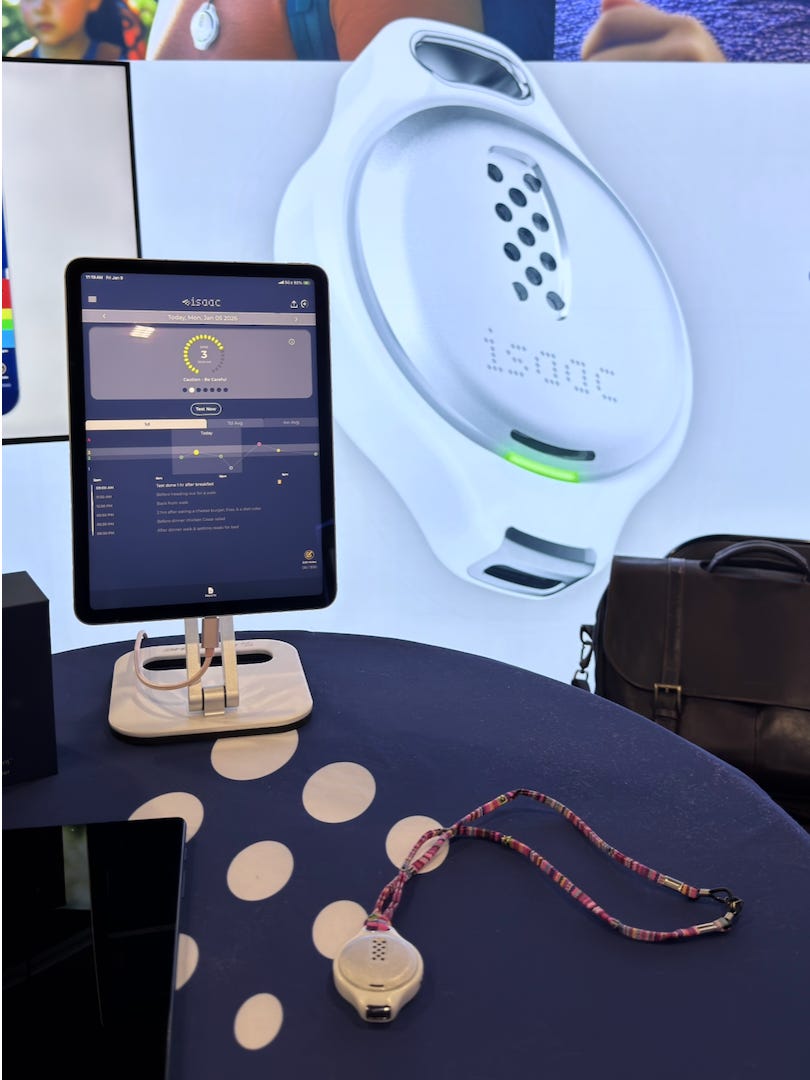
PreEvnt is a US company with a new implementation of an old bit of telemetry. It has long been known that your exhaled breath changes with blood glucose level. The correlation to time and level has been difficult to model as well as the specific elements. Isaac is a small “breathalyzer” form factor that measures volatile organics/acetone and couples it with an AI model to deduce glucose levels.
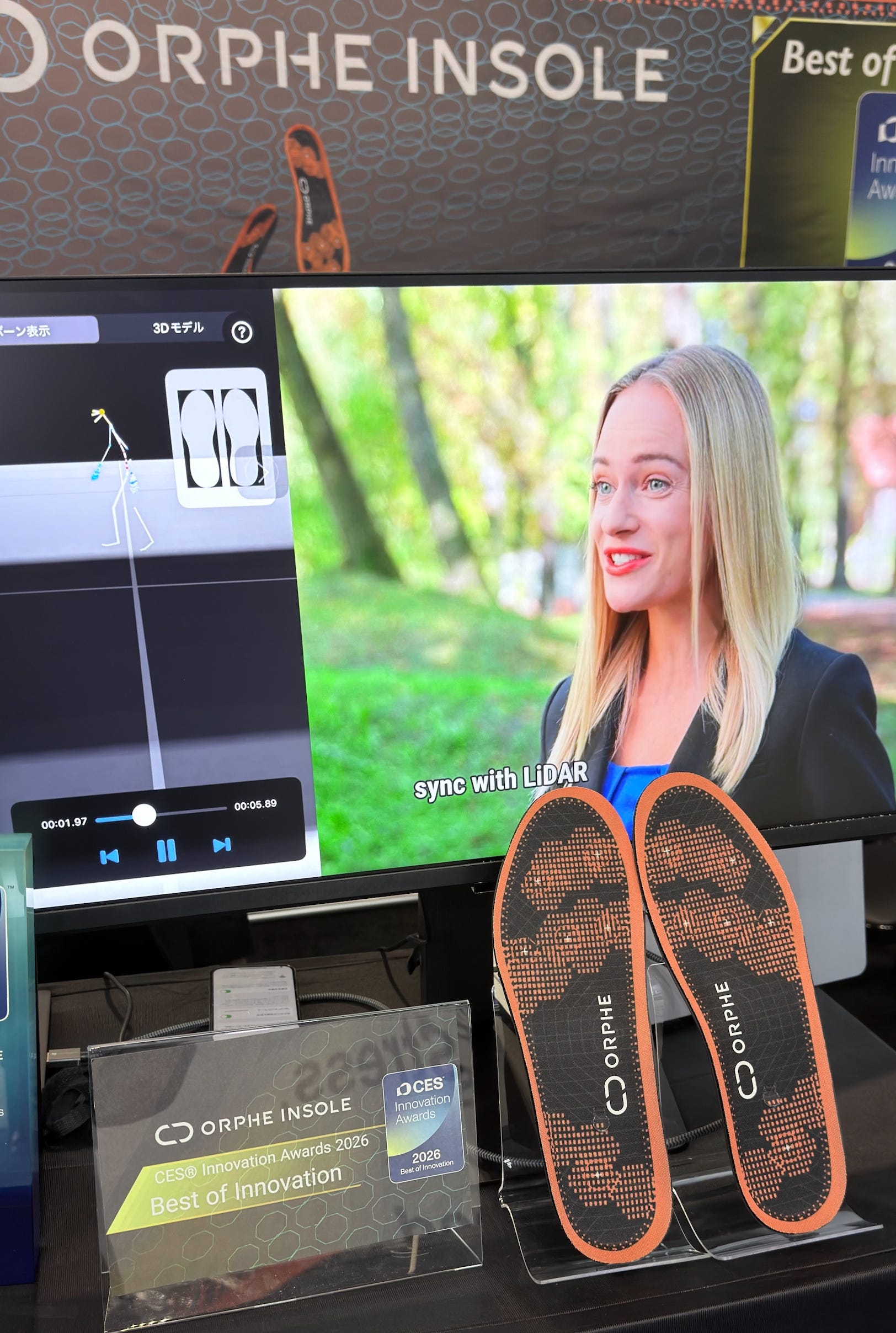
After low back, foot problems are one of the most frequently reported conditions and often go undiagnosed and untreated. The sensors have been around for a while but getting duration measures and correlating with conditions has remained unsolved. There have been shoes and insoles in the past. This year the Orphe insole combines those with a good deal of software in an effort to diagnose and treat a broad range of motion issues as well as falls. The insole has six pressure sensors that provide motion sensor-based gait analysis and software that can help directly or couple with third-party software for more analysis.
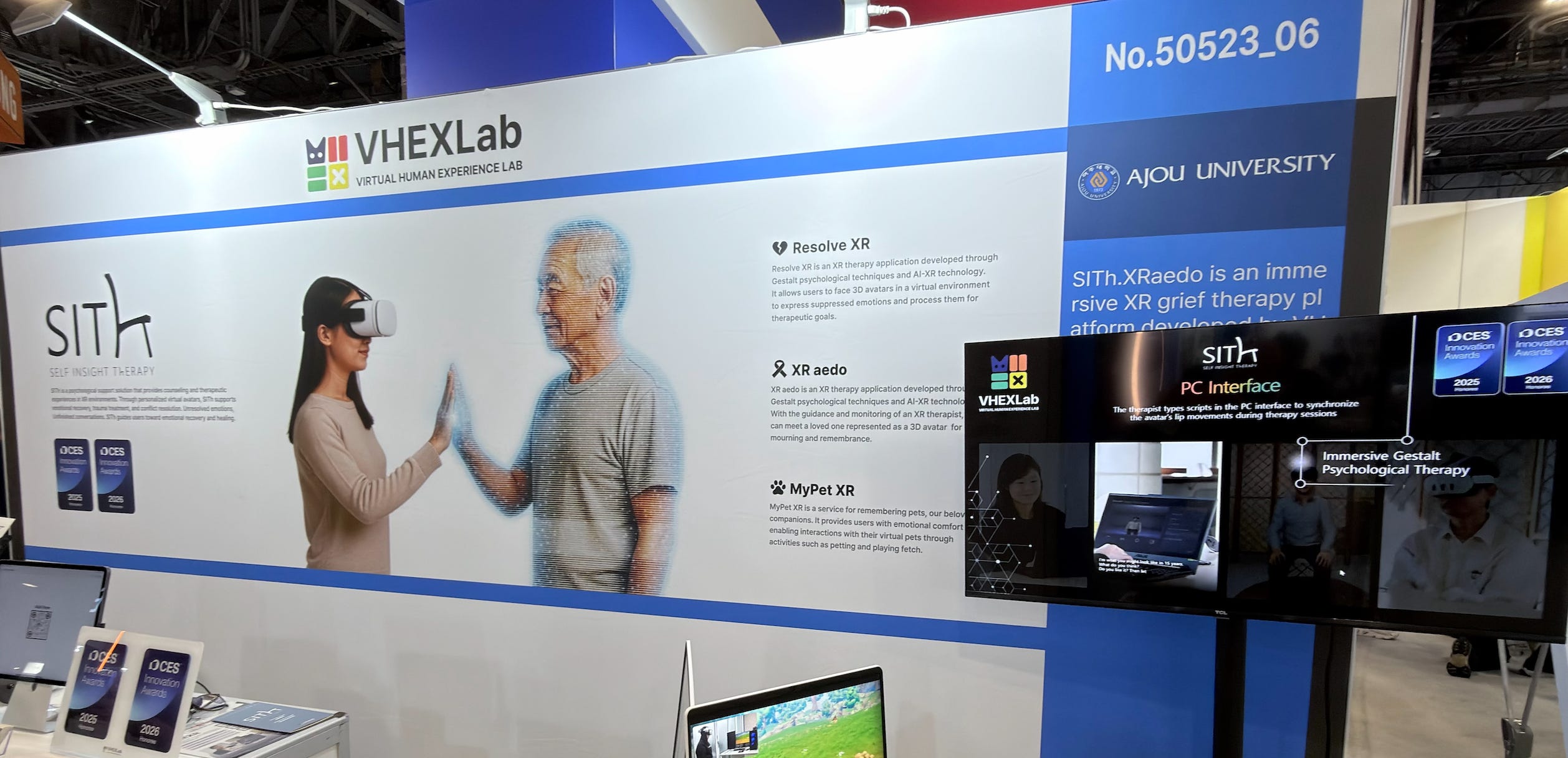
Not all of the products were devices. One product I was fascinated by was XRaedo from a Korean company that has a number of health related XR-based (extended reality) products. XRaedo creates a full motion A/V avatar of a loved one that has passed. The platform enables interaction and supervised grief counseling. At first this seems kind of creepy but as we see generative A/V arise from small samples and combining that with LLMs and training corpora based on real life first party materials, it does seem that recreating loved ones (or historical figures) is going to be a feature we will all have easy and low cost access to.
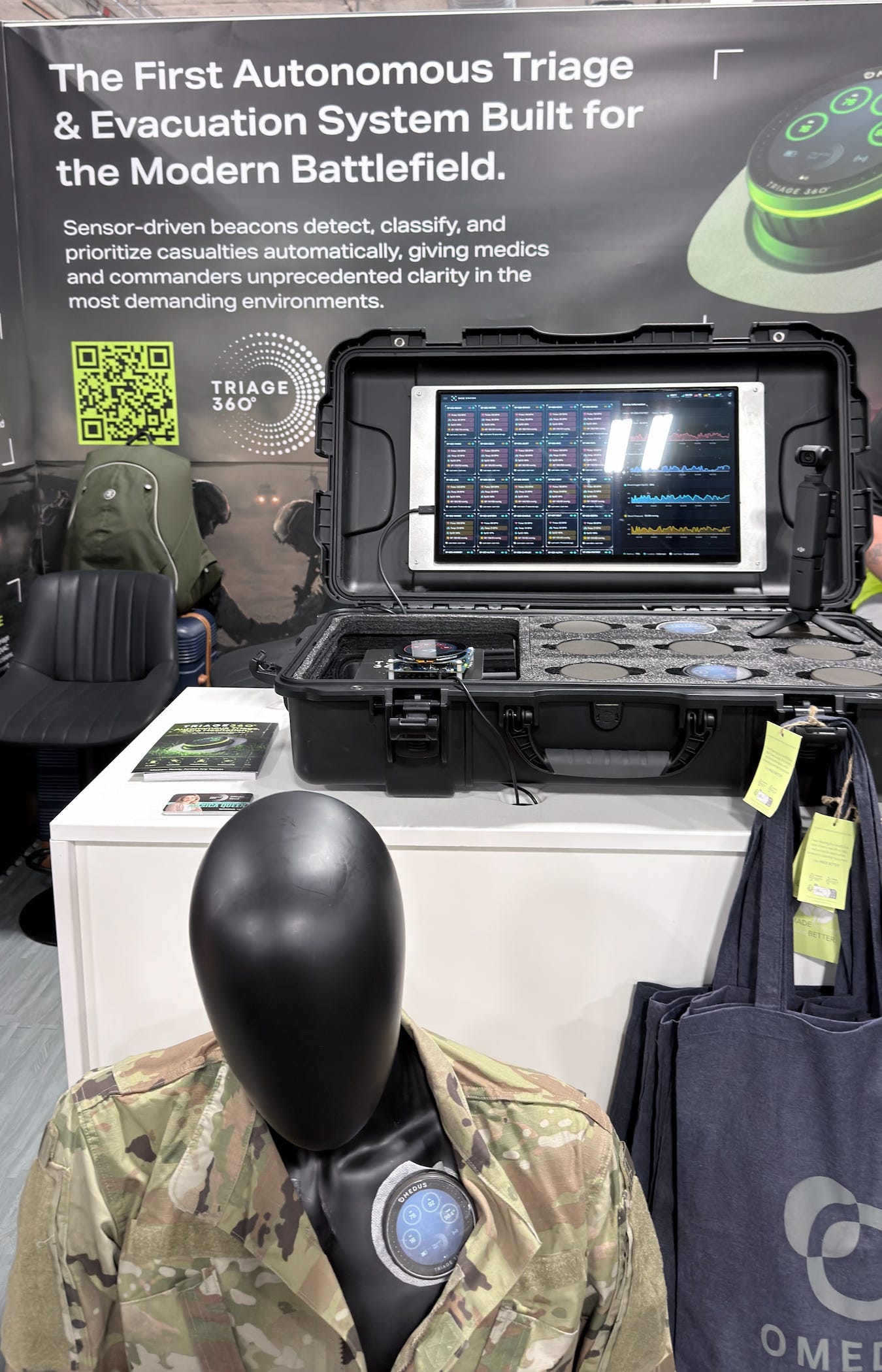
One of my show favorites was Triage 360° from Omedus, a US company based in Nebraska and founded by a triage nurse who worked through the pandemic, a physician, and a former Air Force officer. The product provides a high-tech addition to first responders of mass casualty events. Today triage is a color-coded arm band and a sharpie with a lot of verbal communication and physical separation (watch the tv show “The Pitt” for a good demonstration of this). Triage 360° is a crash case with a bunch of reusable modules that attach to the chest. These modules have the same color codes but also provide basic and needed telemetry, wirelessly sending this back to a console that can be monitored and adjust triage. It is not hard to see this product in stored in any location where a mass casualty event might unfortunately arise.
Robots
I came to the show certain I was going to be overwhelmed by robots. In a sense that was true. There were a lot of robots. The only problem was most of them weren’t working. My view there were three types of robots to be seen:
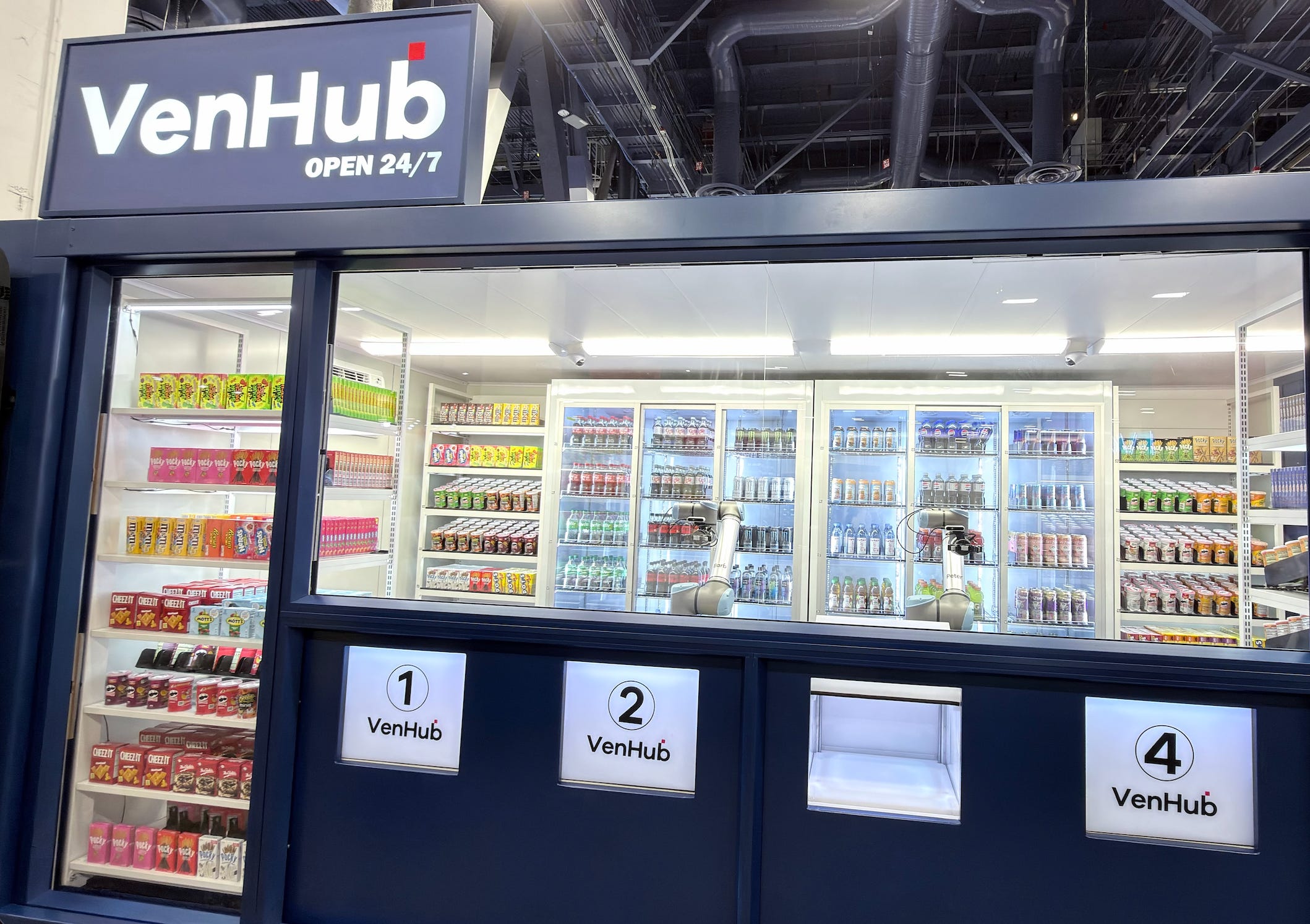
Articulating arms and hands. While I won’t call this a solved problem, they have been used in manufacturing for decades. What is new is setting them up, training them, and how they function in the face of ambiguity. AI has dramatically improved these and it is easy to see we’re going to have a lot more sorting, picking, welding, attaching, and so on to drive “lines” of all sorts. Below is a set of arms that pick off a shelf at a robot-staffed modern Automat.
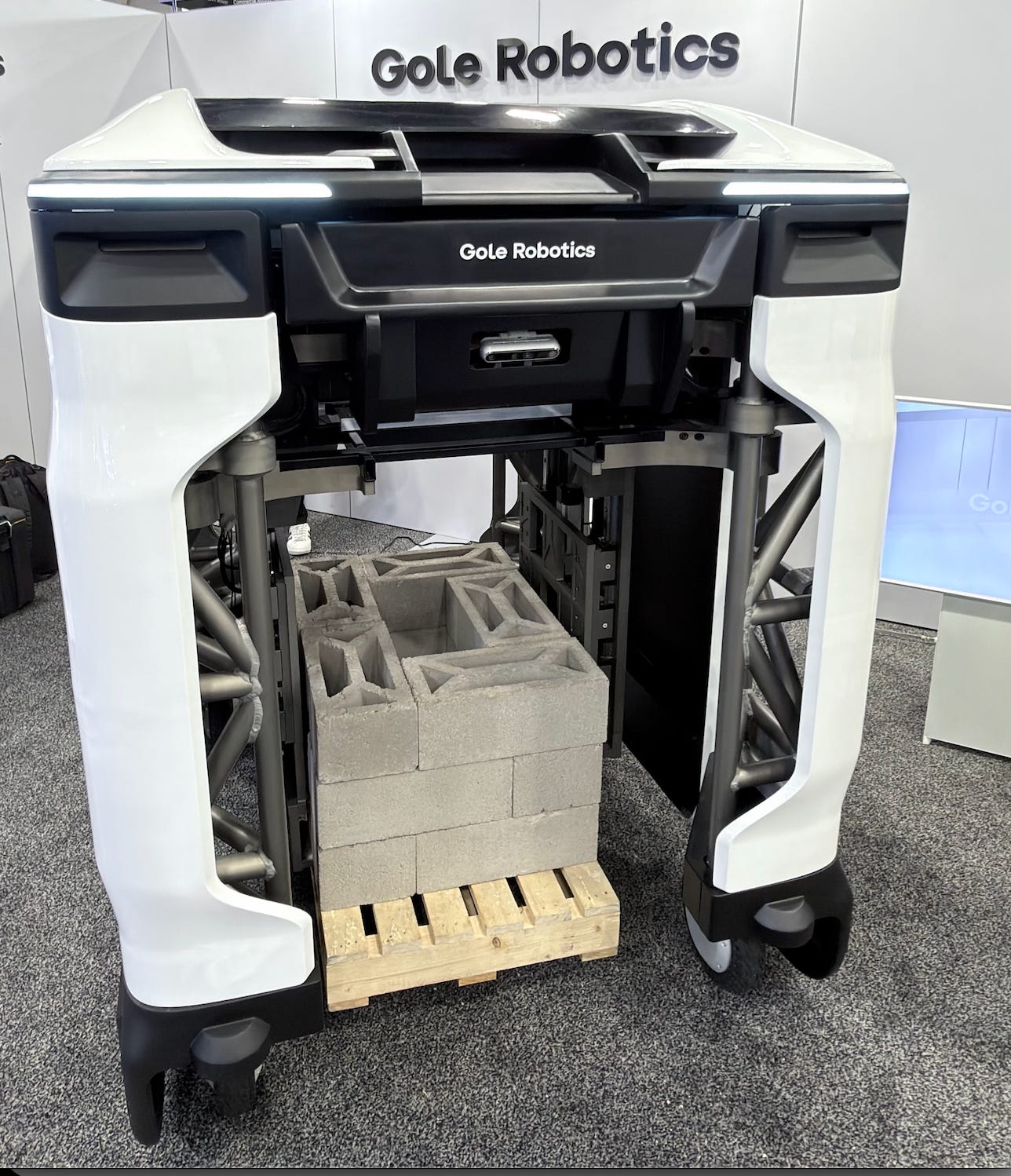
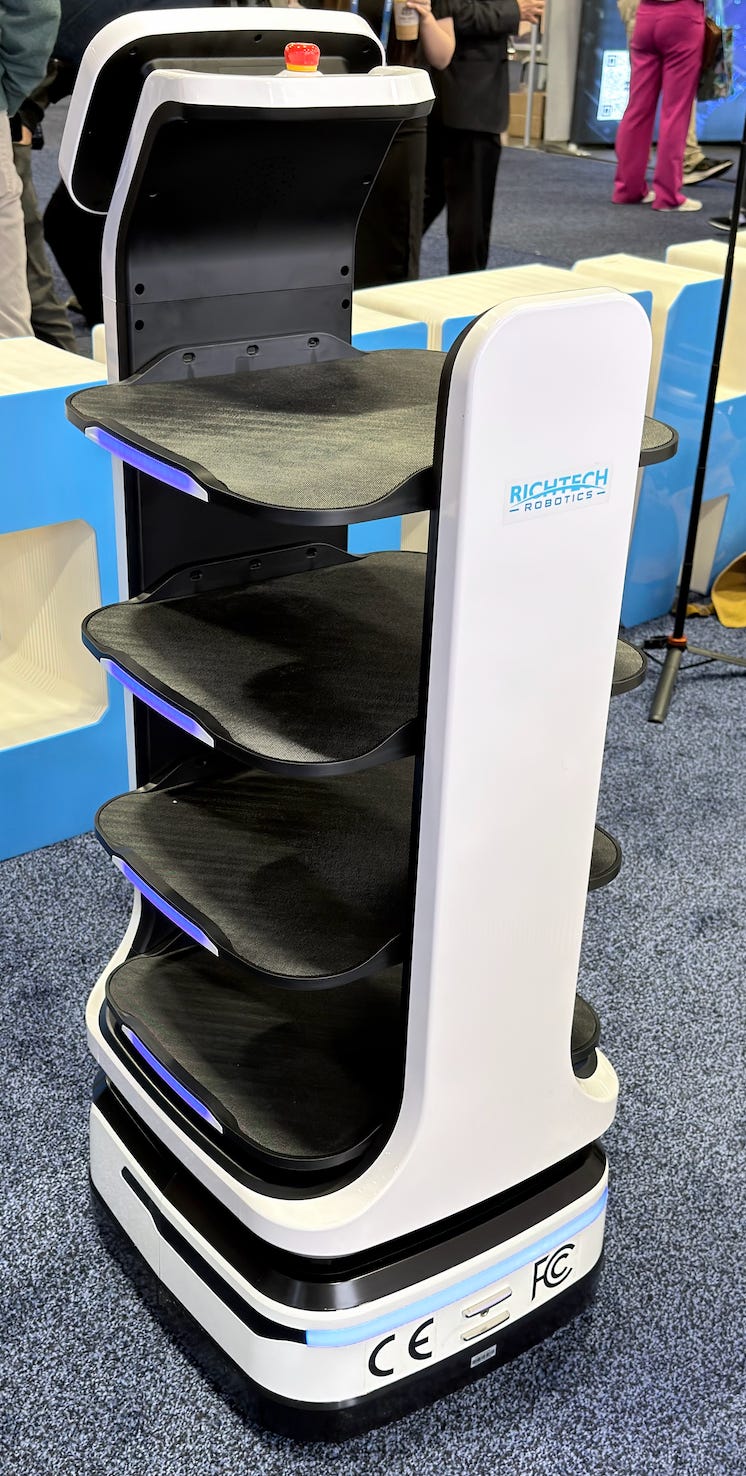
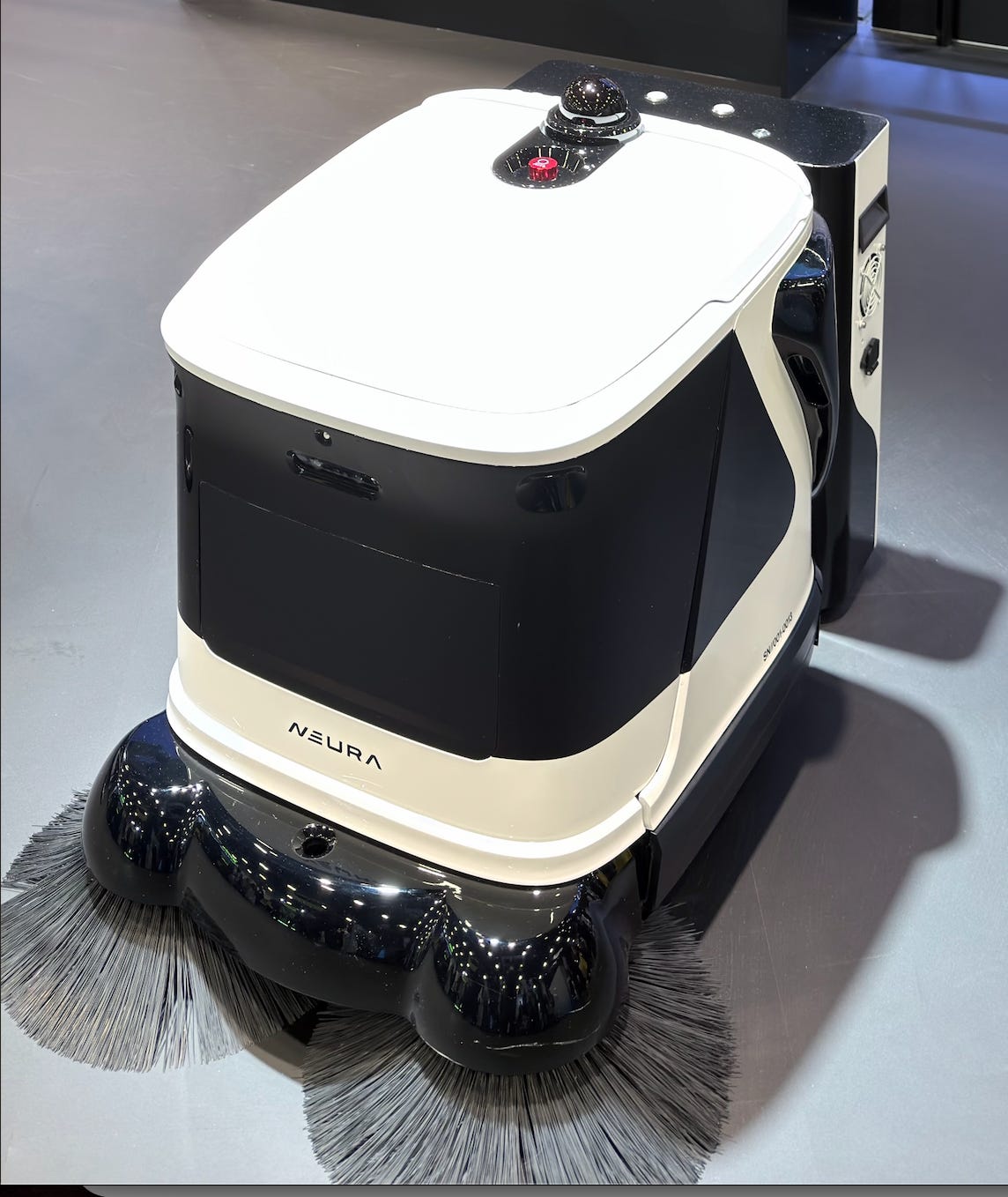
Roomba style autonomous machines. I was (again) blown away by the number of lawn and pool robots. I spent my youth mowing the lawn and cleaning the pool so can appreciate these, but I had no idea cheap teenage labor was in such short supply :-) Lawn robots are becoming larger and more tank-like for sure. These scenario specific robots cover everything from aforementioned lawn and pool to other scenarios such as warehouse delivery, construction site material movement, commercial office cleaning, and warehouse stock movement, to just name a few. Again, these are vastly improved and independent with the new layer of AI software and sensors driving them. There are going to be many many many more of these. The unifying theme of these are the docking stations so I suspect new offices and factory floors will be developed with dedicated docking space, something you see on luxury custom home TikTok for Roombas in kitchens today. Below are a few examples of this style.
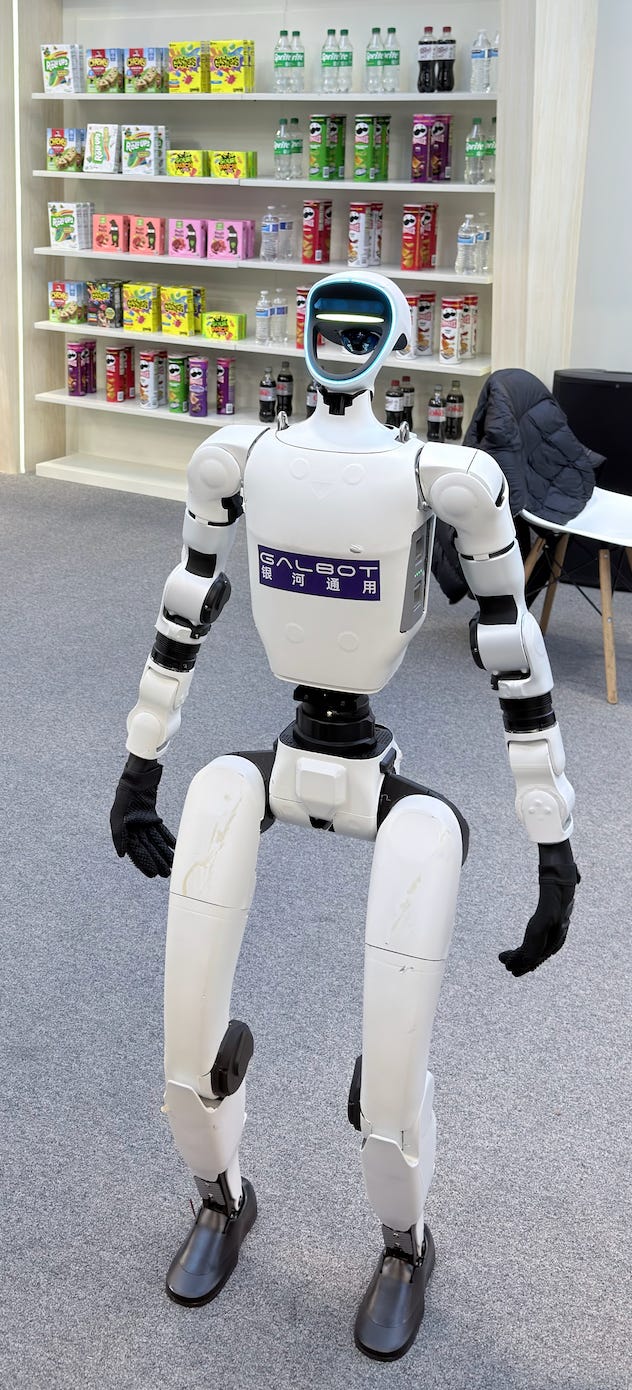
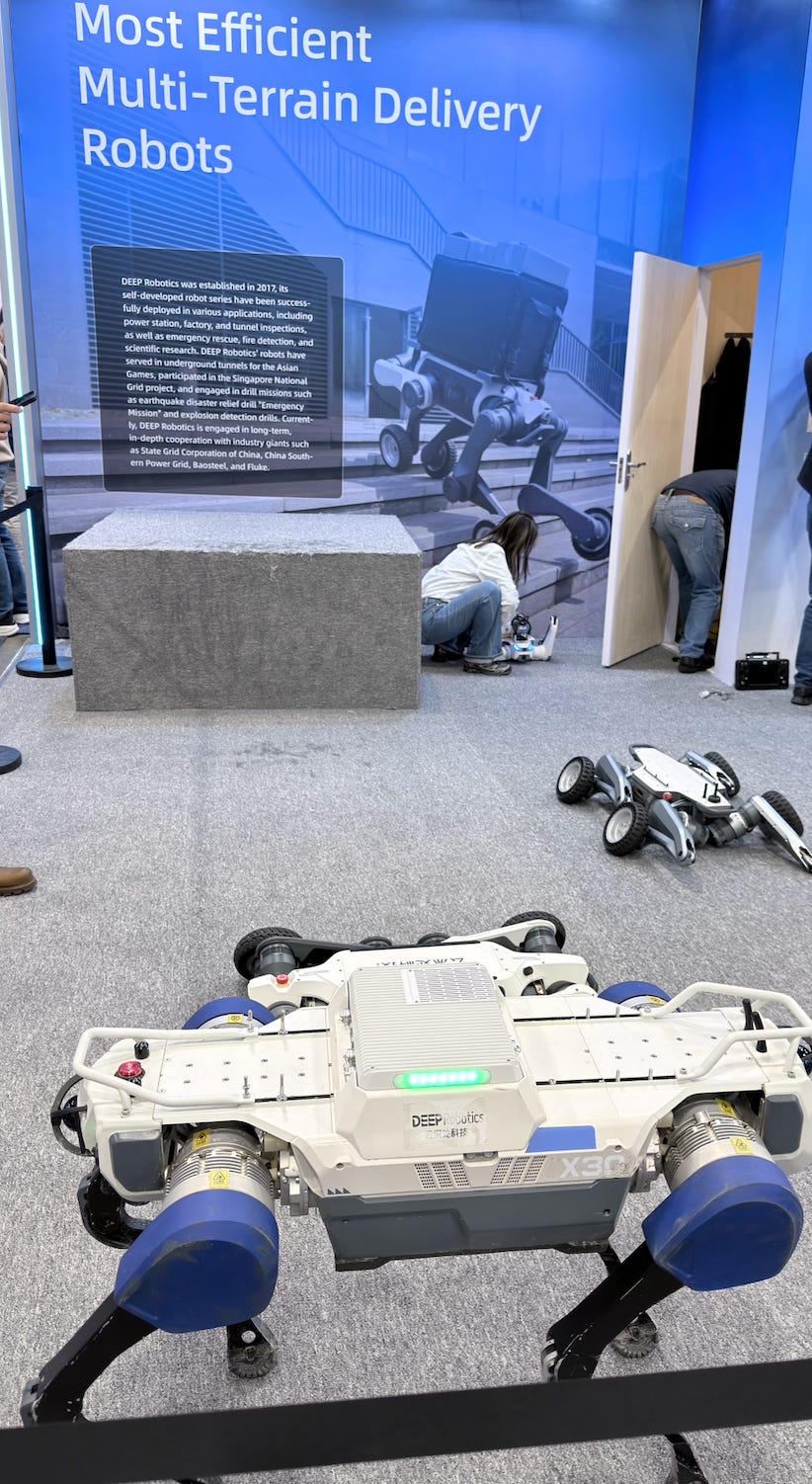
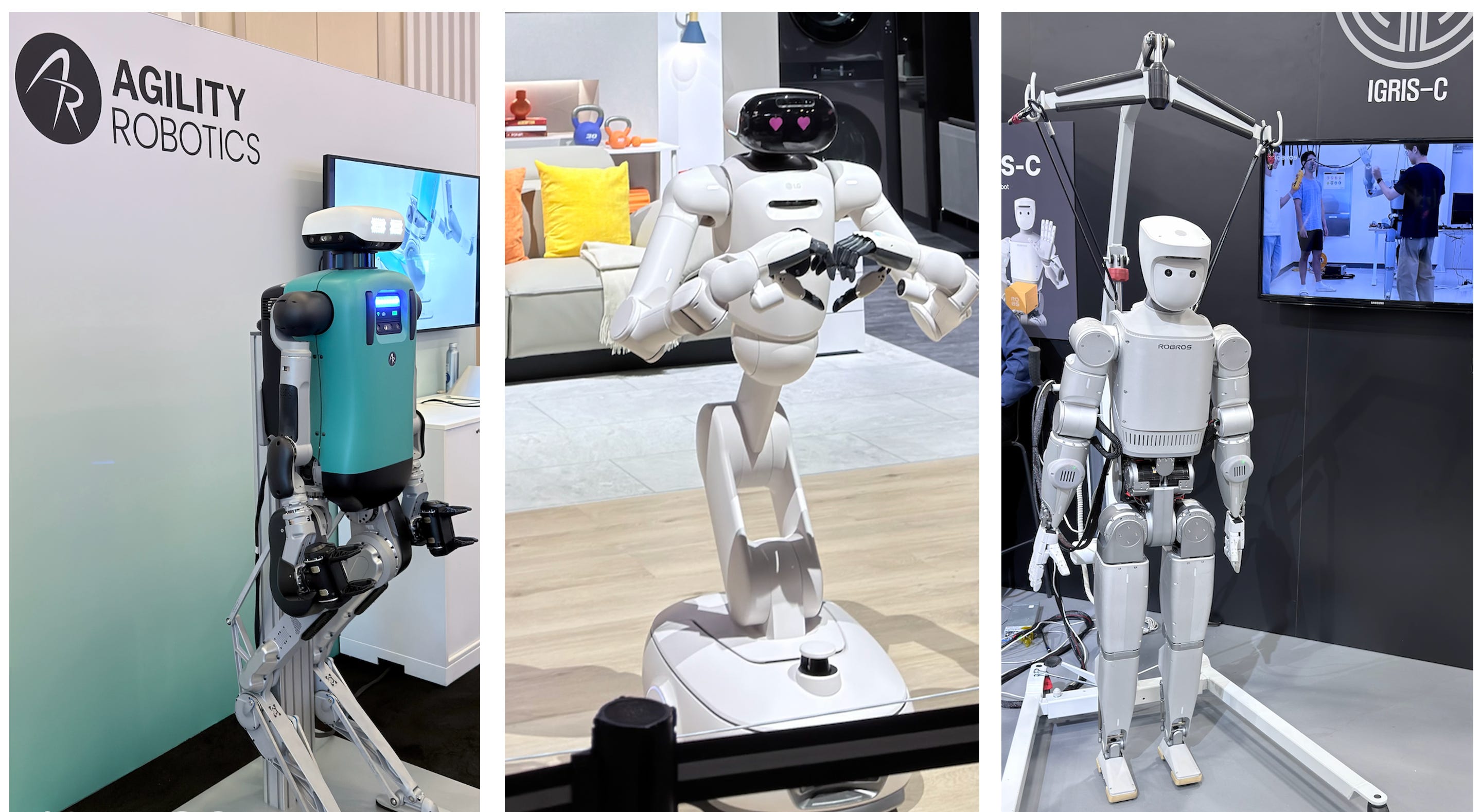
Humanoid (and four-legged) autonomous machines. For many the progress as evidenced by CES seemed slow. The demos were a chorus of failures for sure and reminded me of so many speech recognition demonstrations of the past. There’s a feeling these are always a few years out. There’s no denying the progress and given the pace of autonomous driving, it is fair to see the set of problems these devices face will dramatically improve. Will they get broadly deployed in a few years? To say no, requires one to bet against Elon Musk which I am definitely not willing to do.
Here are a couple of humanoids. The first picks items off a shelf. The second is one of the defensive Boston Dynamic “dogs” but it wasn’t quite lively at the show. The third are just some robots standing there suspending by humanoid robot racks.
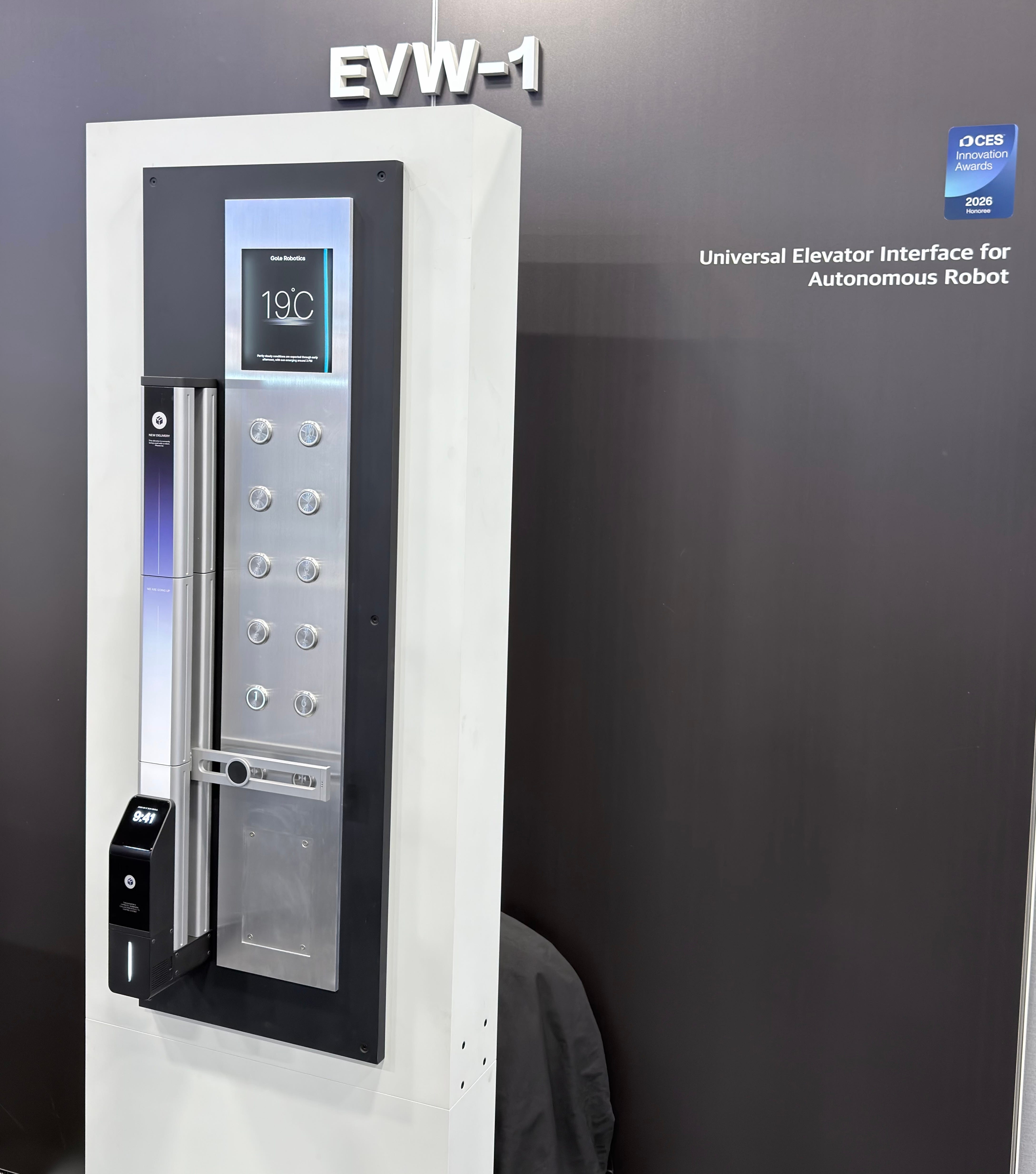
By far the EVW-1 was my favorite robot demo. It is an assist device so robots of the Roomba class can make their way up and down elevators. The robot somehow summons an elevator (which was a step they said could happen with a Wi-Fi command) and then via another command select the floor. This robot then slides up and down and pushes the button. I wasn’t sure why the same Wi-Fi API couldn’t press the button, but I digress. Presumably a full humanoid robot does not need this help. So, this is only for when R2D2 is alone without C3PO.
This one was pretty cool. And really does show that ample opportunity to turn jobs that are difficult at best into jobs that manage, maintain, repair, and keep supplied the robots.
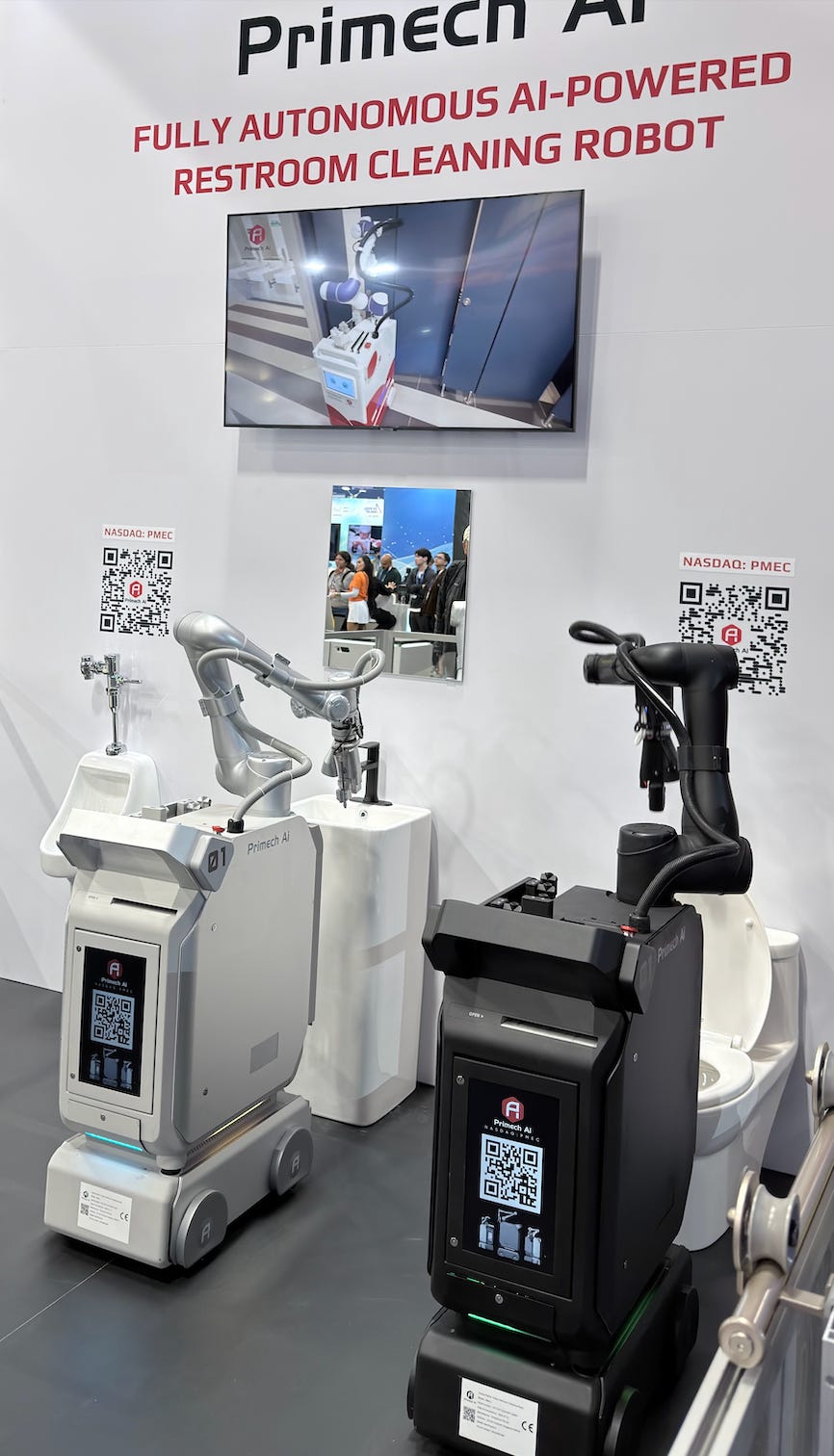
I refuse to be cynical about robots both in the “always 5 years out” view and in the “they are net negative for jobs”. I think the demand for robots is infinite and the more we use, the more jobs get created, just as we saw with transportation as autos created whole new classes of jobs for humans above those in horses (and many more jobs).
Mobility
As mentioned way up at the top, a big chunk of exhibits from past years that were not at the show this year pertained to mobility, particularly autos. I welcome that reduction even though mobility is deeply connected to all the technology work I love and follow.
The show featured a small amount of micro mobility—scooters and ebikes and other assorted ways of moving around in an urban or warehouse setting. There was also a collection of full exoskeleton suits that seems to be increasing in display for both individual and commercial use. While more health related, there were a number of joint-specific exoskeletons such as for knee or arm.
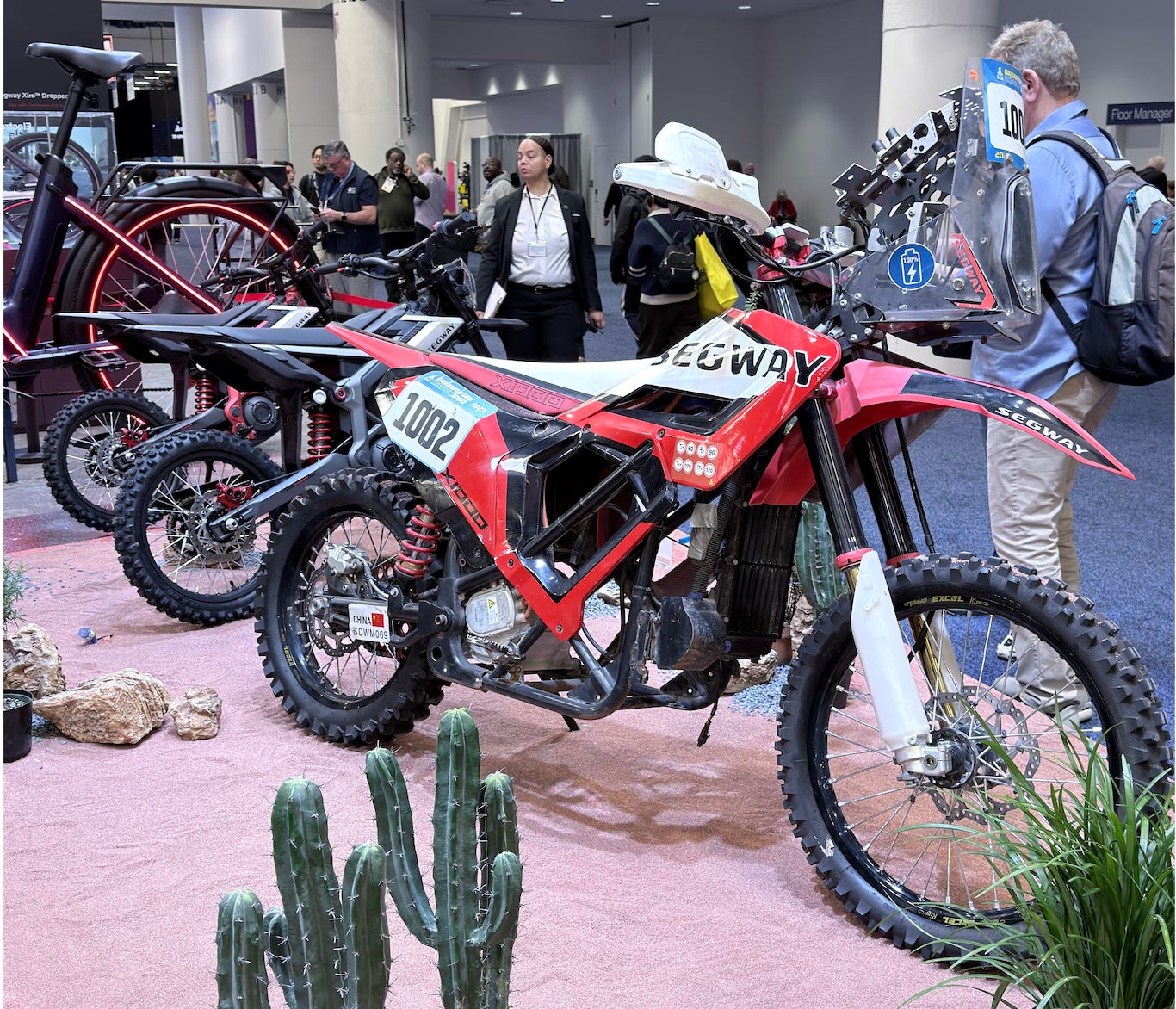
For me there’s one strategy that really matters for mobility and that is autonomy. Like PCs, I believe human-driven vehicles (particularly but not only gas combustion) have reached their saturation point. While obviously ownership will increase, the technology has plateaued and the growth scenarios for vehicles are in autonomy. I believe like mobile phones, it is likely that parts of the world that have low vehicle ownership today will leapfrog human-driven cars once the road infrastructure and economics are in place.
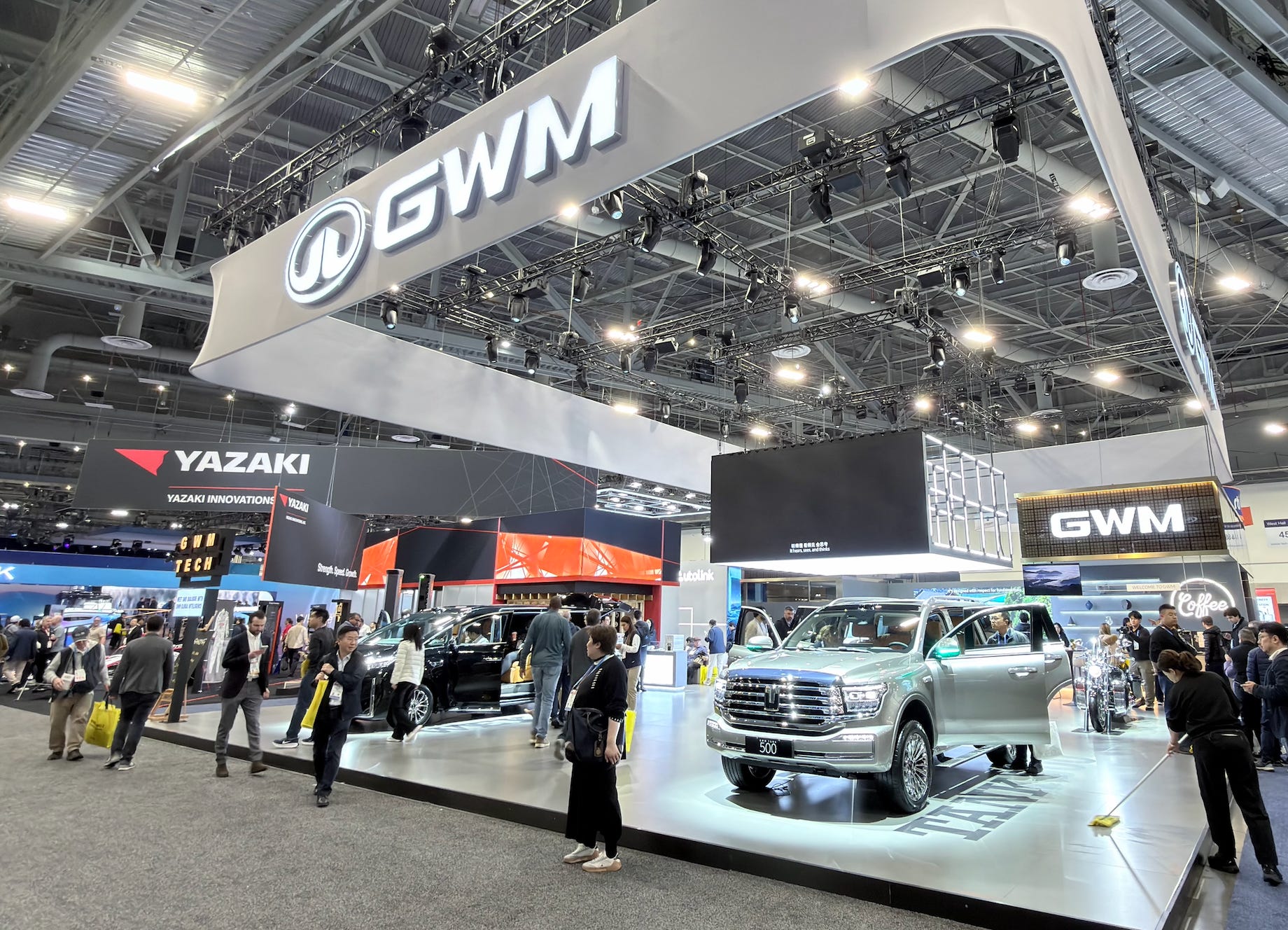
The national companies building GCE all seem to have either retreated or struggle with EV transition. It seems the case is clear that the model of in-house integration and manufacturing of broadly outsourced design and engineering has made it nearly impossible for existing automakers to transition to EV. China is clearly leapfrogging the gas engine with new companies like BYD. Still the existing GWA known for heavy equipment made a big showing of its line of consumer-oriented EVs. They are a distant number two but making a run for it.
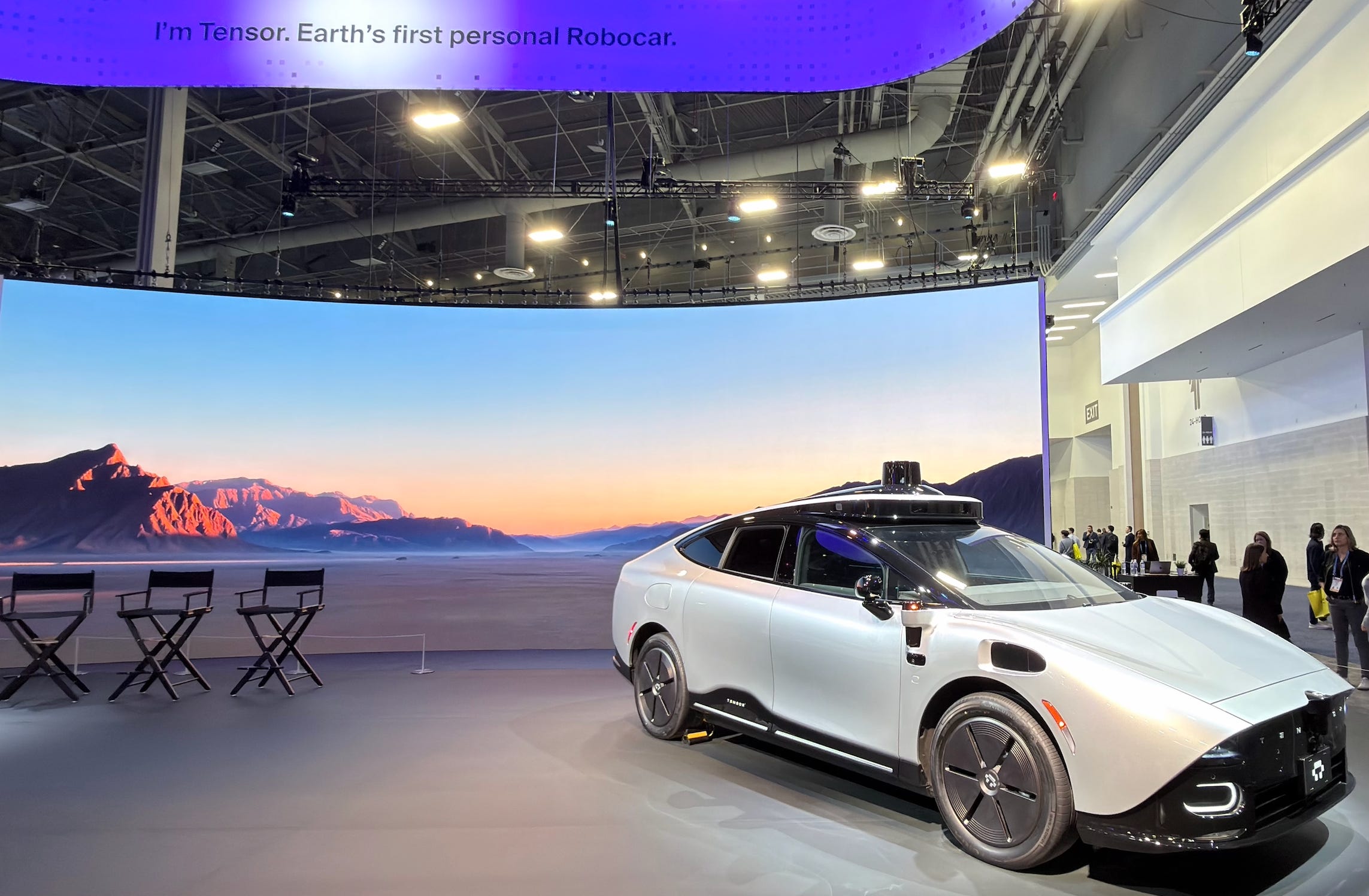
The San Jose-based company Tensor showed off its “designed from the start for autonomy” passenger car. Tensor, like much of the whole auto industry, make use of Nvidia compute on board. The several not-Tesla, EV-first makers have also been struggling in the US. This is very tough.
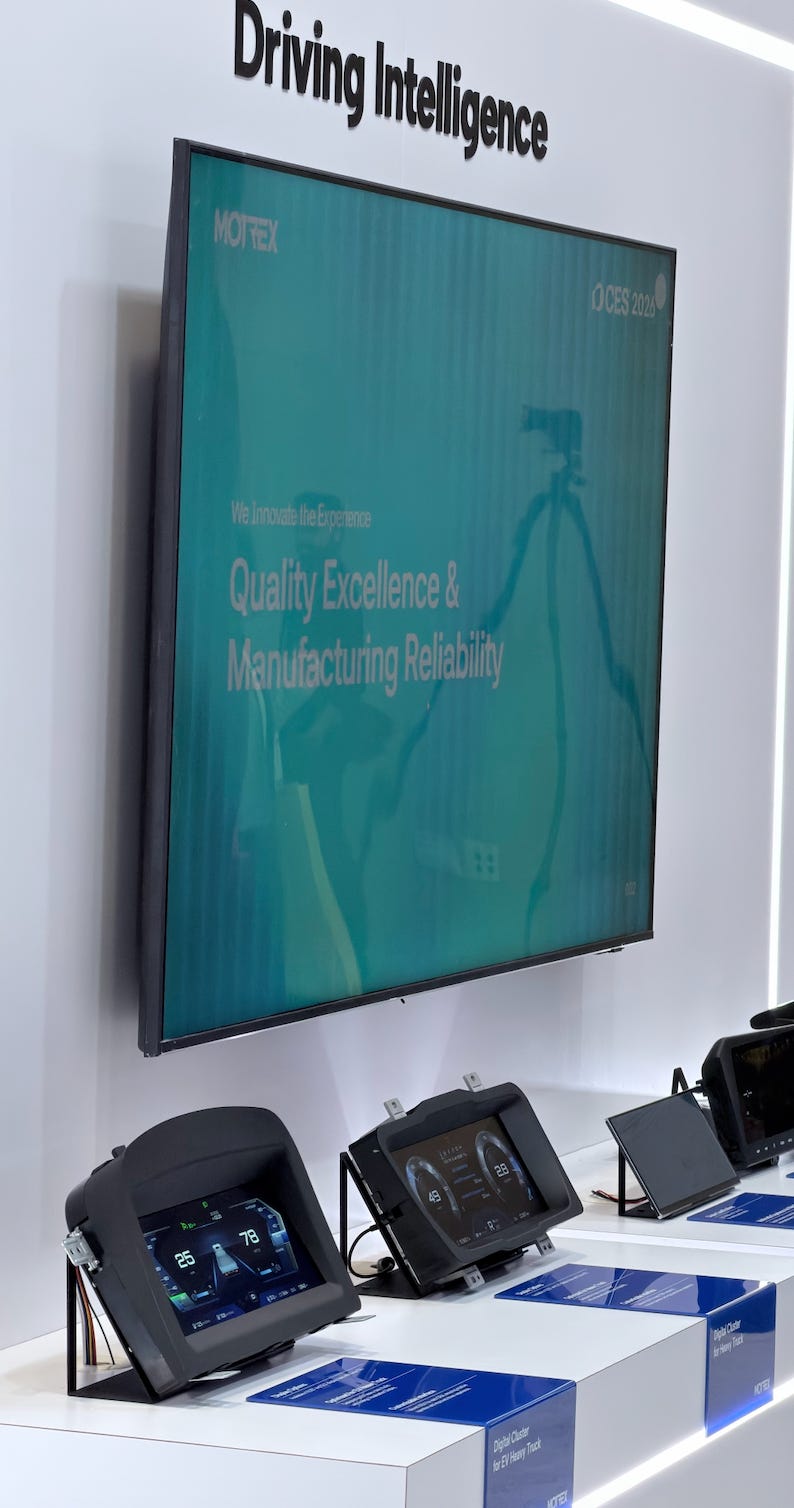
While I laud the efforts at innovation, I don’t think it is necessary that we keep reinventing driver interiors and dashboards for manual driving. It is costly, has uncertain benefit, and right now the safety record is dubious. There were far fewer customizable dashboard components at the show.
Along with Zoox providing transport around town there was Waymo. Waymo had a giant booth. A lot of people in the booth don’t live where Waymo is offering service.
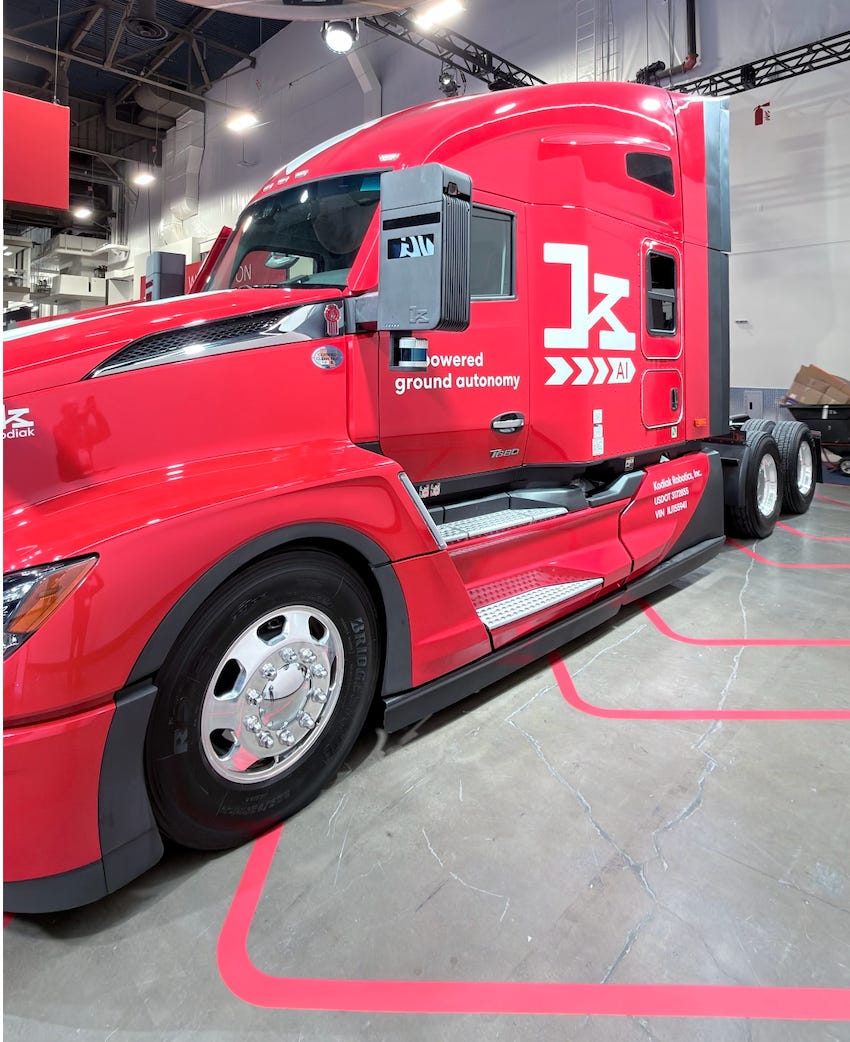
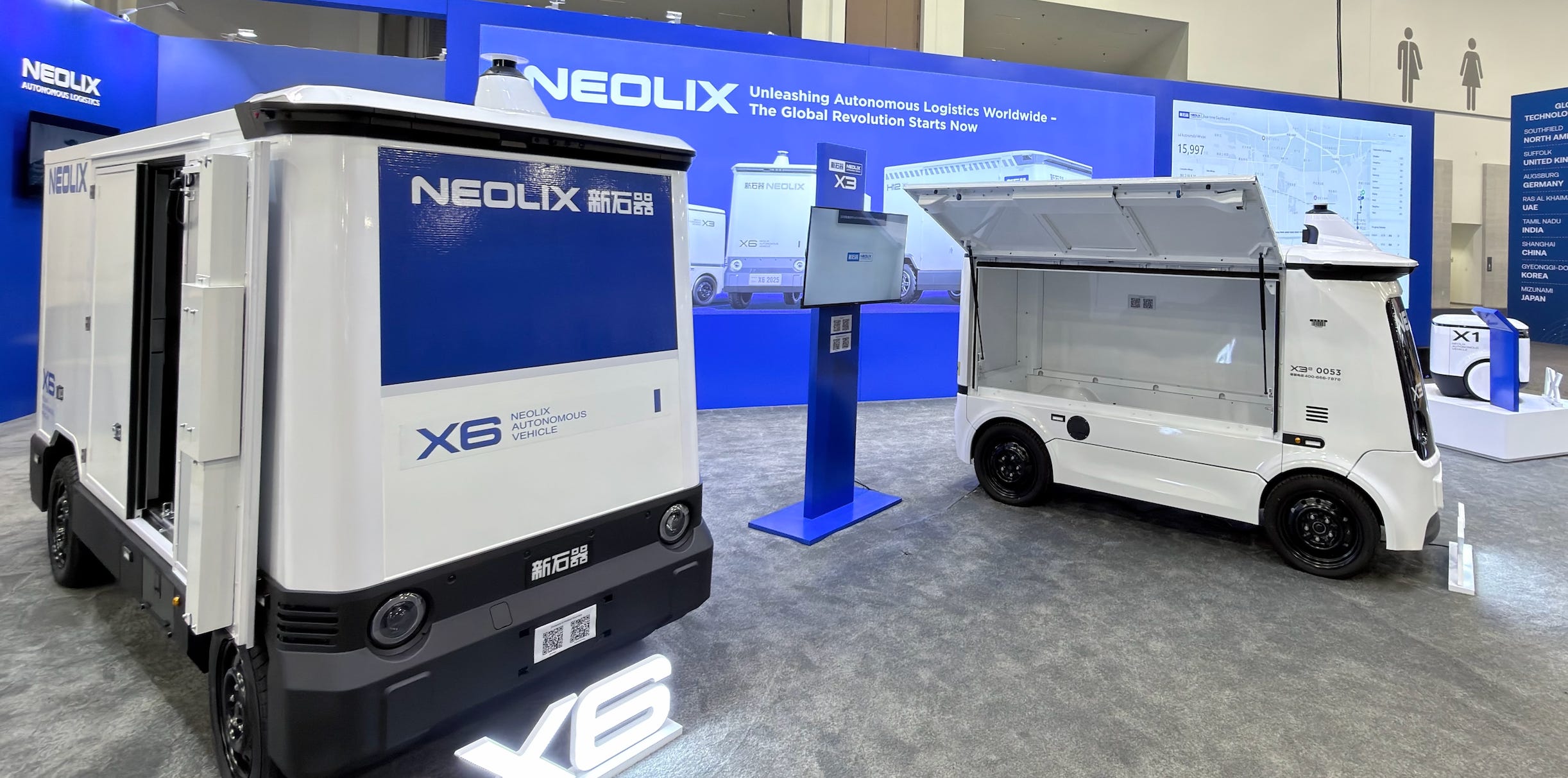
There were assertions of all sorts of autonomous vehicles for commercial use from Bobcat earth movers to heavy trucks. My favorite are the small private property/warehouse people and supply shuttling vehicles. I fully expect to see these shutting around suburbia soon enough.
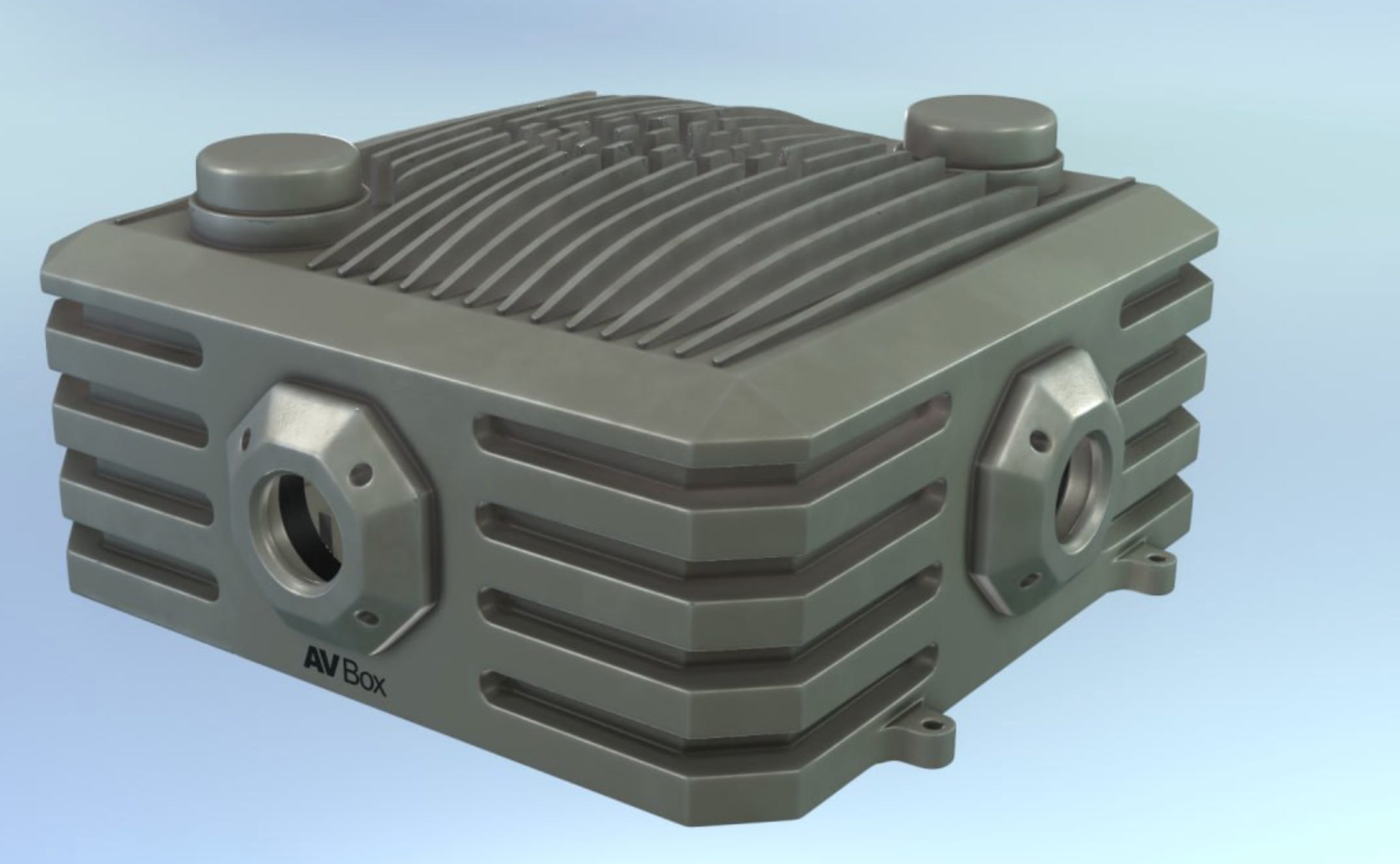
I loved this “All-in-one" retrofit autonomy kit” specifically designed for military vehicles to provide field deployment. You add this to the tank and mount the various sensors depending on the level of autonomy desired (scout, ranger, commander).
Lifestyle and Accessories
My favorite section is the most personal. This is about things that we all use and make life a little more fun or better. No long essays needed here, just some cool stuff with comments in the captions.
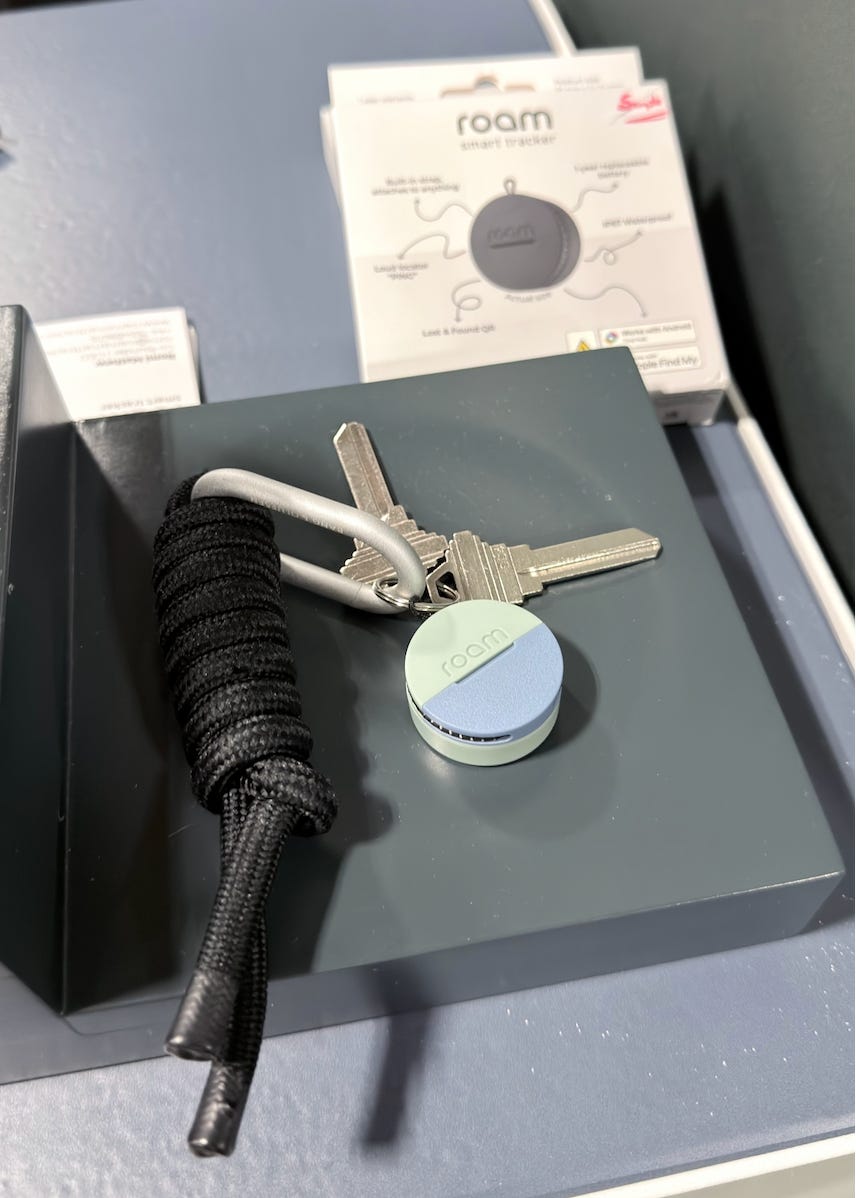
I want to start with a show favorite. This is a super tracker. It works with both Android and iOS and seamlessly taps into those phone-based tracking tools. It also features a QR code which can be scanned (so no find my needed) and connected directly with the owner. To solve the “how to attach” problem it has a built-in connector which easily works with a bicycle tube, handle, shoelace, or strap. The last feature is it uses the cell network to provide positioning by receiving and triangulating. I was not sure how it transmits this or makes use of it. I will let you know as I ordered a pair from Amazon.
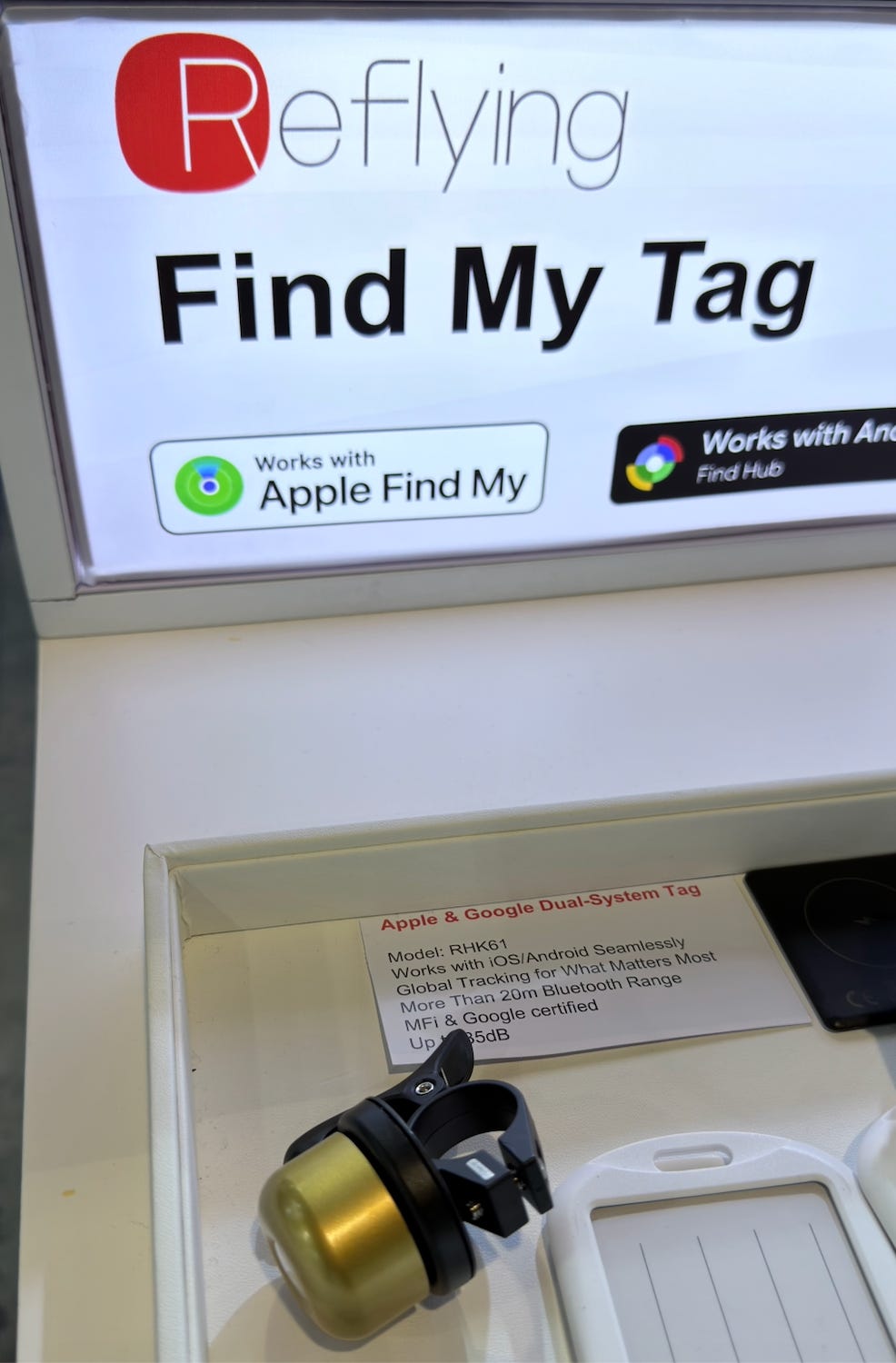
This AirTag is built into the bell on a bicycle or scooter! Reflying is an ODM and always has a lot of creative location solutions.
Every year there is some new charger or cable that you just see everywhere. It used to be that to learn about this you had to go to Japan where they appeared first at retail. Then they started showing up at CES looking to find distributors. Now most of these are on Amazon before the show. That was the case this year with both the “saw these everywhere” chargers. First there was the retractable cable charger that packages a 40-65watt charger with a short cable and often an additional plug or two. The deluxe models of this feature a tractable MagSafe stand. The problem is they don’t have the output to power all the ports based on my experience. The other device is a flat box with a mains cord and several mains receptacles along with some USB-A/C ports.
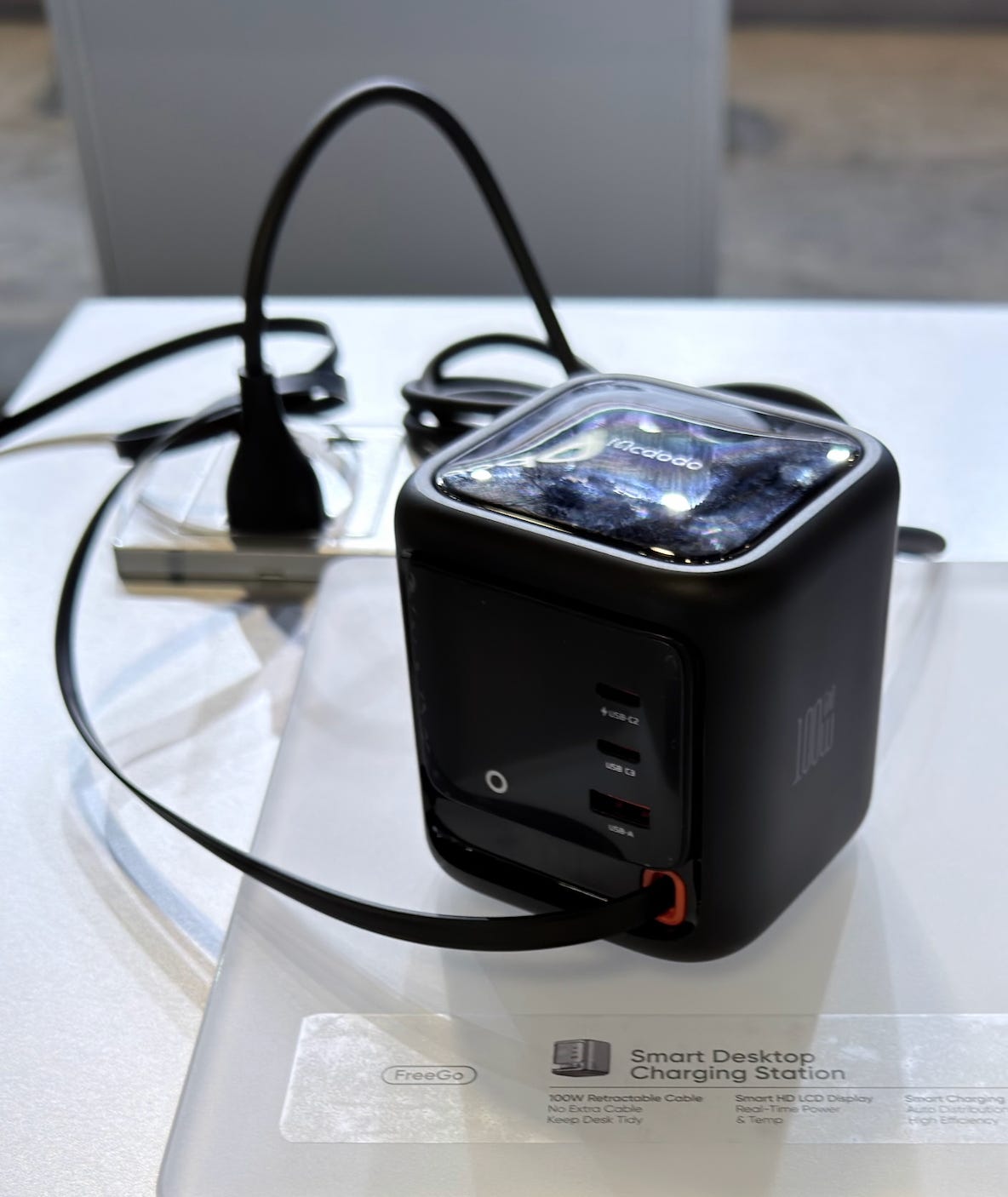
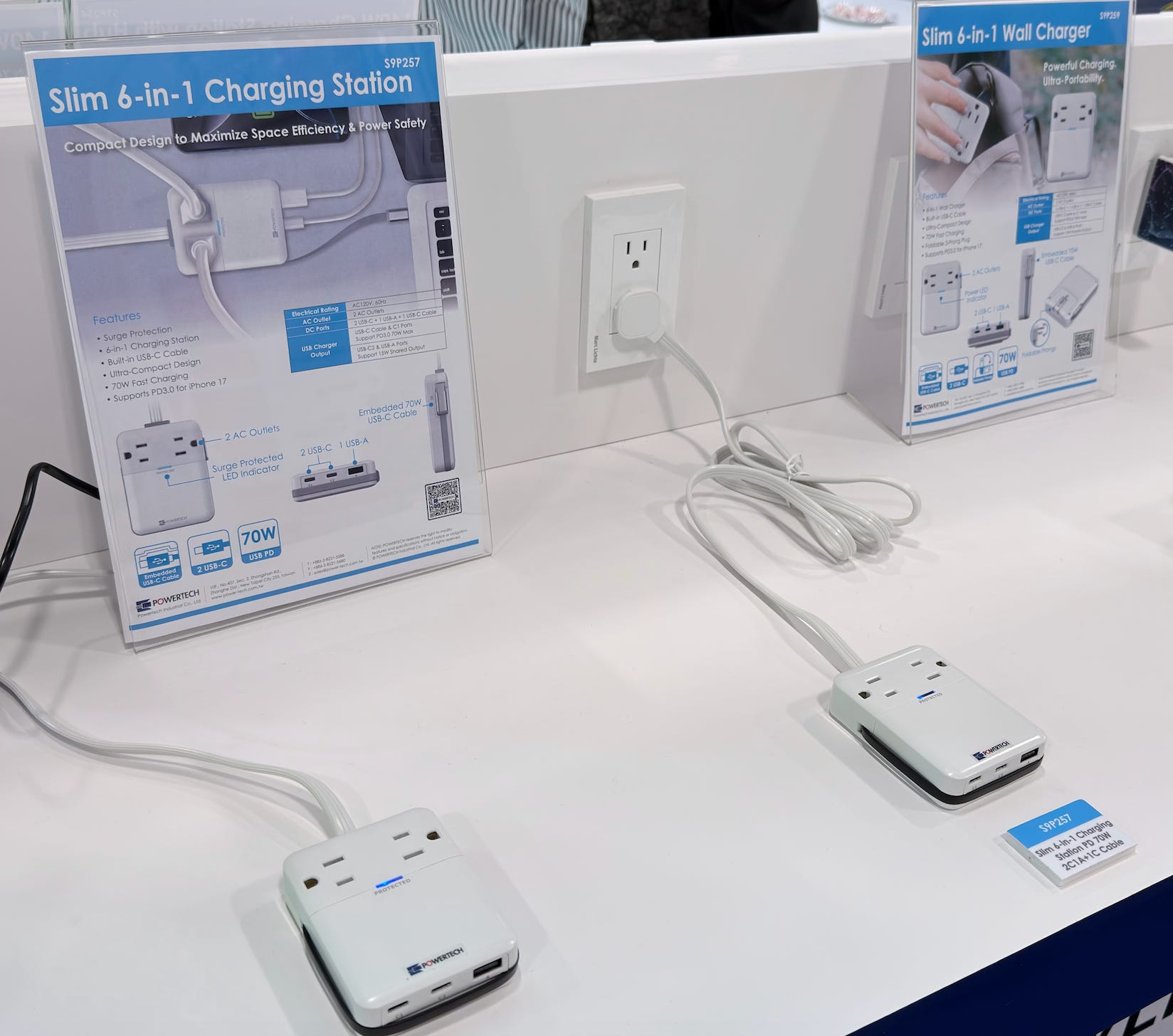
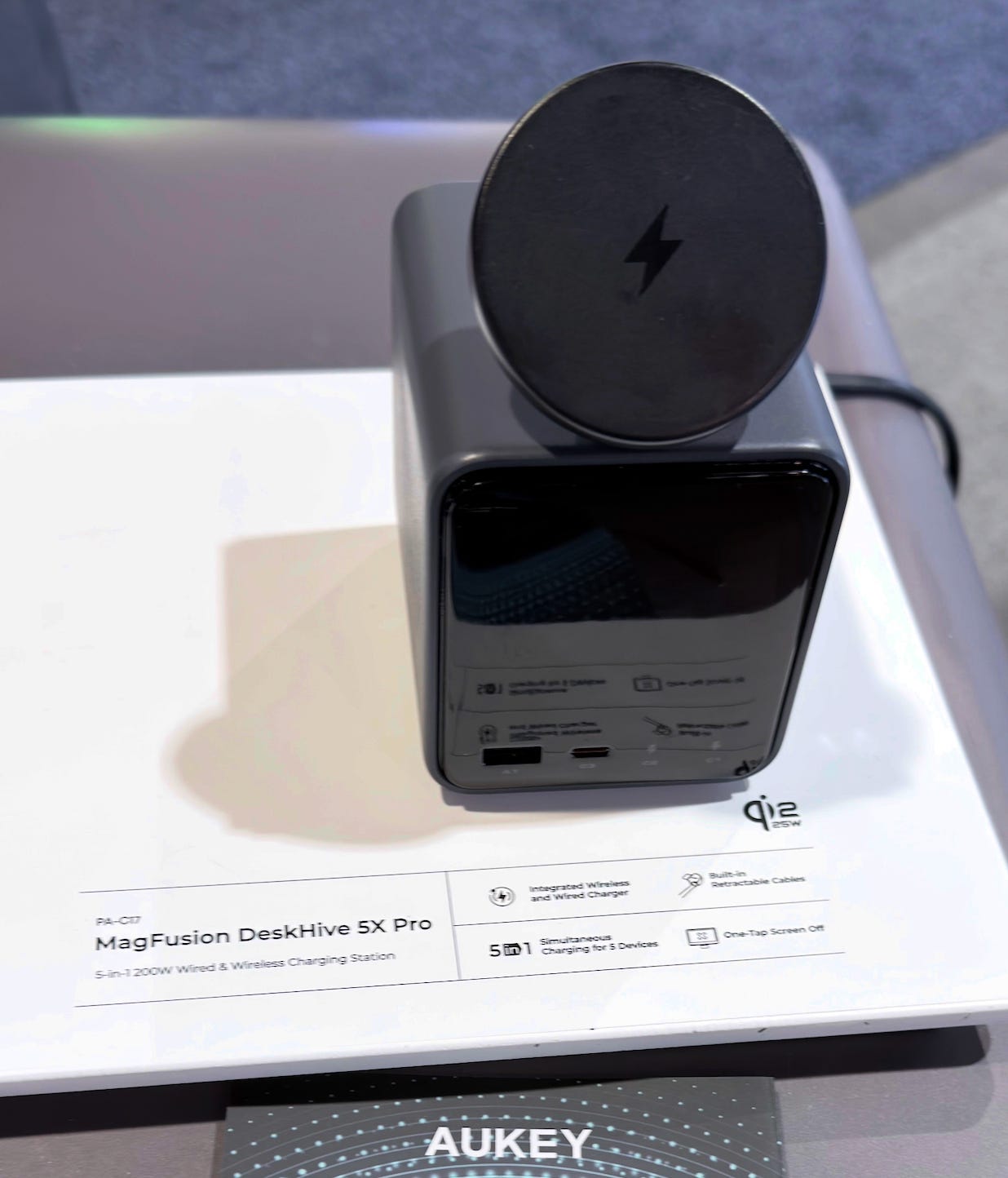
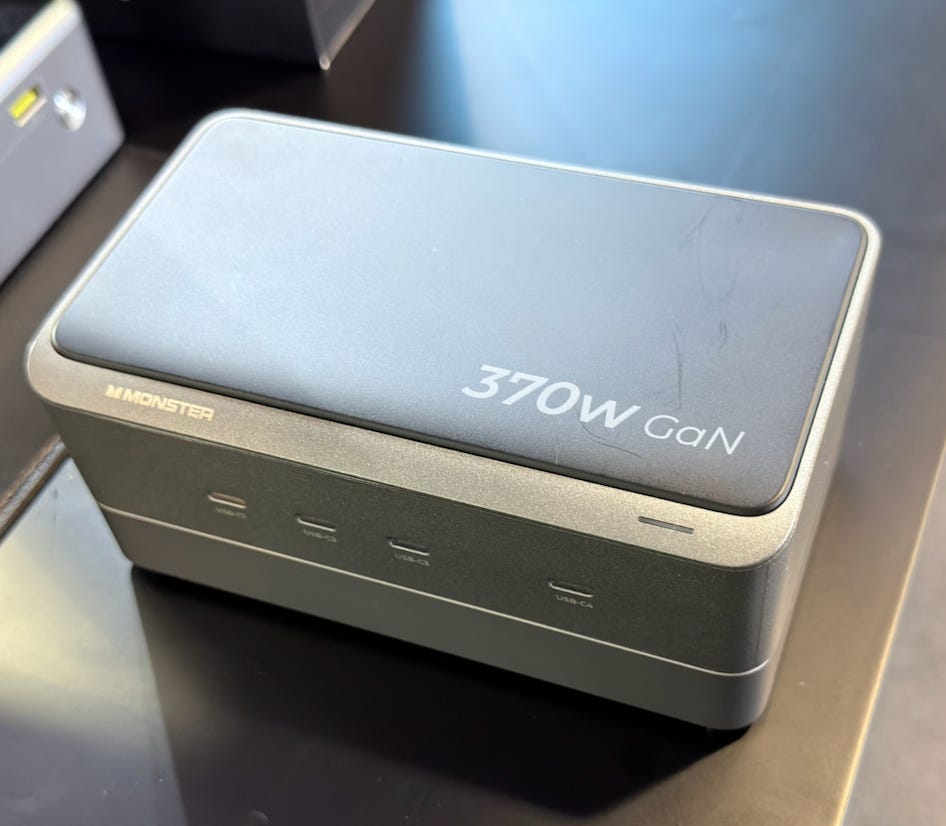
There is clearly a race to build the charger with the most output. The highest rating I found was a ridiculous 370 watts. Ironically this was branded by Monster who used to have a booth selling magical analog cables with silver and nitrogen in the wire cases.
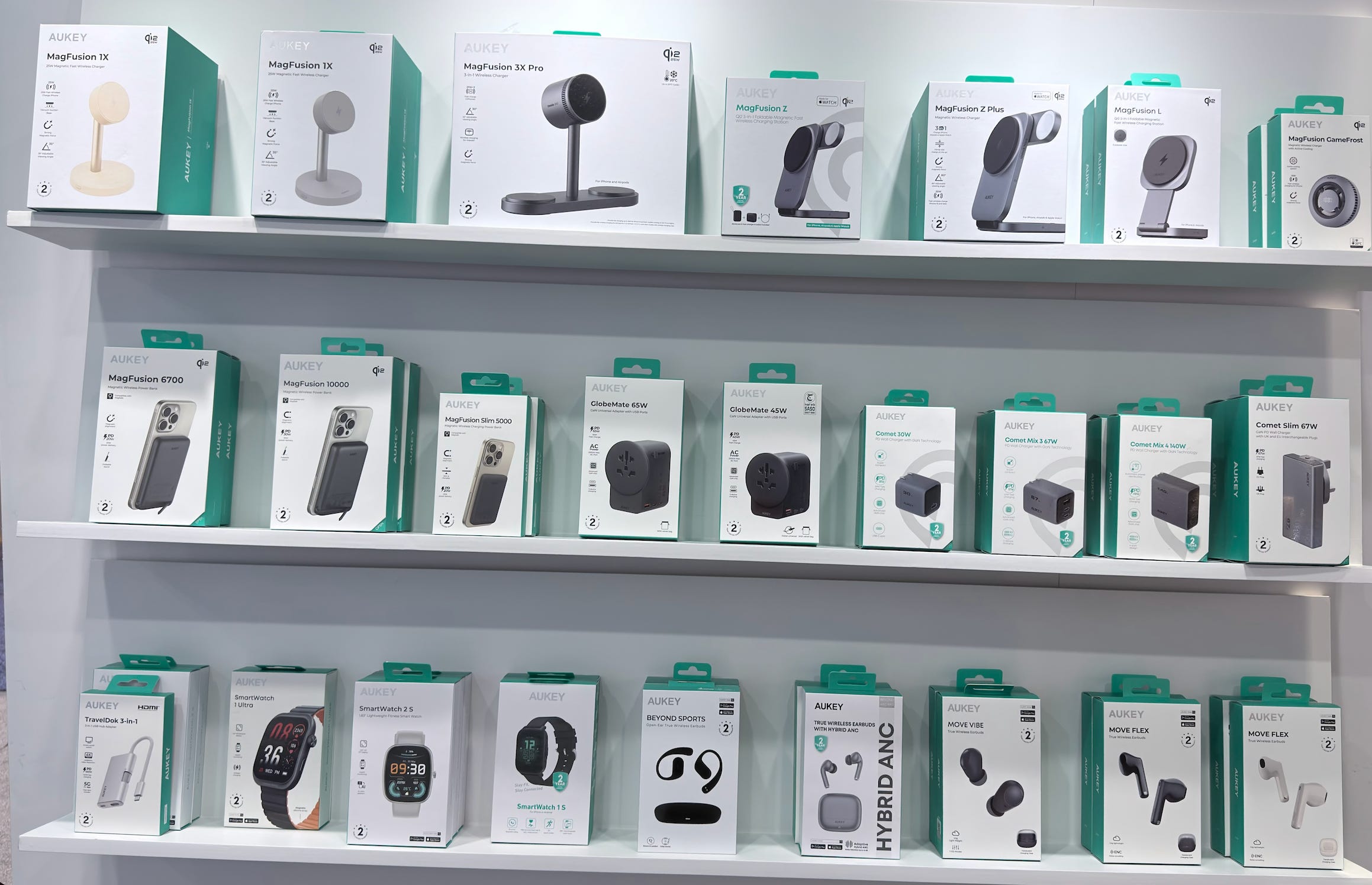
Aukey (not to be confused with Anker) offers a nice view of how these accessory companies all offer a FULL range of the same accessories.
These cables/chargers combined a SIM slot for the purpose of acting as a cellular hotspot. Pretty wild. Feels like a spy device.
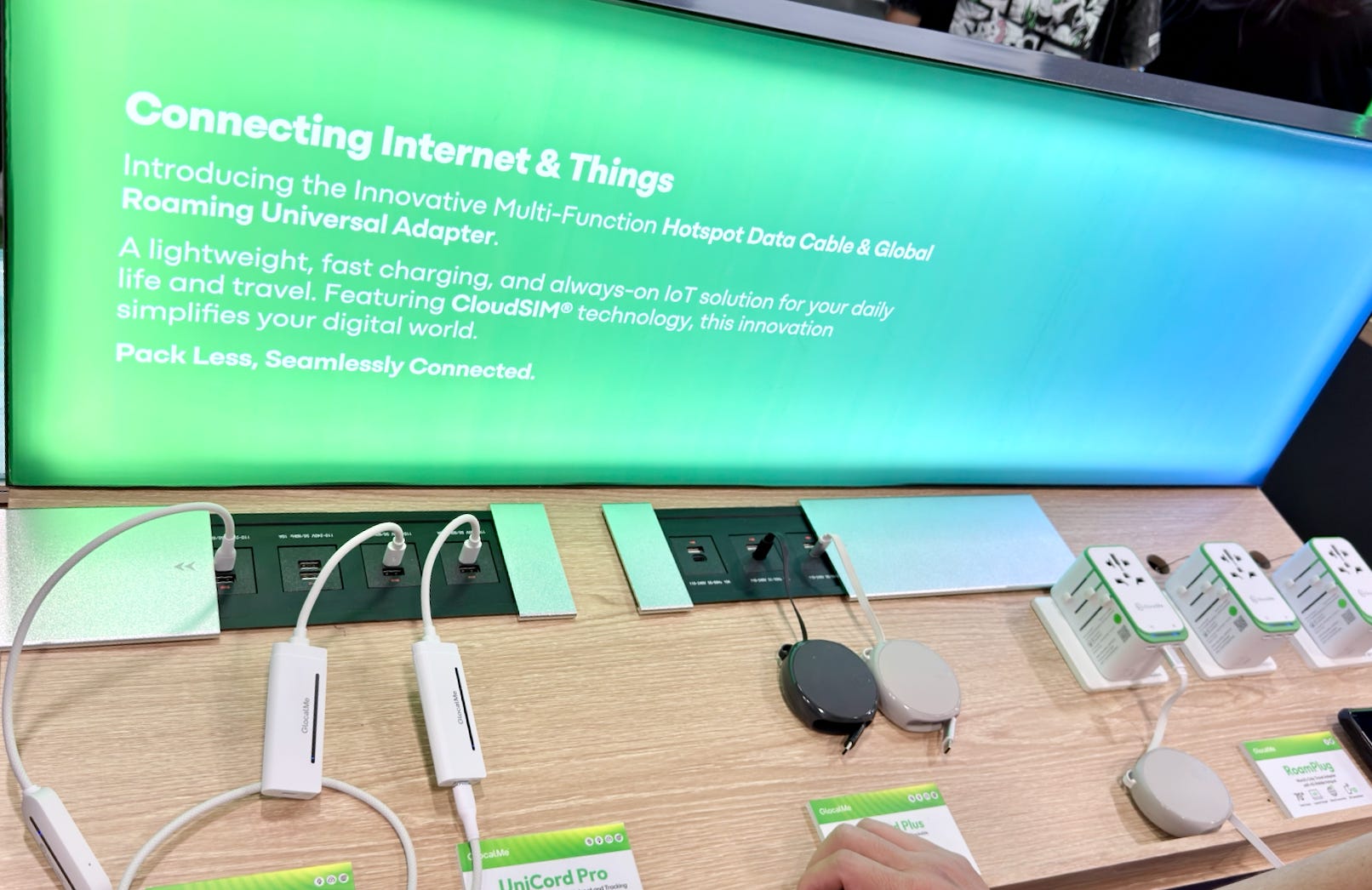
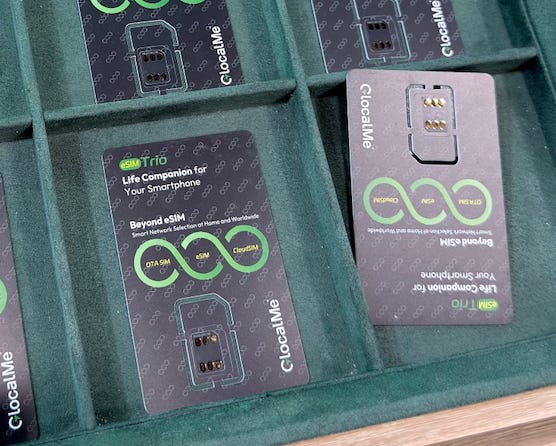
From the same company, this is a physical SIM card that itself supports a dozen eSIMs. You put this physical SIM in your (Android or non-US iPhone phone) and then you can load it up with eSIMs. I think the app for loading only works on Android.
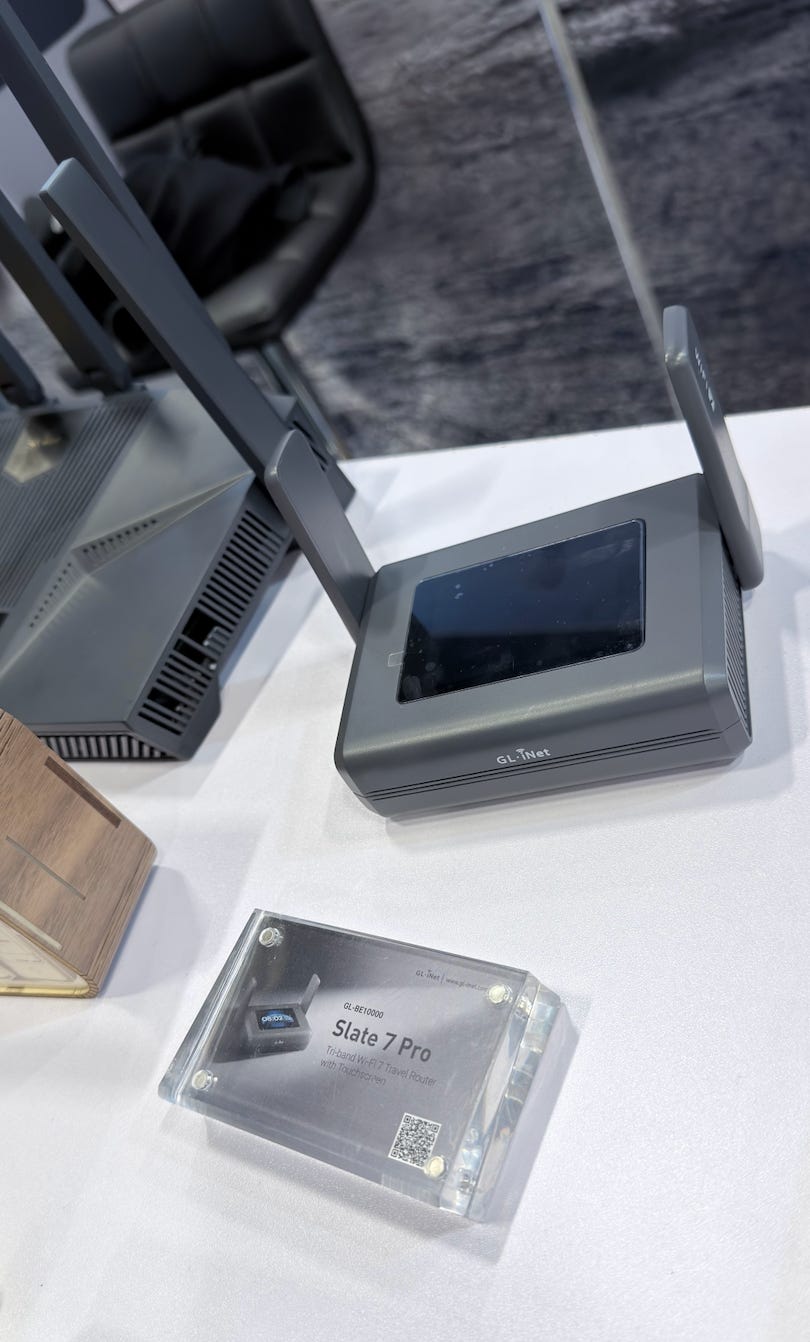
Moving on to connectivity. There’s been a rise in a micro category of mobile hotspots for use off of public Wi-Fi or wired networks. This provides a level of security or often VPN access as well. I travel with one though I couldn’t get it to work at the hotel this year! They like many things go from cool idea to wowza that’s a lot, probably too much. This one is HUGE and is more like a stationary router at this point. The big addition is a screen for doing all the management on device.
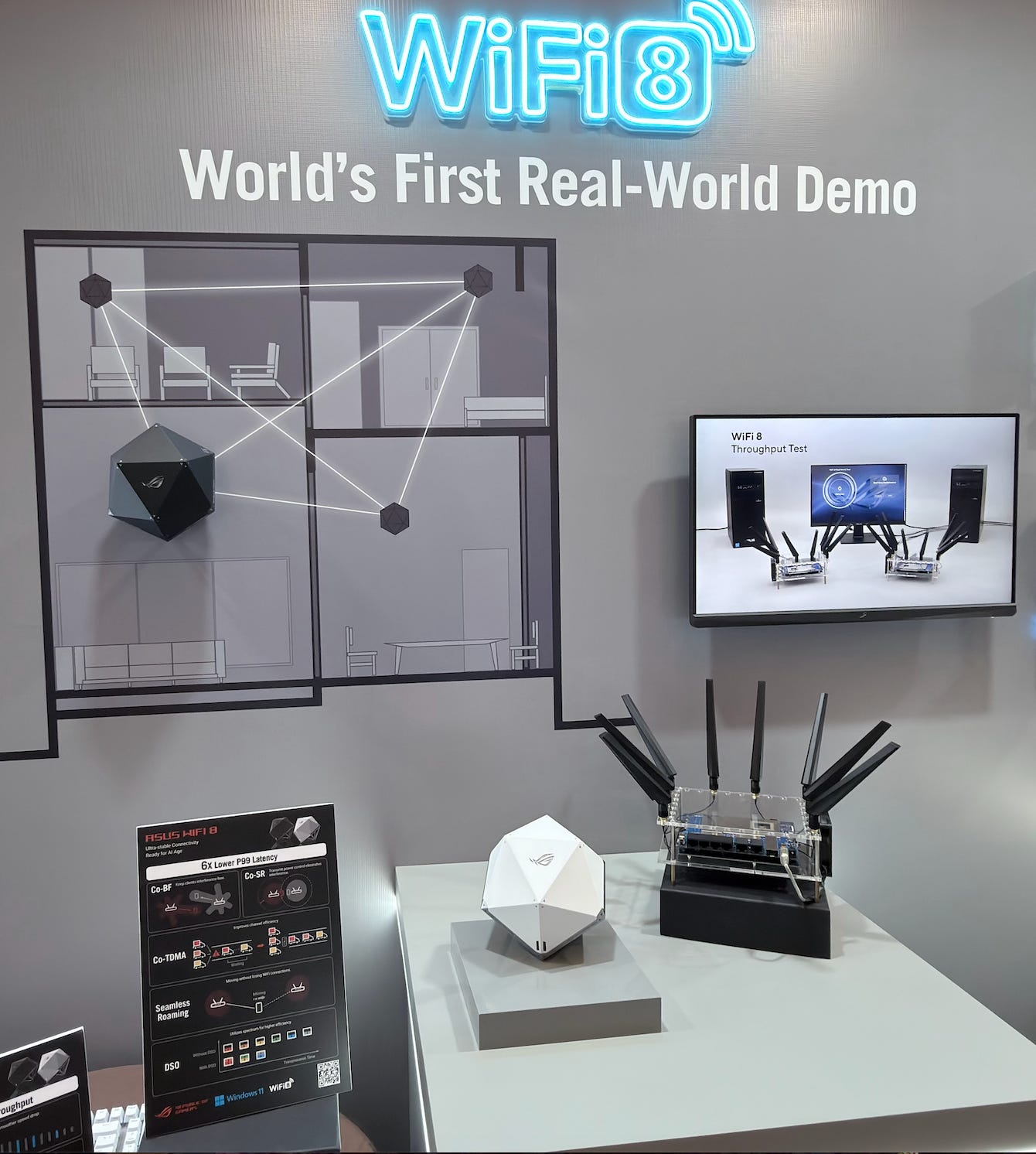
ASUS showed the first live demonstration of Wi-Fi 8! (I am still not on 7). The booth showed it to be faster. The stated goal is to be better for a lot of low-bandwidth consuming devices. In the photo the thing with all the antennas is the device and the hexagon-ish model is the proposed final form factor. Also, Asus it is Wi-Fi not WiFi.
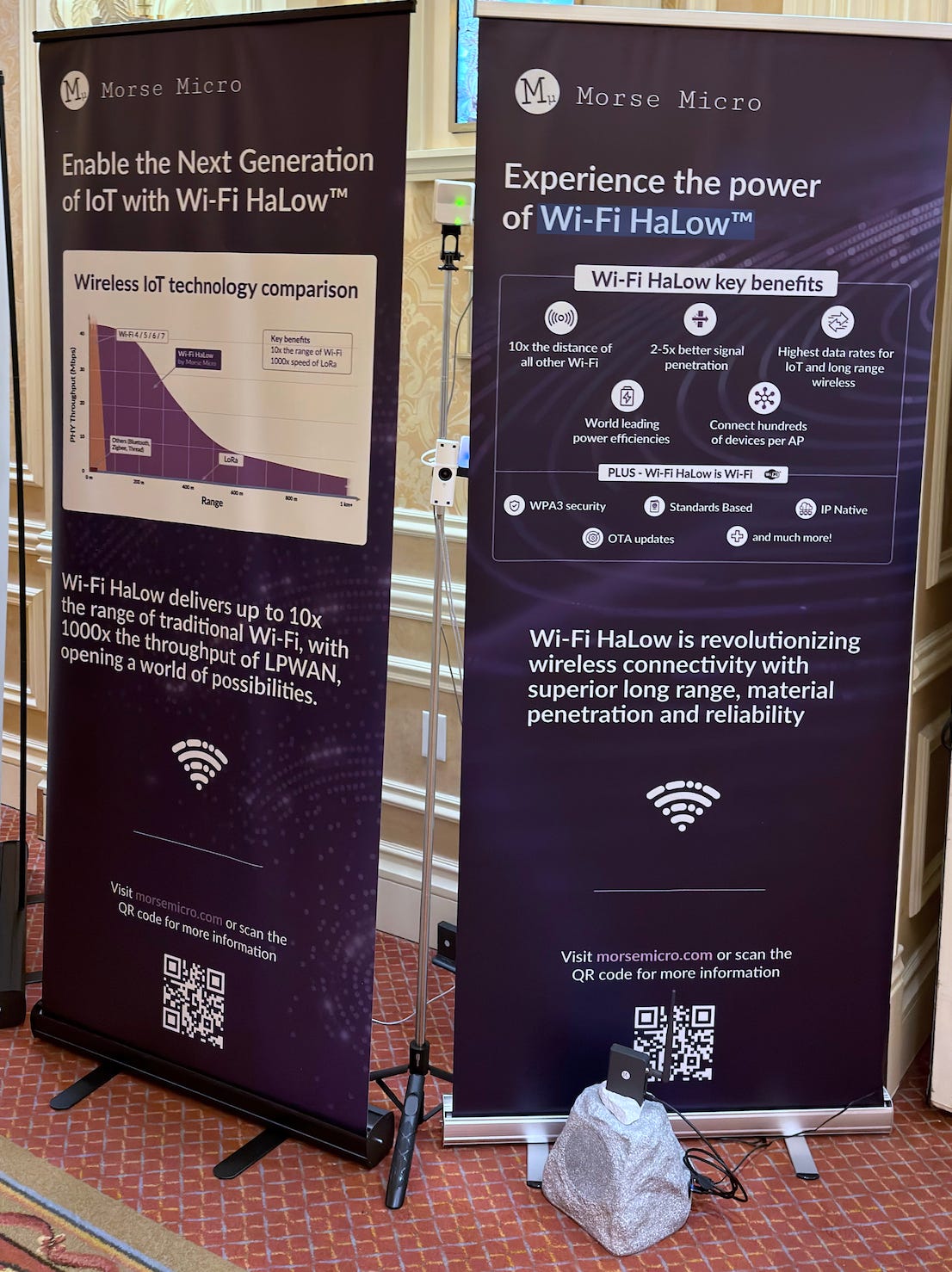
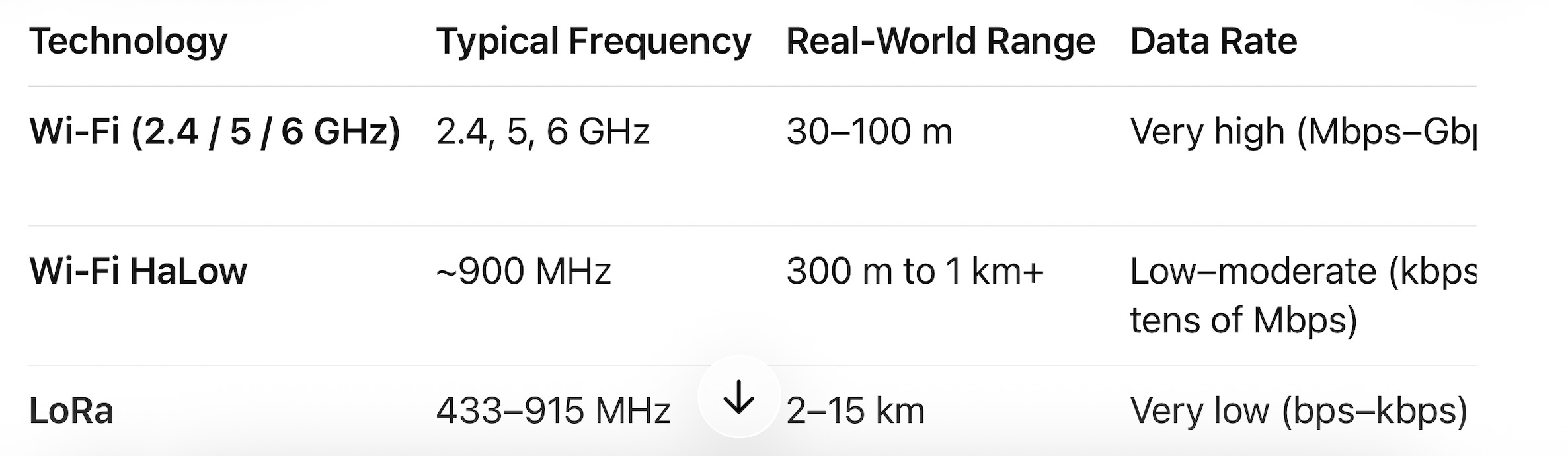
At the other end of connectivity, there were several demonstrations of LoRa and Wi-Fi HaLow™, which share a portion of the megahertz spectrum in the US. HaLow is Wi-Fi 802.11ah for low bandwidth IoT devices that benefit from very long-range connectivity. This is what could be used in a giant open field or very large warehouse/factory floor. The devices look like Wi-Fi chips but they benefit from a bigger base station antenna. Below I included a bandwidth explainer for fun :-)
The product Rockland LowMesh is a LoRa radio that has a transceiver that pairs with a phone (that does not need cell/Wi-Fi for use, just BTLE) and allows a private mesh network over long-range (longer than family radio). It also has a base station to even further extend the range. They sell a whole suite of connectivity tools for the platform.
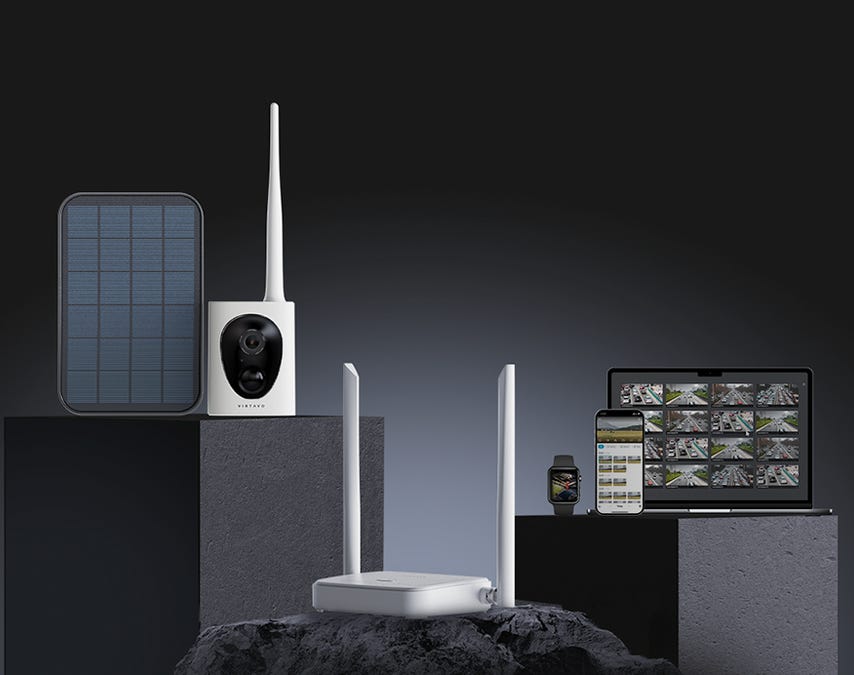
MileFlask by ShowMo, a security company based in the US, has a HaLow-based camera solution to provide security/surveillance for a multi-mile area.
Handy bandwidth/frequency explainer:
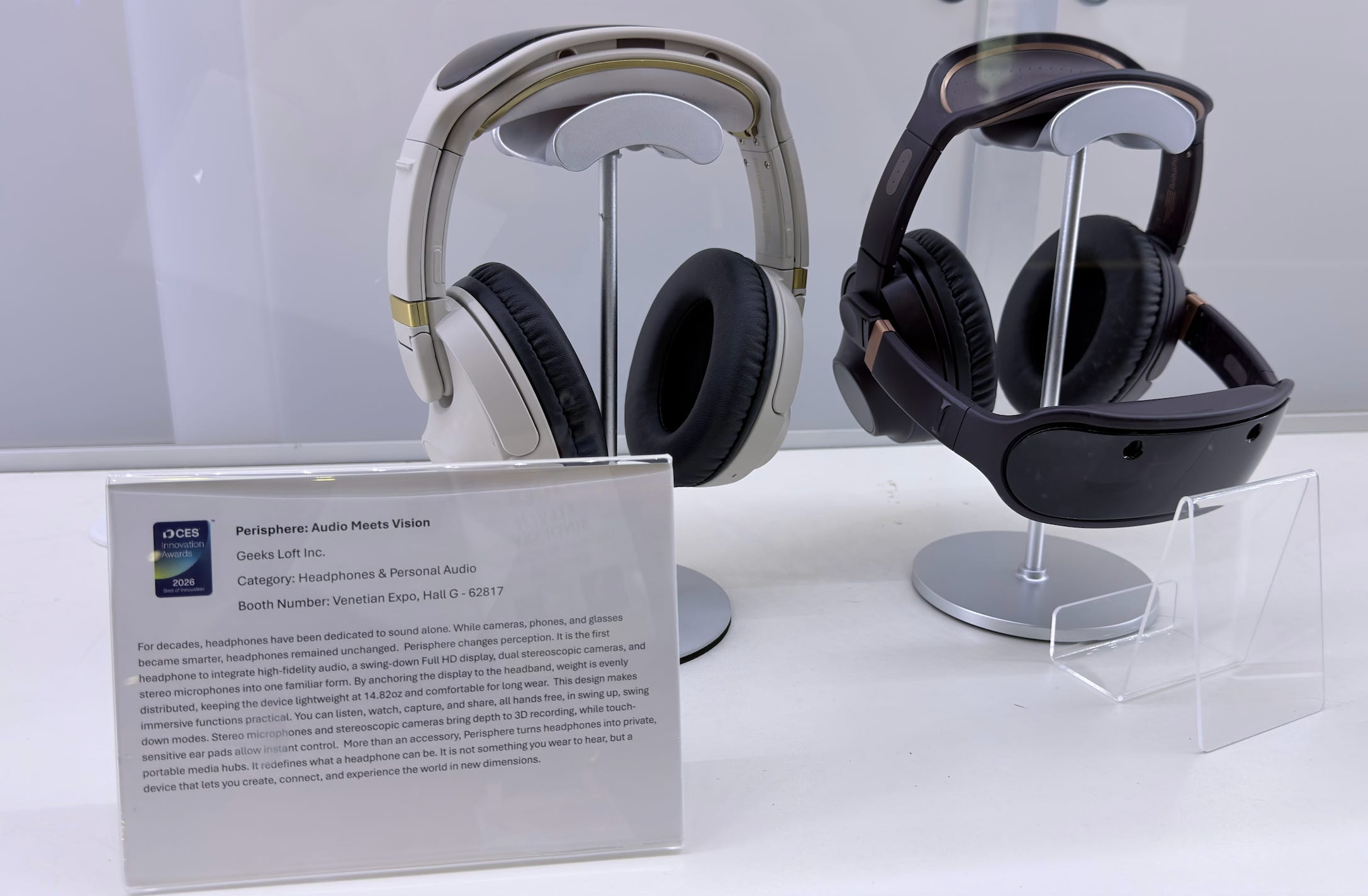
I don’t like using my phone on a plane because there’s nowhere to put it that isn’t too far from me. I loved AVP but that was a schlep. These headphones which can be plain audio, feature a cool “screen” integrated that you can stream from your phone. Pretty wild and very nice ID. Not available yet but can’t wait to try out on a trip.
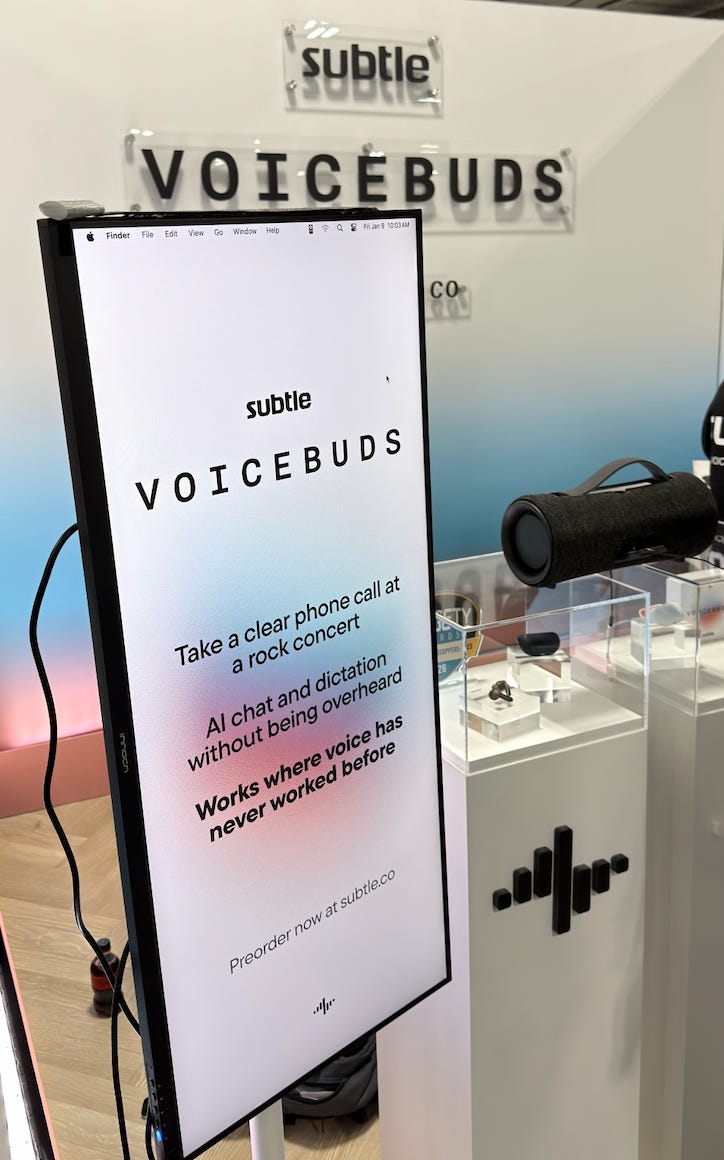
These earbuds were wild. They went beyond noise cancelling and were basically voice isolation. They would play a bunch of loud music like a conference, but you were able to carry on a normal conversation.
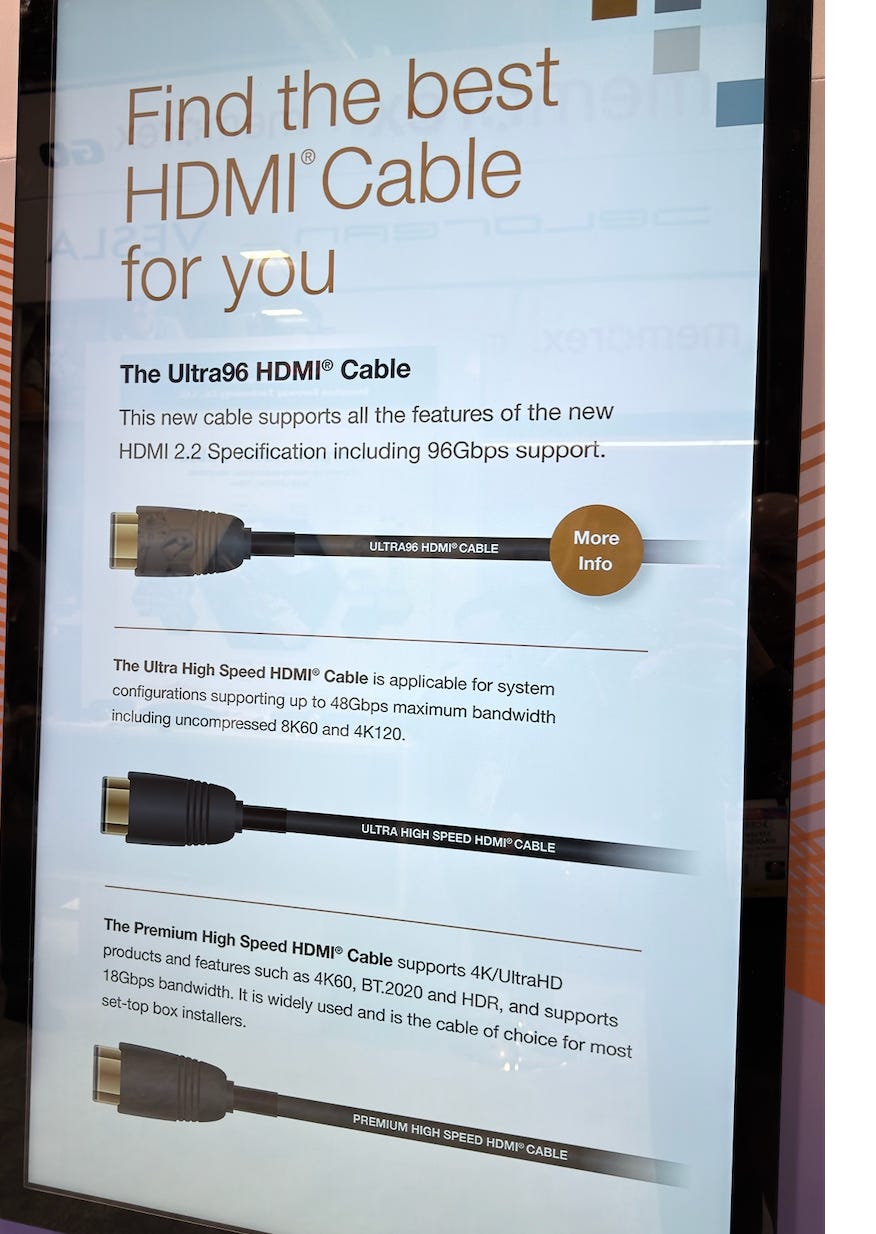
HDMI introduced HDMI Ultra96 which is 96Gbps. The key is HDMI is now like USB-C in that you can’t tell if a cable will work because the connectors are the same but the wires inside are different. So kudos to the EU for this victory.
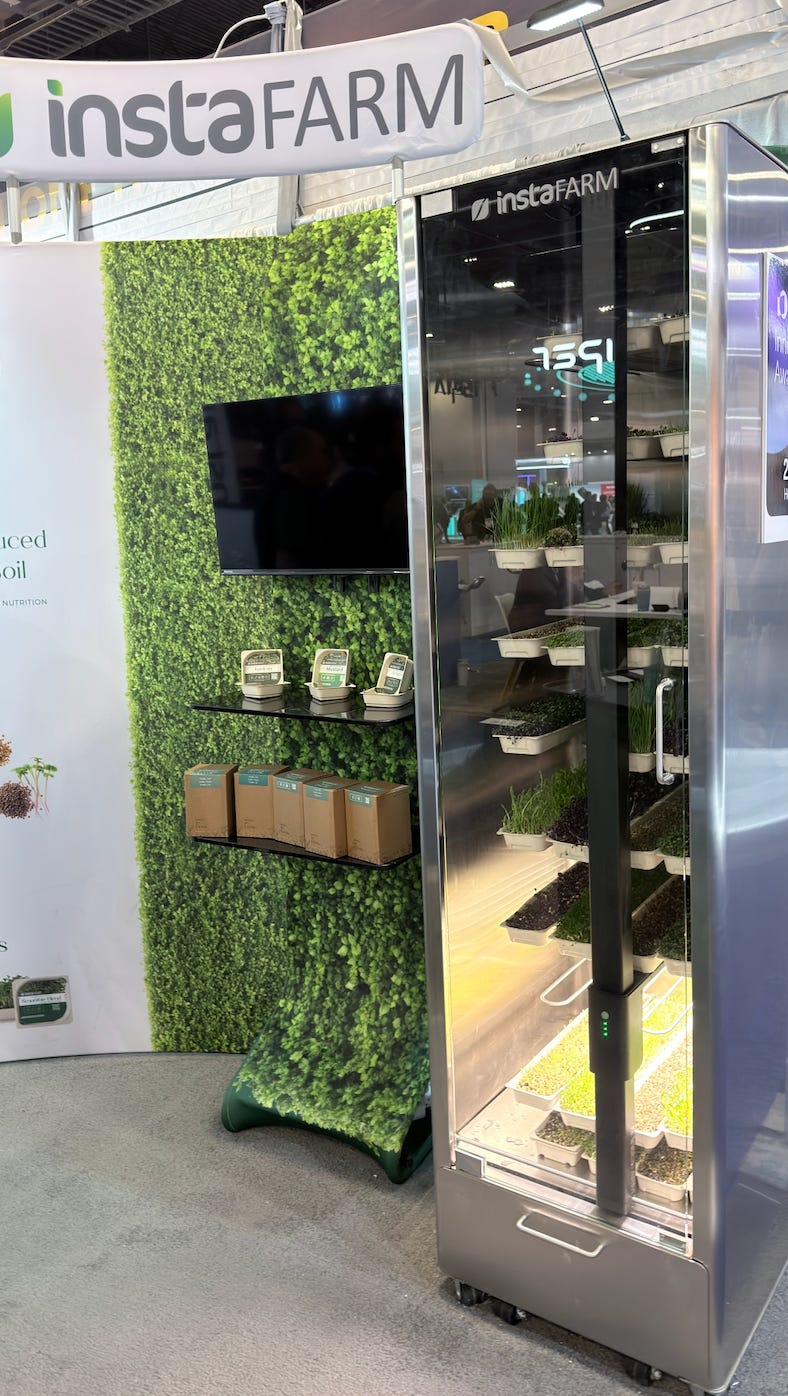
We’re addicted to our Gardyn (so are the kittens). I love these home planters using AI, lights, and water. This one lets you use your own soil and doesn’t require pods. But still has all the AI monitoring you’d expect.
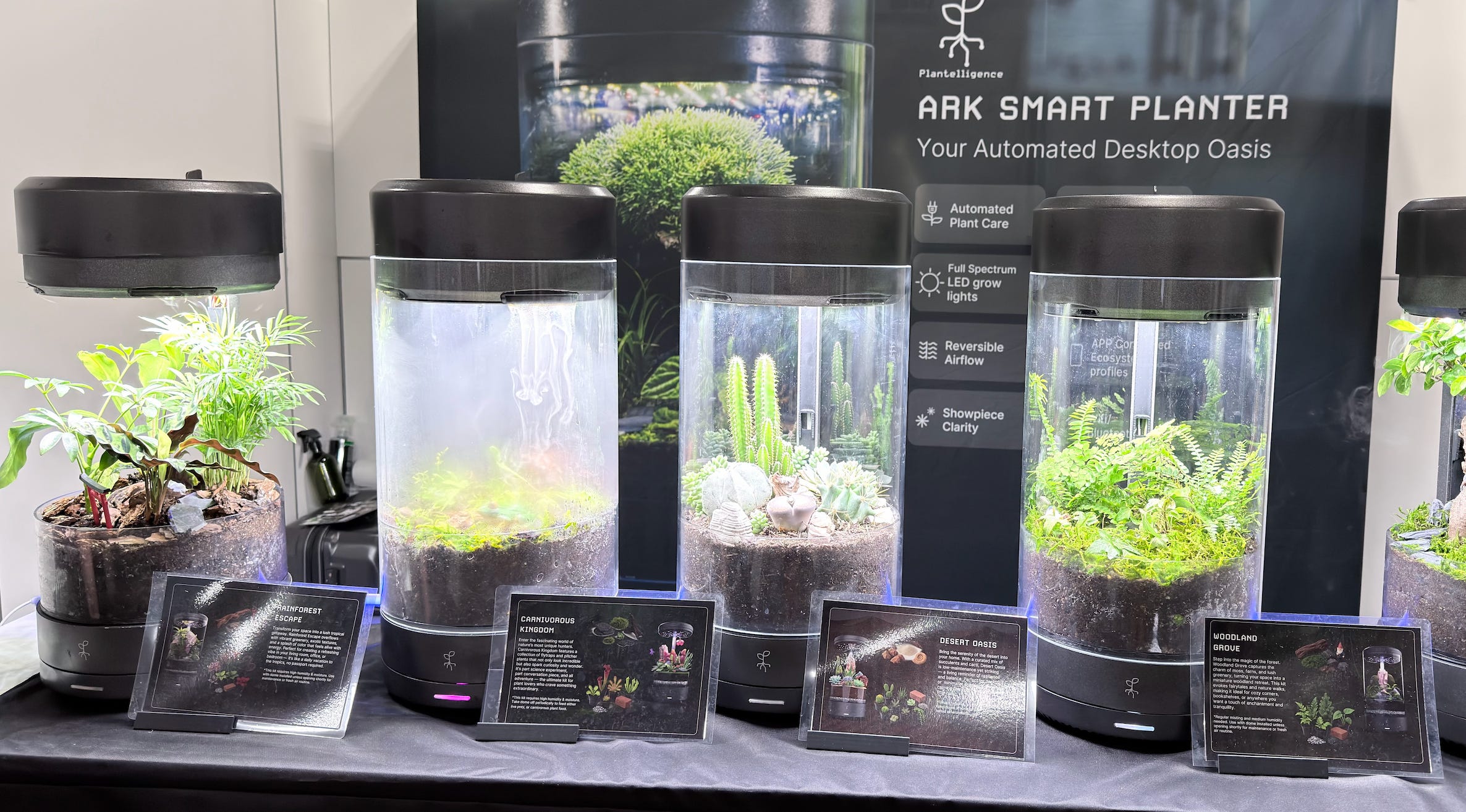
This planter uses prepackaged themes/schemes and uses all the fancy tools to help you keep them alive. It looks very nice in a room too.
Speaking of cats, this is a body composition scale for pets. I can tell your firsthand our cat would not be happy with this as he is just living his best life.
And Finally…
Just a few things that made me smile or something…
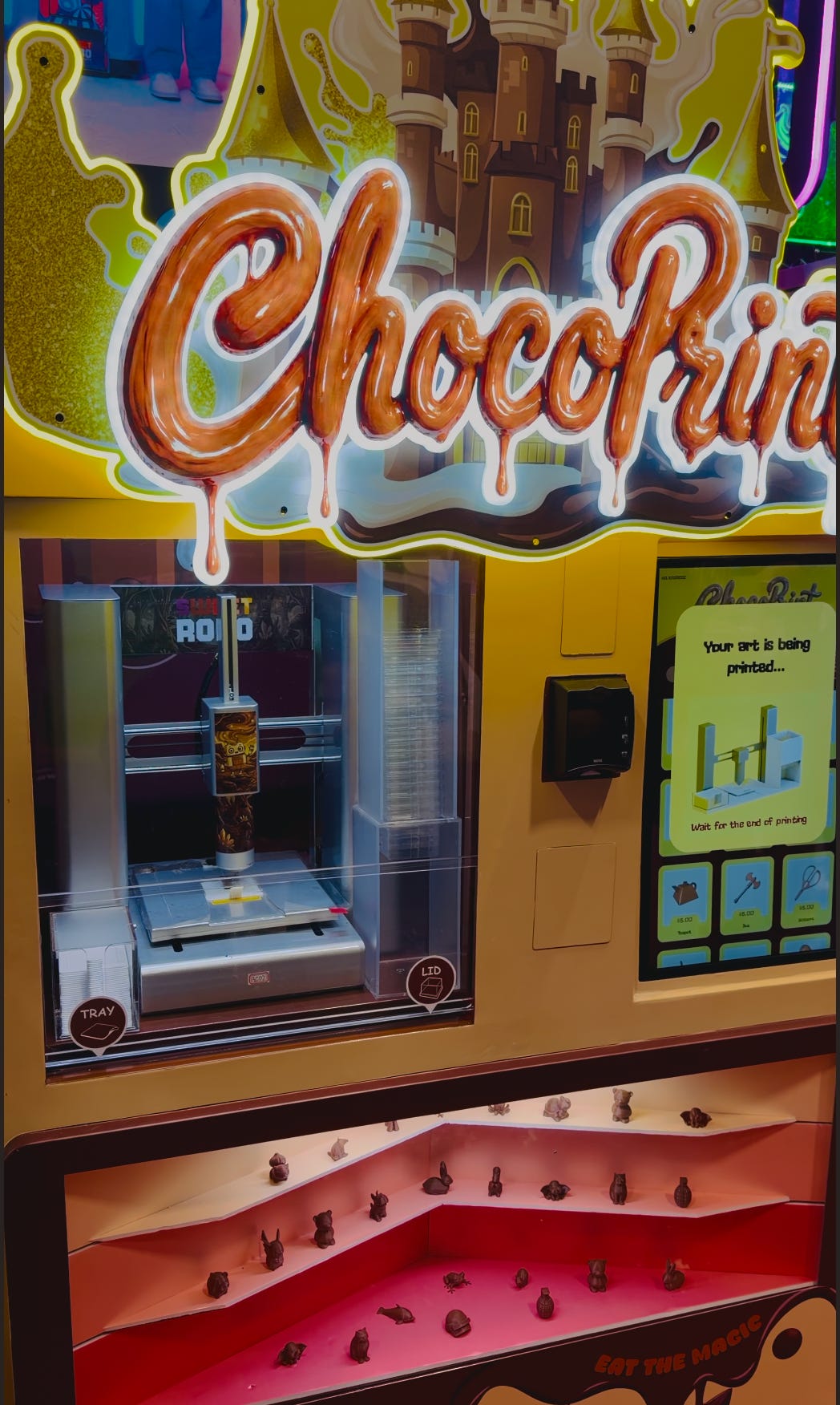
This was kind of…creepy.
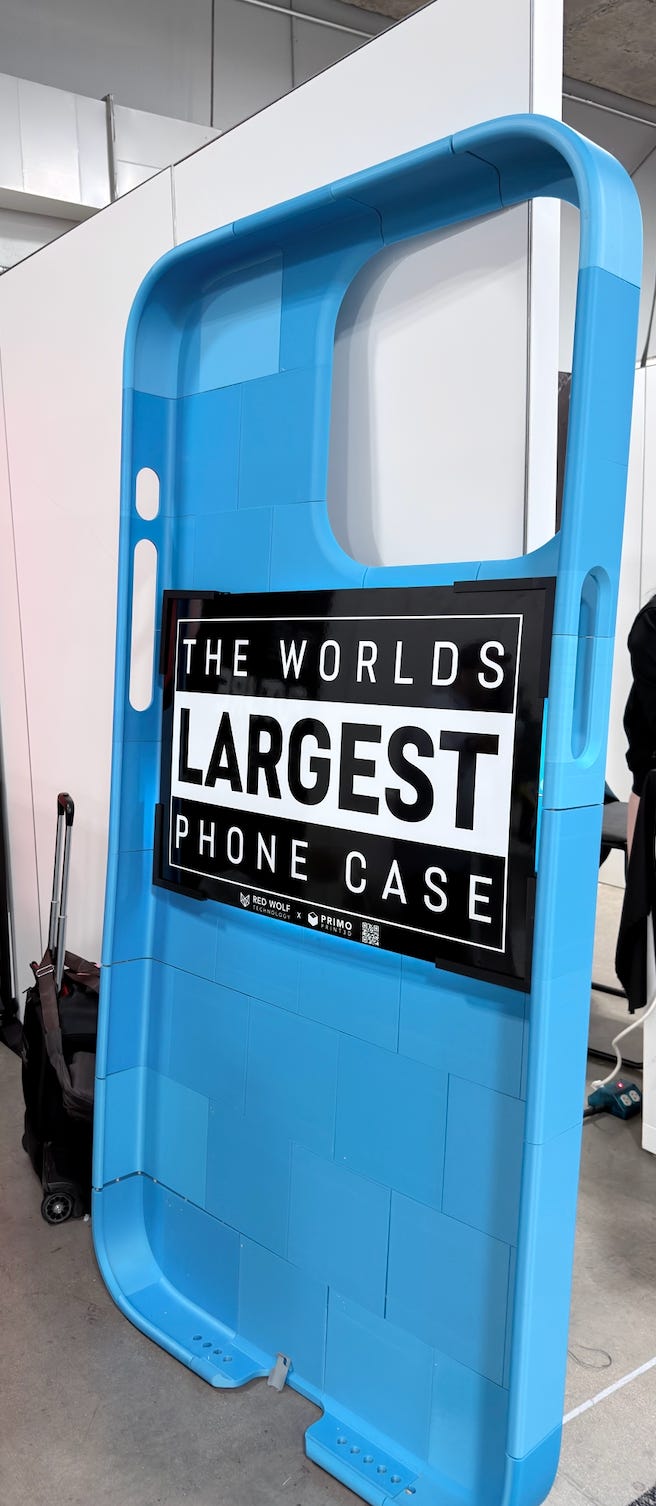
So was this.
If you made it this far then you’re probably as exhausted as I was on Sunday afternoon hitting publish. What I’d ask you to do is just take a deep breath and think about the millions of people directly employed by everything in those 4100 booths. The thousands of people that worked 7x24 the week before building the city and then tearing it down until mid-week this week. All the work they put in is mind blowing. And think of the 50,000 or more people who spent hours in booth duty or in meeting rooms buying, selling, explaining, partnering, and more. There is nothing that compares to the learning from booth duty. I want to thank all the people I bugged with questions or who without skipping a beat ran through the script for the 100th time. Thank you!
See you next year!
Notes. I visited the whole floor but still didn’t see everything so I know cool stuff is missing, especially if it wasn’t on display. I only attended a few of the private/press events. Nothing here is an endorsement. No products or links are sponsored in any way including free samples. I took all the photos unless indicated. I am sure I made mistakes or missed something and take full responsibility. I estimate there are a dozen typos and garbled sentences in here and those are my fault and I appreciate the reports. You try typing this up after walking 40 miles ;-) No LLM was used in the production of this report. No market or financial advice is intended in anyway. All views are my own, 100%.
Great article. Thanks for summarizing your experience for us
This is a great report. Just wanted to note that there are a few distracting typos that maybe a copy editor would catch. Most critically, the AI device that connects to a laptop is from Tiiny (two i's) not Tiny.